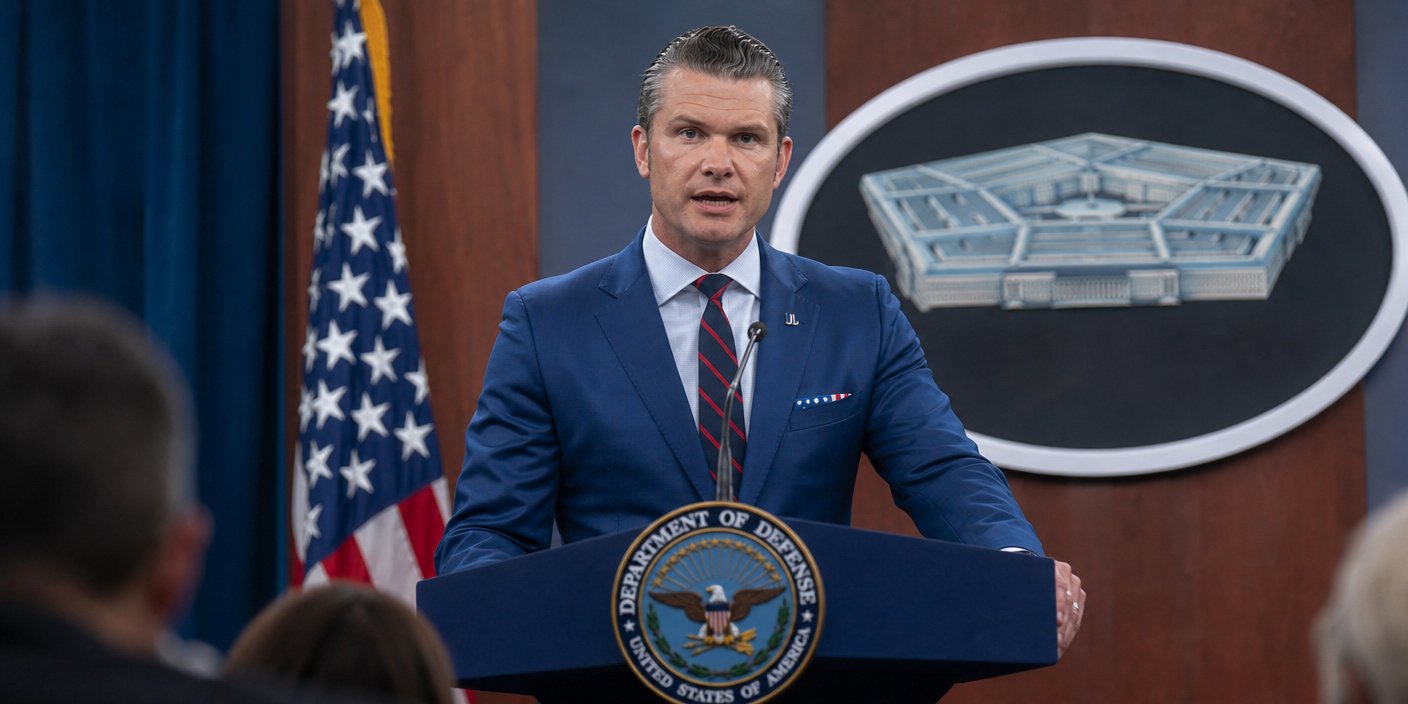
In a decisive shift in U.S. academic and national security policy, Defense Secretary Pete Hegseth has formally designated Chinese-funded Confucius Institutes operating within American university campuses as a verified national security threat. The announcement signals the end of a long-standing debate regarding the autonomy of these programs, with the Department of Defense (DOD) moving to dismantle 80 specific locations identified as functioning as ‘propaganda cells’ within the domestic education system.
The Strategic Assessment of Confucius Institutes
The designation follows an extensive review by intelligence and security officials concerning the operational mandates of Confucius Institutes. For years, these centers, which offer Mandarin language courses and cultural programs, have been under scrutiny regarding their relationship with the Chinese Communist Party (CCP). Secretary Hegseth’s directive effectively ends the ambiguity that has defined the presence of these institutes on U.S. soil. The DOD’s intelligence assessment suggests that these entities have moved beyond cultural exchange, serving as platforms for foreign influence operations designed to shape academic discourse and surveil intellectual property.
By labeling these specific sites as ‘propaganda cells,’ the administration is utilizing the full weight of the national security apparatus to force their closure. This is not a request for voluntary review; it is an order for immediate cessation of activities. Universities that have accepted funding from these organizations are now required to demonstrate full separation, ensuring that no further intelligence or strategic influence operations can be facilitated through their departments.
Impact on Academic Freedom and Security
The intersection of academic freedom and national security has long been the primary friction point regarding Confucius Institutes. Proponents of the institutes often pointed to their role in language acquisition and cultural enrichment. However, the DOD’s findings allege a far more insidious framework. Reports indicate that these institutes often restricted discussions on sensitive topics such as Tibet, Taiwan, and the South China Sea, effectively enforcing self-censorship on American campuses.
Furthermore, the concern regarding ‘academic espionage’—the theft or unauthorized transfer of sensitive research from university labs to foreign state actors—has become a central pillar of the current security strategy. By dismantling these 80 cells, the DOD is aiming to harden the U.S. intellectual ecosystem against foreign penetration. Universities are now effectively on notice: federal research funding may be contingent upon the total removal of these foreign-controlled entities from their campuses.
Historical Context: From Cooperation to Containment




To understand the gravity of the current decision, one must look at the historical trajectory of Confucius Institutes. Since their introduction in the United States in 2004, the institutes were initially welcomed by many universities as a low-cost method to bolster international studies programs. At their peak, over 100 institutes were operating across the nation.
However, the narrative began to shift around 2018, as counter-intelligence agencies began documenting irregularities in hiring practices, curriculum development, and the suppression of free speech on campuses. The transition from ‘cultural outreach’ to ‘strategic liability’ marks one of the most significant pivots in U.S.-China educational relations in the 21st century. Hegseth’s order represents the culmination of this evolution, effectively closing the chapter on a program that the government now views as incompatible with American national security interests.
The Future of U.S.-China Academic Relations
This aggressive stance raises critical questions about the future of international academic collaboration. While the dismantling of these 80 cells is framed as a security necessity, it leaves a vacuum in language training and cultural engagement. Educators and university administrators are now tasked with the difficult challenge of sourcing legitimate, independent funding for Mandarin language studies that does not rely on foreign state-sponsored programs.
Experts suggest that the current crackdown is just the beginning of a broader audit of foreign influence in higher education. This ‘de-coupling’ is expected to extend into other areas of collaborative research, particularly in STEM (Science, Technology, Engineering, and Mathematics) fields. The administration’s message is clear: the era of unchecked foreign influence on American campuses, disguised as academic cooperation, has reached its conclusion.
Secondary Angles of Concern
1. The Economic Impact on Research Grants: Many universities fear that this crackdown may lead to broader skepticism regarding foreign-backed research initiatives, potentially slowing down international research collaborations that are actually benign and beneficial.
2. The ‘Intelligence Spillover’ Effect: The 80 identified cells are not just academic hubs; the DOD intelligence brief implies these nodes acted as listening posts for data collection on both faculty and students. The investigation into the extent of this surveillance is ongoing, and further revelations may impact university reputations.
3. Regulatory Compliance and Legal Challenges: Universities may face significant legal hurdles in breaking contracts with these institutes. The federal government’s involvement provides a strong legal shield, but the bureaucratic process of disentanglement will likely be complex and prolonged.
FAQ: People Also Ask
Q: What specific criteria did the DOD use to label these institutes as ‘propaganda cells’?
A: The DOD’s assessment focused on three primary areas: the funding relationship directly tied to foreign state entities, the suppression of academic discourse on specific geopolitical topics, and evidence of foreign oversight in faculty hiring and curriculum management.
Q: How many Confucius Institutes will remain after this order?
A: The directive targets the 80 identified locations as an immediate priority. The administration has signaled that any remaining operations will be subject to equally rigorous security vetting, effectively moving toward a total ban on the program in the United States.
Q: Will students currently enrolled in these programs lose their credit?
A: The administration has emphasized that the goal is to decouple the university from the organization, not to punish students. Guidelines are being issued to universities to transition these language programs to legitimate, independently managed departments.
Q: How does this affect universities that have already closed their institutes?
A: Universities that proactively closed their institutes are in a strong position. The current directive is aimed at those that maintained the programs despite increasing warnings from security agencies over the past several years.