Nestlé has officially inaugurated its “Deep Tech Center” in Orbe, Switzerland, marking a strategic pivot toward integrating artificial intelligence, advanced robotics, and sensor technology into its global manufacturing and product development supply chain. This new hub, located within the company’s existing global R&D ecosystem, is specifically tasked with scaling the application of deep tech to enhance sustainability, manufacturing efficiency, and, most notably, the customization of coffee experiences for consumers worldwide.
Key Highlights
- Strategic Location: The facility is based in Orbe, Switzerland, a historic site for Nestlé’s R&D, now transformed into a digital innovation powerhouse.
- Technological Focus: Integration of AI, Internet of Things (IoT), and robotics to streamline supply chains and optimize production lines.
- Coffee Personalization: Leveraging data and algorithms to tailor coffee products, from NESCAFÉ to Nespresso, to individual consumer profiles.
- Sustainability Goals: Utilizing sensor technology and AI analytics to reduce energy consumption and waste across global manufacturing plants.
The Engine Behind the Brew: Inside Nestlé’s AI Strategy
In the quiet manufacturing heart of Orbe, Switzerland, a revolution is brewing—not just in the coffee beans, but in the silicon architecture that monitors them. The opening of Nestlé’s Deep Tech Center signifies a fundamental shift in how the world’s largest food and beverage company approaches industrial innovation. For decades, Nestlé’s R&D efforts in Orbe have focused on traditional food science—chemistry, biology, and nutritional optimization. Today, the focus has shifted toward the digital. The Deep Tech Center is designed to act as a bridge, closing the gap between complex digital data and physical product manufacturing.
Scaling the Digital Supply Chain
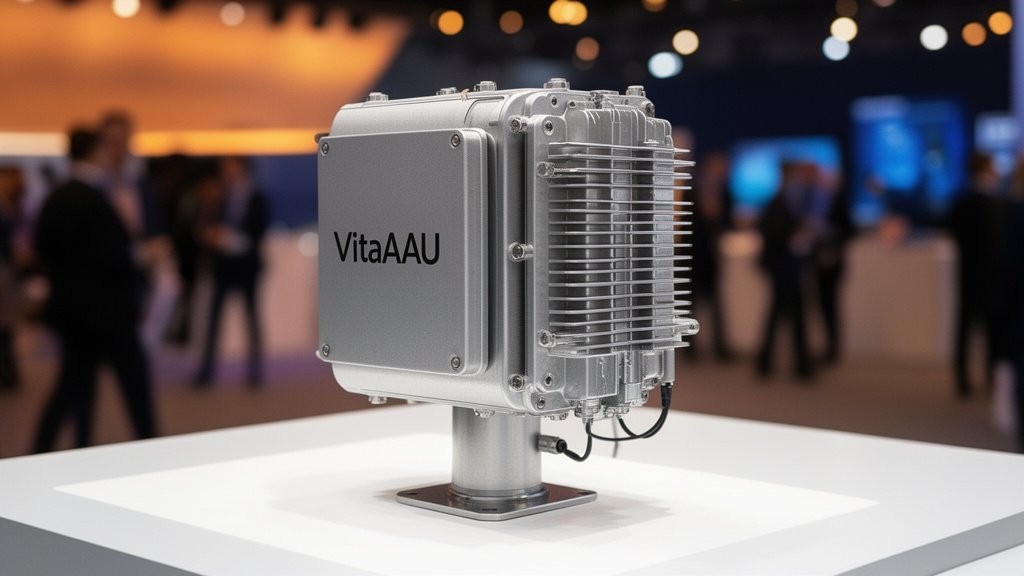
The immediate impact of the Deep Tech Center lies in its capacity for ‘Industrial IoT’ (Internet of Things). By installing advanced sensor arrays across manufacturing sites, Nestlé can now monitor the production of its coffee, pet food, and dairy products with unprecedented granularity. The Deep Tech Center’s mandate is to take the data harvested from these sensors—vibration patterns in machinery, precise temperature fluctuations in roasters, and raw material throughput—and process it through generative AI and predictive analytics.
This is not merely about maintenance; it is about efficiency. By predicting when a machine component might fail before it actually does, the company can avoid downtime that costs millions in lost production. The Center aims to scale these digital learnings from Orbe to Nestlé’s hundreds of manufacturing sites worldwide, essentially allowing a factory in Brazil or Vietnam to tap into the operational intelligence generated in Switzerland.
Robotics and the New Coffee Standard



While industrial manufacturing is the backbone, the ‘face’ of this innovation is undoubtedly coffee. Nestlé manages some of the world’s most recognizable coffee brands, including Nespresso, NESCAFÉ, and Nescafé Dolce Gusto. The Deep Tech Center is developing new robotics-driven production lines that allow for a degree of agility previously unavailable in high-volume food manufacturing.
Traditionally, large-scale production required rigid, long-term setups. With the integration of AI-driven robotics, Nestlé can now pivot production runs with greater ease. This flexibility is essential for personalization. Imagine a future where a coffee machine or a specific product line can be adjusted in real-time based on local consumer taste data, harvest availability, and regional trends. The robots in the Orbe facility serve as the testing ground for these flexible production systems, effectively turning the factory floor into a modular, responsive entity.
Personalization at Scale
One of the most compelling secondary angles to this news is the concept of hyper-personalization. Nestlé is no longer just selling a commodity; it is utilizing deep tech to predict consumer behavior. By analyzing vast datasets—ranging from online customer feedback to real-time consumption patterns monitored through smart appliances—the company can use AI to identify emerging trends in flavor profiles.
If the data suggests a rising preference for cold-brew variations in a specific demographic, the Deep Tech Center’s algorithms can help configure the supply chain and production settings to meet that demand faster than competitors. This creates a tight feedback loop where the consumer is effectively ‘co-creating’ their next cup of coffee through their data input, while the company maintains the efficiency of mass production. It is a balancing act of scale and intimacy, made possible by the processing power newly concentrated in Orbe.
Sustainability and the Circular Economy
Beyond production and taste, there is an imperative for sustainability. Nestlé has faced increasing pressure to reduce its carbon footprint and waste production. The Deep Tech Center is tasked with optimizing the ‘circularity’ of its operations. AI models are being trained to track energy consumption at every stage of the coffee roasting and packaging process. By identifying tiny inefficiencies that human operators might miss, the AI can suggest modifications to optimize energy use, significantly reducing the environmental impact of massive production plants. This is a crucial pivot; in the modern economic landscape, sustainability is not just an ethical requirement but a financial one. Leveraging AI to hit these environmental targets is a strategic move that addresses investor concerns regarding ESG (Environmental, Social, and Governance) performance.
FAQ: People Also Ask
Q: What exactly does ‘Deep Tech’ mean in the context of food manufacturing?
A: In this context, it refers to the application of sophisticated digital technologies—such as Generative AI, machine learning, computer vision, and industrial robotics—to solve complex problems in the food and beverage industry, moving beyond simple automation to self-optimizing systems.
Q: Is Nestlé using AI to change the taste of their coffee?
A: Not directly changing the bean, but using AI to perfect the roasting, grinding, and packaging processes. This ensures consistency and allows for the rapid development of new flavor profiles based on predictive consumer data.
Q: How does this affect the average consumer?
A: Consumers will likely see faster product development, more consistent quality, and, in the future, personalized coffee experiences that are tailored to their specific regional preferences and consumption habits.
Q: Are jobs being replaced by robotics at this center?
A: Nestlé frames this initiative as ‘augmentation’ rather than ‘replacement.’ The technology is designed to handle repetitive, high-precision, and dangerous tasks, allowing human employees to focus on strategic decision-making, quality oversight, and innovation management.