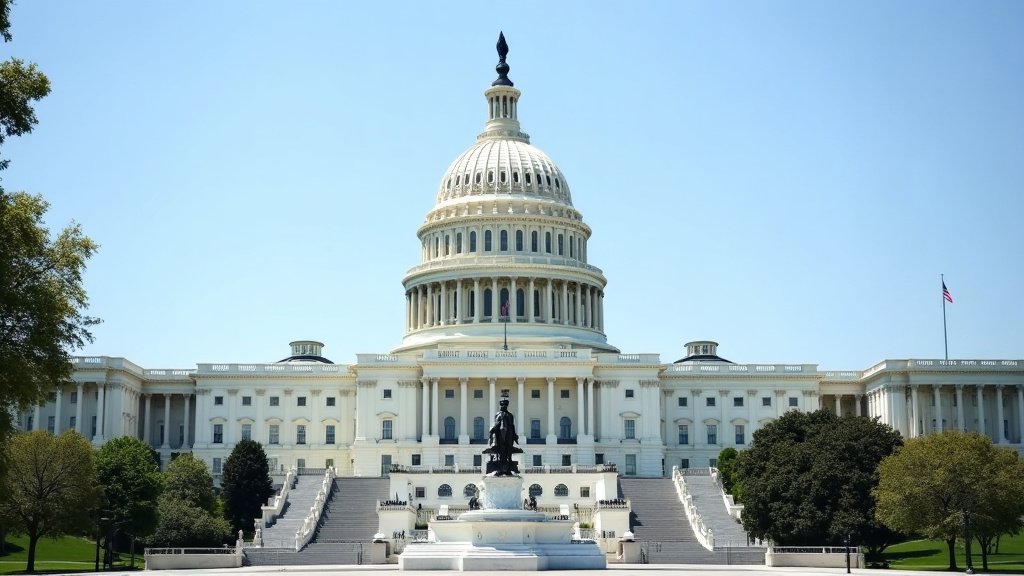
The political landscape of the United States shifted decisively this week as official results from North Carolina’s 5th District recount confirmed the victory of Democrat Chuck Hubbard over long-time Republican incumbent Virginia Foxx. With this result, the Democratic Party has officially cemented a commanding majority of at least 258 seats in the U.S. House of Representatives. This outcome represents a watershed moment in contemporary American politics, constituting the largest legislative sweep for the party since the 1992 election cycle, effectively recalibrating the balance of power in Washington and setting the stage for an ambitious legislative agenda. The confirmation brings an end to a protracted period of electoral uncertainty, providing a clear mandate that will define the upcoming congressional session.
The North Carolina Recount: Breaking the Firewall
For weeks, the nation’s attention remained fixed on the North Carolina 5th District, a constituency traditionally considered a Republican stronghold. The race between political newcomer Chuck Hubbard and entrenched incumbent Virginia Foxx remained too close to call on election night, eventually triggering a mandatory recount due to the narrow margin of votes. The recount process was a meticulous undertaking that involved bipartisan election officials, rigorous ballot auditing, and high-stakes legal scrutiny.
The final tally, which saw Hubbard edge past Foxx, served as the final domino to fall in a broader electoral wave. The reversal in the 5th District was not merely a local victory; it functioned as the critical tipping point that pushed the Democratic caucus past the 250-seat threshold and into the 258-seat territory. Analysts suggest that the shift in the 5th District reflects a changing electorate, pointing to shifting demographics and suburban trends that have consistently favored Democratic candidates in recent cycles. For Hubbard, the win is a defining moment, transitioning from a localized campaign to becoming a central figure in a historic legislative majority.
Analyzing the 1992 Comparison and Political Realignment
Political historians and analysts have been quick to draw parallels between this current sweep and the political environment of 1992. That year was defined by a massive realignment of voter preferences and a desire for structural change in the federal government. Similar to the current moment, the 1992 cycle was characterized by economic anxiety, a desire for fresh leadership, and a broad-based coalition that spanned across regional and demographic lines.


However, the 258-seat majority reached in this cycle is arguably more robust in terms of its legislative utility than the results of previous decades. With a 258-seat caucus, party leadership gains a significant buffer, allowing for the passage of complex, high-priority legislation even in the face of internal party dissent or aggressive minority opposition. This margin provides a level of durability to the Democratic agenda that has been absent in many recent, closely divided congresses. The shift reflects a wider trend of nationalization in congressional races, where local outcomes are increasingly driven by national policy preferences and party branding rather than solely the personal popularity of individual incumbents.
Legislative Implications: What the Majority Means
With a supermajority-adjacent position, the Democratic caucus faces the immediate challenge of managing high public expectations. A 258-seat majority changes the calculus of governance. It moves the needle from survival-mode legislative tactics—where every vote is a nail-biter—to proactive policy-making.
Key areas expected to see immediate legislative focus include comprehensive infrastructure development, climate and energy reform, and significant budgetary realignments aimed at addressing the national debt and fiscal policy. The expanded majority also changes the dynamic within committees, where Democrats will now hold a more comfortable advantage in staffing and investigative power. This shifts the internal structure of the House, allowing for faster advancement of bills from committee floors to the full House vote.
Furthermore, the margin provides the party with significant leverage in potential negotiations with the Senate and the Executive branch. As the legislative session begins, the unified front presented by a 258-seat caucus will likely force a more conciliatory approach from political opponents who realize that filibuster-proof or veto-proof majorities are not strictly necessary to exert significant political pressure. The challenge, however, will be maintaining cohesion across a diverse caucus that spans from progressive to moderate wings. Ensuring that these 258 members vote in unison on flagship legislation will be the true test of this historic majority.
FAQ: People Also Ask
How does this 258-seat majority impact the legislative process?
A majority of 258 seats significantly eases the path for passing legislation in the House. It provides party leadership with a cushion, allowing them to pass bills even if a handful of members dissent, effectively reducing the leverage of fringe factions within the party and enabling a more efficient legislative agenda.
Why was the North Carolina 5th District recount so critical?
The NC-5th recount was the final piece of the puzzle to secure the 258-seat milestone. Because the overall national margin was so slim across multiple competitive districts, every seat mattered. The flip from Republican to Democrat in this specific district acted as the deciding factor in surpassing the critical 250-seat mark.
How does the current political climate compare to 1992?
While 1992 was a watershed moment for party realignment, the current cycle is characterized by higher voter turnout and a more polarized electorate. Unlike 1992, where change was driven largely by economic shifts, this year’s sweep is defined by a combination of demographic shifts, intense partisan mobilization, and distinct, policy-driven ideological differences.
What are the immediate priorities for the new House majority?
With a comfortable majority, the House is expected to move quickly on priority legislation, including economic reform packages, infrastructure investment, and potential changes to healthcare policy. The focus will likely shift from defensive strategies to proactive, policy-heavy legislative efforts.