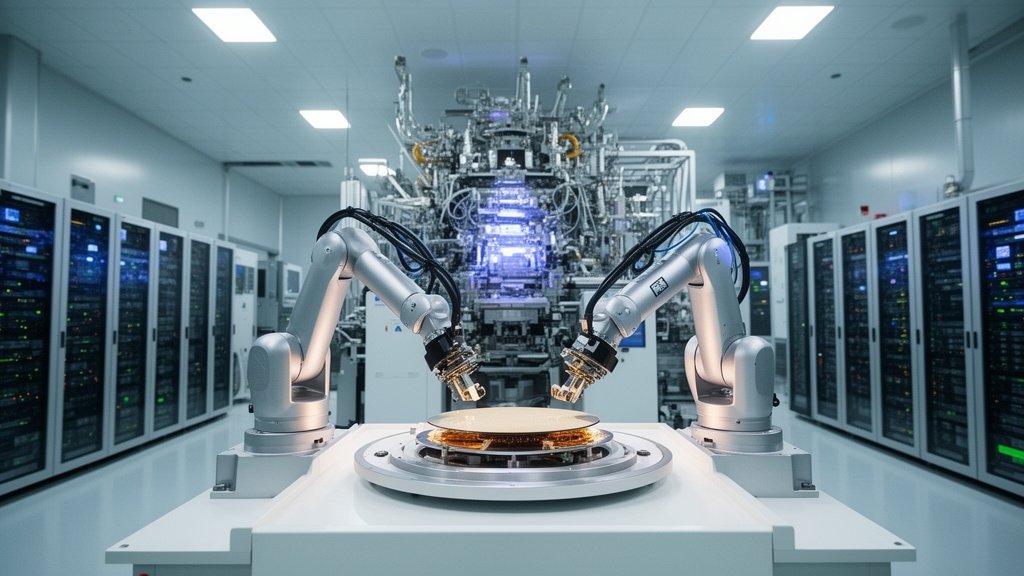
In a seismic shift reflecting the evolving landscape of global technology, Foxconn, formally known as Hon Hai Precision Industry Co., is rapidly redefining its core business. Long synonymous with being the primary manufacturer of Apple’s iPhones, the Taiwanese tech giant has now firmly pivoted towards the booming market of artificial intelligence (AI) servers. This strategic transformation is not merely a diversification but a fundamental reorientation, driven by the insatiable global demand for AI infrastructure, cloud computing, and generative AI.
A Strategic Transformation
For the first time in its history, Foxconn’s revenue from cloud and networking products, which prominently include AI servers, has surpassed that generated from its traditional smart consumer electronics division, encompassing iPhone assembly. In the second quarter of 2025, AI servers and related cloud services contributed an impressive 41% to Foxconn’s total revenue, outstripping the 35% from consumer electronics. This marks a significant departure from 2021, when consumer electronics accounted for 54% of the company’s revenue.
This deliberate strategic pivot, spearheaded by Chairman Young Liu since his leadership began in 2019, aims to mitigate the long-flagged vulnerability of over-reliance on the maturing smartphone market, which has seen slowing demand growth. Foxconn’s early investments in AI servers, dating back to 2002, have provided a crucial head start, positioning it to capitalize on the current AI boom.
The company’s financial projections underscore this dramatic shift. Foxconn anticipates its AI server revenue to surge by more than 170% year-on-year in the third quarter of 2025, with expectations for annual AI server sales to exceed NT$1 trillion (approximately US$33.35 billion) by the end of 2025. Furthermore, AI servers now constitute over half of Foxconn’s total server sales, boasting gross margins that are 10-15% higher than those from its traditional consumer electronics segment, signaling a more profitable future for the technology giant.
Powering the AI Revolution: Key Partnerships

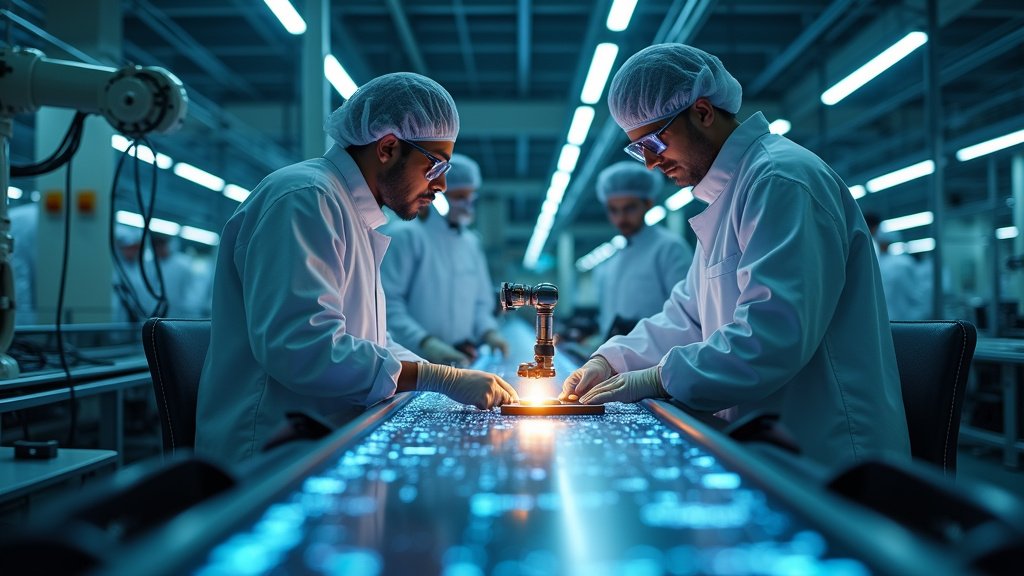
Foxconn’s strategic ascent in the AI server domain is deeply intertwined with its robust partnerships. A cornerstone of this strategy is its collaboration with Nvidia, the dominant force in AI chips. Foxconn has emerged as Nvidia’s largest server maker and is the sole assembler of its cutting-edge Blackwell-powered GB200 servers, which command a significant price premium due to their advanced capabilities for exascale computing.
Beyond assembly, the partnership extends to co-development of critical components like high-speed connectors, liquid-cooling systems, and power supplies for Nvidia’s chips. Foxconn is also collaborating with Nvidia and the Taiwan government to establish an AI factory supercomputer featuring 10,000 Nvidia Blackwell GPUs, aimed at significantly expanding AI computing resources for Taiwanese researchers and industries.
Looking to the future of manufacturing, Foxconn and Nvidia are actively exploring the deployment of humanoid robots in their new AI server production facility in Houston, Texas, with a target rollout in the first quarter of 2026. These robots are being trained for essential assembly tasks, marking a potential revolution in factory automation.
Further solidifying its presence in the enterprise hardware sector, Foxconn also maintains partnerships with other industry leaders such as Supermicro and Dell for AI server production. In a notable development, SoftBank recently acquired Foxconn’s Lordstown, Ohio facility for $375 million. However, Foxconn will continue to operate the plant, converting it to build AI servers to support SoftBank’s ambitious $500 billion Stargate AI data center project. Foxconn is also working with Google Cloud and has acquired a stake in TECO Electric & Machinery to enhance its modular data center and power infrastructure capabilities.
Implications for the Global Technology Landscape
This strategic pivot has profound implications, not only for Foxconn but for the entire global technology landscape. For Foxconn, it promises higher profitability due to the superior margins associated with AI servers, offering a vital diversification of its revenue streams away from the often volatile consumer electronics market.
While Apple remains a significant client, the shift means Foxconn is no longer solely defined by iPhone production. The move aligns with rumors that Apple itself may build its own AI servers, a development in which Foxconn could play a pivotal enabling role. This evolving relationship underscores a broader industry trend where Taiwanese manufacturers, including Foxconn’s competitors like Quanta Computer and Wistron Corp., are reorienting their focus toward AI server production.
Taiwan is increasingly solidifying its position as the indispensable hub for the AI revolution, accounting for over 90% of global AI server shipments. The substantial investments in new facilities across the U.S. (Texas, Mexico, Ohio) and India also highlight a strategic move towards geopolitical diversification, aiming to mitigate supply chain risks and cater to growing demand from North American clients.
Conclusion
Foxconn’s aggressive embrace of AI server manufacturing represents a pivotal moment in its nearly five-decade history, fundamentally redefining its role in the global tech ecosystem. From its origins in plastic parts to its long tenure as the backbone of smartphone production, Foxconn is now squarely positioned at the forefront of the AI industrial revolution. This forward-thinking strategy, driven by robust partnerships, technological innovation, and a keen eye on market demands, ensures Foxconn’s continued relevance and growth as it helps to build the critical infrastructure powering the future of artificial intelligence. This significant news underscores the dynamic nature of modern technology.