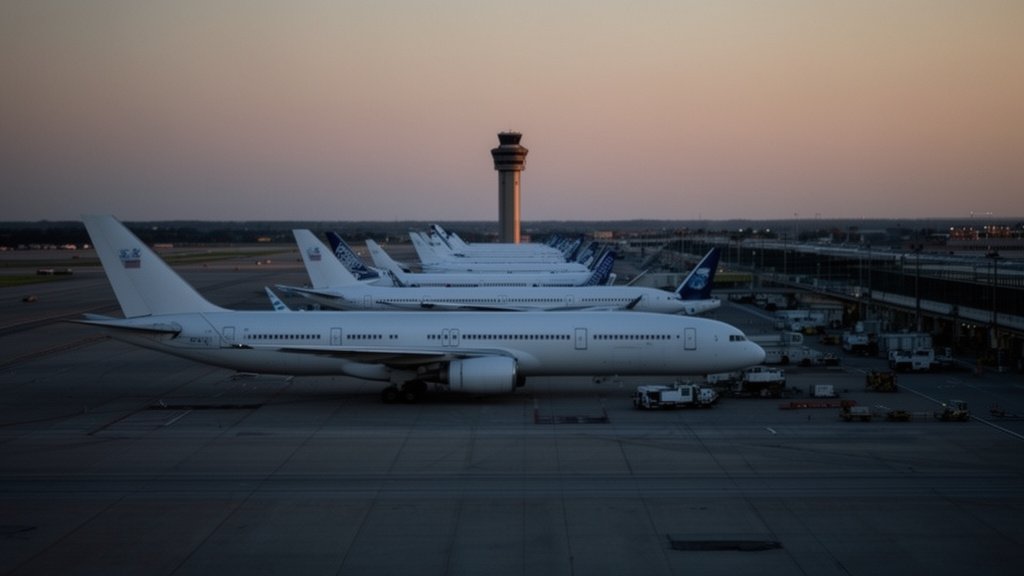
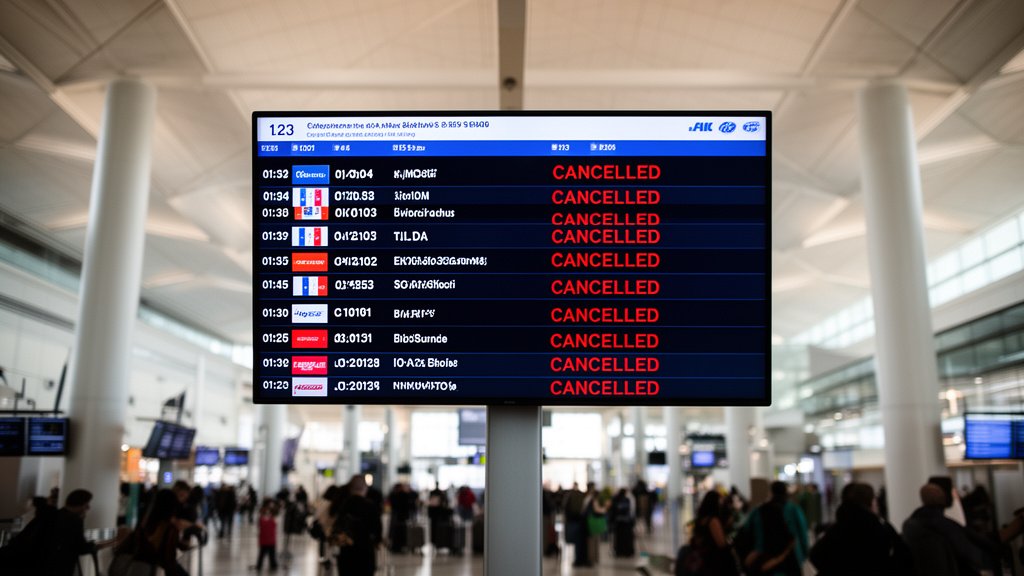
The Federal Aviation Administration (FAA) officially lifted its nationwide ground stop on November 13, 2026, bringing an end to a day of significant disruption for air travelers across the United States. While the skies are beginning to clear, the incident has ignited an urgent debate regarding the stability of the nation’s aviation communications infrastructure. According to preliminary assessments provided by the Trump administration, the grounding was not the result of a malicious cyberattack, but rather a catastrophic failure caused by the integration of modern, high-bandwidth aviation management software with the country’s aging, legacy ground equipment.
Key Highlights
- Nationwide Paralysis: On November 13, 2026, the FAA issued a mandatory ground stop for all domestic flights, citing a critical failure in aviation communications systems.
- The ‘Tech-Stack’ Conflict: Trump administration officials suggest that newly implemented air traffic management upgrades overwhelmed the capacity of outdated, decades-old aviation hardware, leading to a system-wide blackout.
- System Integrity Restored: As of the latest update, the FAA has successfully stabilized the primary systems, allowing air traffic control centers to resume normal operations.
- Modernization Pressure: The event has accelerated discussions in Washington regarding the need for a comprehensive overhaul of the national airspace infrastructure to prevent future fragility.
Anatomy of the November 13 Aviation Crisis
The events of November 13, 2026, unfolded with sudden intensity. In the early morning hours, regional and national air traffic control hubs began reporting intermittent data transmission failures. These failures quickly cascaded, affecting the systems responsible for delivering critical real-time flight notifications to pilots and ground crews. By mid-morning, the FAA had no choice but to initiate a nationwide ground stop, a rare and drastic measure designed to ensure the safety of aircraft already in the air while preventing others from departing into a potentially compromised communications environment.
The Infrastructure Paradox




At the core of the issue lies the “modernization paradox” currently facing the U.S. aviation sector. To increase flight efficiency, reduce congestion, and improve safety, the FAA has been incrementally deploying advanced software systems and data-routing protocols. These systems are designed to handle exponentially more data packets than the legacy hardware installed at regional airports and control centers across the country.
Trump administration spokespeople have clarified that the system failure occurred when these newer, data-heavy traffic management updates attempted to communicate with terminal infrastructure that, in some cases, dates back to the late 20th century. Essentially, the high-speed data stream required by modern flight navigation tools encountered a digital bottleneck. The resulting latency caused the legacy hardware to error out, effectively blinding the air traffic management interface. It is a stark reminder that in complex systems, the weakest link in the chain—often the oldest component—defines the operational limit of the entire network.
Economic and Logistical Ripple Effects
While the safety of the flying public was prioritized, the economic fallout of the November 13 ground stop was immediate and severe. Thousands of flights were canceled or delayed, leaving passengers stranded in terminals from major hubs like Hartsfield-Jackson Atlanta International Airport to smaller regional facilities. The airline industry, already operating on thin margins, faces a massive logistical challenge in re-accommodating travelers and repositioning crews and aircraft. Industry analysts estimate that the disruption could result in millions of dollars in losses, not only in operational costs but also in the long-term erosion of passenger confidence.
The Future of Aviation Modernization
The administration has signaled that this incident serves as a definitive catalyst for a faster modernization timeline. The strategy moving forward will likely focus on a synchronized hardware-and-software rollout rather than piece-meal upgrades. The primary goal is to ensure that future software deployments are stress-tested against the actual installed base of hardware, rather than idealized models. Aviation engineers are now being tasked with conducting a nationwide audit of legacy equipment to identify which components are most at risk of failure when interacting with modern data streams.
FAQ: People Also Ask
Why did the FAA implement a ground stop instead of just slowing down traffic?
Safety is the absolute priority in aviation. When the communications link between the FAA, ground crews, and aircraft becomes unstable or provides unreliable data, the risk of a miscommunication is too high. A ground stop is the standard procedure to “reset” the airspace, ensuring no planes are in a vulnerable position while engineers work to stabilize the underlying network.
Is it safe to travel now that the ground stop is lifted?
Yes. The FAA has confirmed that the underlying communications infrastructure issues were identified and addressed. While flight delays may persist for several days due to the massive backlog of rebooked passengers and out-of-position aircraft, the aviation safety systems themselves are fully operational and verified.
Will this happen again?
While technology outages can never be 100% eliminated, the FAA is currently prioritizing a comprehensive review of all interface points between legacy and modern systems. The administration has indicated that the lessons learned from the November 13 failure will be used to redesign the integration testing protocols for all future software rollouts.