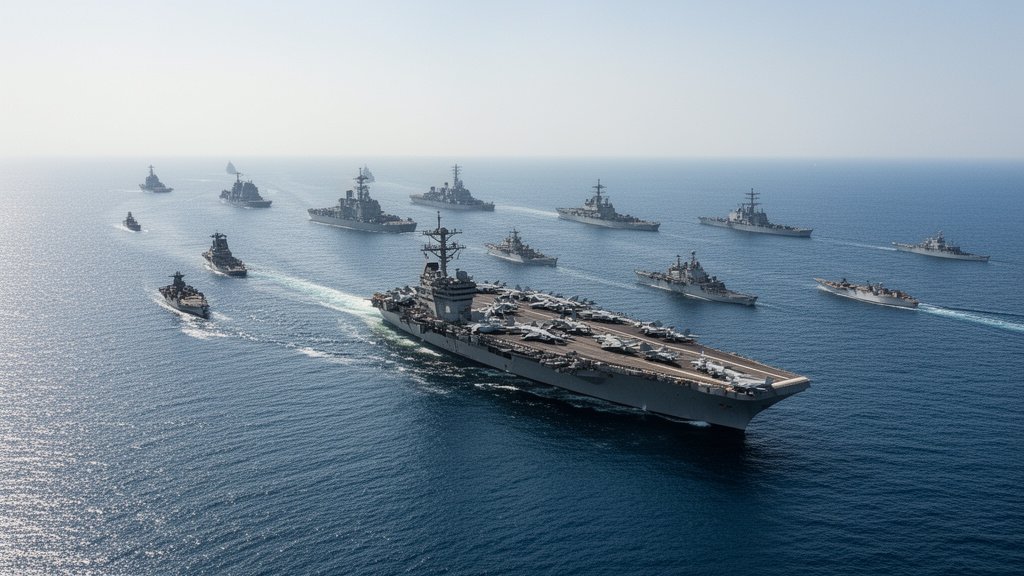
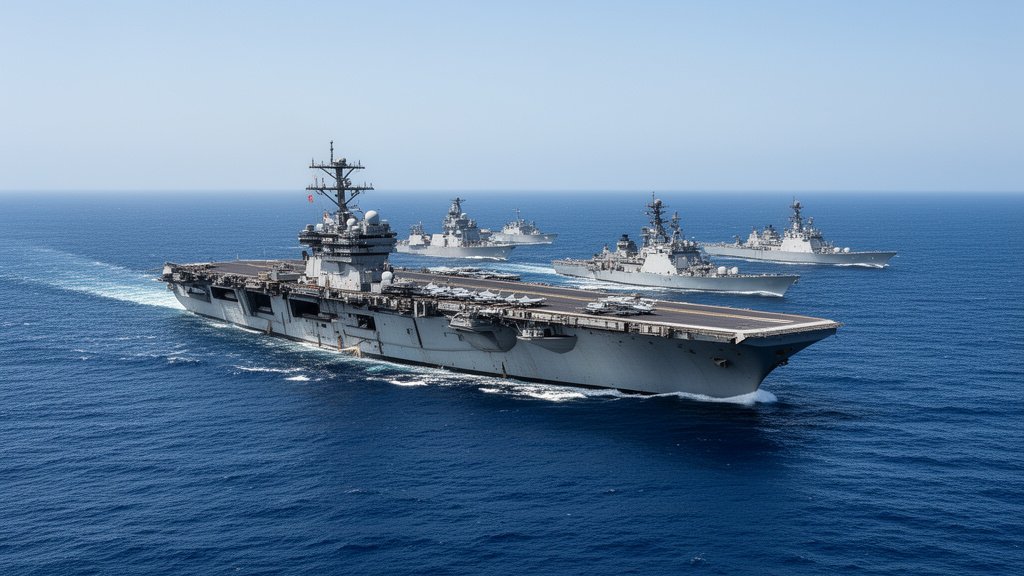
President Donald Trump has escalated his “maximum pressure” campaign against Tehran, formally demanding that NATO allies deploy warships to the Strait of Hormuz to secure vital oil supply routes. The push, aimed at countering what the White House characterizes as an Iranian blockade, has exposed deep fissures within the transatlantic alliance. While the U.S. views the stabilization of this global oil chokepoint as a collective security necessity, major NATO partners—including Germany, Italy, and Spain—have formally declined to participate in the U.S.-led naval initiative, effectively stalling the expansion of the maritime coalition.
Key Highlights
- The Demand: The Trump administration has explicitly called for NATO military assets to patrol the Strait of Hormuz to ensure freedom of navigation amid rising tensions with Iran.
- The Refusal: Major European powers, specifically Germany, Italy, and Spain, have officially ruled out contributing naval vessels to the U.S.-led maritime security construct, citing a preference for a European-led mission or diplomatic de-escalation.
- Strategic Stakes: The Strait of Hormuz facilitates the transit of approximately 20% of the world’s oil supply, making any disruption to this passage a direct threat to global energy market stability.
- The Conflict: The request stems from a series of incidents, including the seizing of oil tankers, which the U.S. has attributed to Iranian aggression, prompting a need for a robust international maritime response.
Geopolitical Chokepoint: The Battle for Maritime Security
The Strait of Hormuz is not merely a geographic location; it is the jugular vein of the global energy economy. With the U.S. pushing for a more assertive international presence, the friction between Washington and its European allies highlights a diverging strategy regarding how to best manage Iranian volatility. The Trump administration’s demand for NATO involvement represents a strategic pivot to multilateralize the burden of maritime security, yet the immediate rejection from Berlin, Rome, and Madrid underscores a reluctance among NATO members to be drawn into an escalation that could spiral into a wider regional conflict.
The Operational Divide: U.S. vs. European Strategy
The U.S.-led proposal centers on the International Maritime Security Construct (IMSC), a mechanism designed to enhance surveillance and security in the Persian Gulf. Washington argues that Iran’s interference with commercial shipping constitutes a global threat that warrants a unified NATO response. However, the refusal from Germany—a nation historically cautious regarding military projection in the Middle East—and other allies is rooted in the fear that aligning too closely with the U.S. “maximum pressure” campaign will undermine ongoing diplomatic efforts to preserve the Iran Nuclear Deal (JCPOA).
This diplomatic impasse has created a “mission void.” While the U.S. continues to patrol the region with its own assets, the absence of a unified NATO front limits the perception of collective deterrence. Critics of the European refusal argue that it leaves the Strait vulnerable, while supporters of the European stance maintain that independent surveillance missions are the only way to avoid the perceived “trap” of U.S. military escalation.
Economic Vulnerability and Global Markets
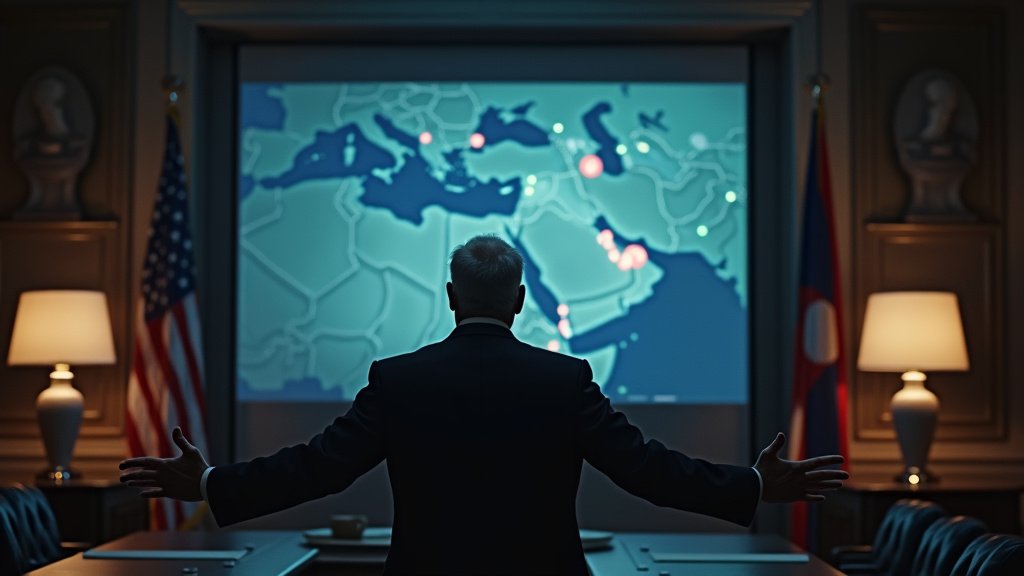


The economic implications of this standoff are severe. Energy markets are hyper-sensitive to geopolitical posturing in the Gulf. Even the perception that the Strait could be closed—or that naval escort is required for every vessel—drives up maritime insurance premiums and impacts global crude prices.
1. Insurance Inflation: Shipping companies face exponential increases in “war risk” premiums when transiting the Strait, costs which are ultimately passed down to consumers globally.
2. The 20% Factor: Because one-fifth of the world’s oil transits through this narrow passage, any prolonged disagreement between NATO members creates a “fear premium” in the futures market, destabilizing prices even in the absence of an active blockade.
3. Supply Chain Fragility: The standoff forces commercial fleets to potentially rely on a fractured security environment, increasing the likelihood of accidents or strategic misunderstandings between commercial vessels and regional naval forces.
Secondary Angles: Contextualizing the Crisis
Historical Precedent: The Tanker War
To understand the gravity of the current situation, one must look back to the 1980s “Tanker War” during the Iran-Iraq conflict. During that period, the U.S. launched Operation Earnest Will to protect Kuwaiti oil tankers. That historical parallel serves as a cautionary tale: American intervention often leads to deep, decade-long entanglements. European leaders, wary of history, are likely calibrating their responses based on the long-term political costs of such engagements.
The Future of NATO Autonomy
This dispute serves as a bellwether for the future of NATO. As European nations seek to establish their own “strategic autonomy,” they are increasingly willing to say “no” to Washington. The refusal regarding the Strait of Hormuz is not an isolated event but rather a structural shift in how European powers prioritize their own foreign policy objectives over automatic alignment with U.S. directives.
Energy Security vs. Military Presence
There is an inherent paradox in the administration’s request: while the U.S. demands more naval presence to ensure oil flow, the very act of increasing military density in the Strait may paradoxically increase the risk of an accidental naval clash. The future of this crisis likely depends on whether the U.S. can transition from a demand-based model to a coalition-building model that respects the strategic caution of its partners.
FAQ: People Also Ask
1. Why did Germany, Italy, and Spain refuse the U.S. request?
These nations are concerned that joining a U.S.-led naval coalition would be interpreted as a direct escalation against Iran, potentially damaging their ability to act as intermediaries and undermining the remaining diplomatic framework of the Iran Nuclear Deal.
2. What is the ‘Strait of Hormuz’ and why is it so important?
The Strait is the world’s most important oil chokepoint. It is the narrow passage connecting the Persian Gulf to the Gulf of Oman and the Arabian Sea, through which a significant percentage of the world’s oil is exported.
3. Is there currently a blockade of the Strait?
While Iran has not successfully achieved a total blockade, it has engaged in “gray zone” tactics, including seizing foreign-flagged tankers, which the U.S. categorizes as a de facto attempt to restrict freedom of navigation and intimidate global shipping.
4. What is the International Maritime Security Construct (IMSC)?
This is the U.S.-led initiative aimed at promoting maritime stability and ensuring safe passage for commercial shipping in the Persian Gulf, Strait of Hormuz, Bab el-Mandeb Strait, and the Gulf of Oman.