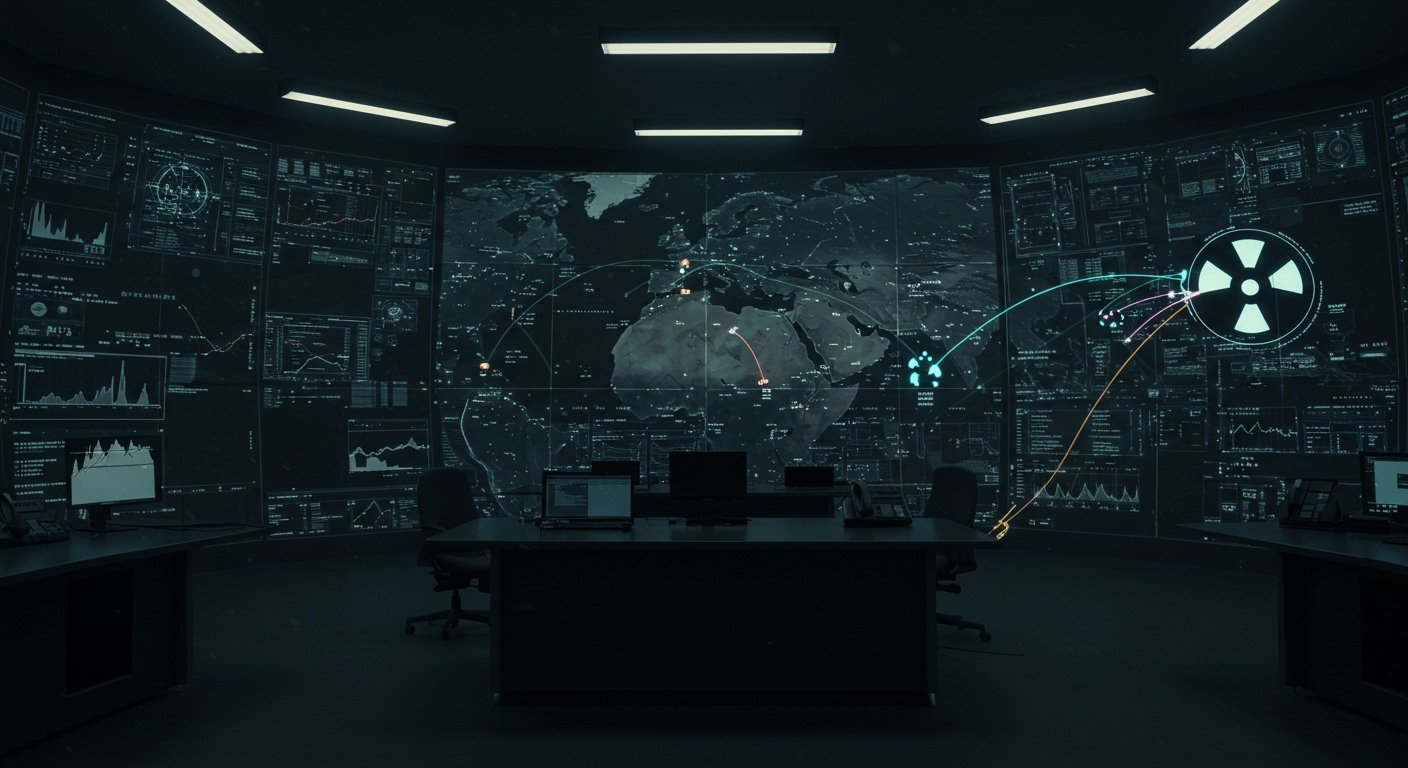
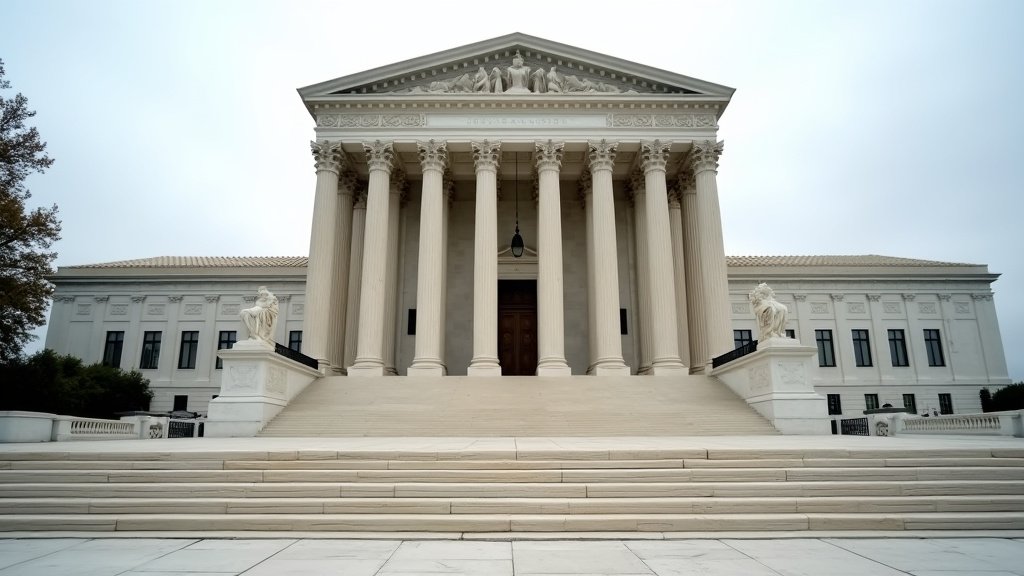
The Trump administration is escalating its scrutiny of the American media landscape, with senior officials within the Federal Communications Commission (FCC) issuing stark warnings that broadcasting licenses could be in jeopardy for outlets failing to align with the administration’s narrative on the U.S. conflict with Iran. FCC Chairman Brendan Carr has publicly admonished broadcasters, suggesting they “correct course” on their coverage, which the administration has labeled as “distortions” and “fake news.” This development marks a significant intensification in the administration’s ongoing battle with legacy media, moving beyond rhetoric into the sphere of regulatory oversight. Key Highlights: – FCC Chairman Brendan Carr has publicly threatened the broadcasting licenses of outlets critical of the U.S.-Iran conflict strategy. – The administration has characterized specific reports as “distortions” and “fake news,” pressuring newsrooms to alter their editorial stance. – The move highlights a growing tension between executive oversight and the First Amendment protections traditionally afforded to the press. – Legal experts are closely monitoring the situation for potential constitutional challenges regarding regulatory overreach. ## The Regulatory Squeeze on Media Freedom The recent statements from the FCC leadership have sent shockwaves through the media industry, raising fundamental questions about the extent of government power over private broadcasting entities. While the FCC has long held the authority to grant and renew broadcast licenses based on the “public interest, convenience, and necessity,” this latest directive suggests a pivot toward using licensing as a tool for ideological enforcement. ### The FCC’s Role in Media Licensing The FCC’s power to revoke or deny the renewal of a broadcasting license is an extreme measure, historically reserved for flagrant violations of public safety or technical standards. However, Chairman Brendan Carr’s public stance suggests that the definition of “public interest” may be expanding to include editorial alignment with administration objectives during times of geopolitical tension. For broadcasters, the license renewal process occurs periodically, and even the threat of an inquiry into a station’s editorial content is enough to create a “chilling effect,” where editors might preemptively sanitize coverage to avoid the threat of regulatory reprisal. ### Defining ‘Distortions’: The Administration’s Critique The administration’s central argument hinges on the assertion that current reporting on the conflict with Iran constitutes “distortions.” By framing critical coverage as “fake news,” the administration is attempting to shift the discourse from a debate about facts to a debate about legitimacy. The administration contends that certain news outlets are actively misrepresenting military strategy and geopolitical objectives in a way that undermines national security. However, media organizations argue that holding the executive branch accountable for its war strategy is a core function of the free press—not an act of misinformation. ### Broadcasting Freedom vs. Regulatory Compliance The tension is exacerbated by the unique nature of broadcast media, which utilizes the public airwaves. Unlike cable or internet-based media, broadcast television is subject to more stringent FCC regulations. The administration’s focus on broadcasters rather than cable networks suggests a strategic choice to target the platforms that arguably still hold the largest, most generalized audience reach. This creates a two-tier system of press freedom: one for the internet and cable, and a more constrained version for the broadcast spectrum. As the situation evolves, the battle line is being drawn between the government’s desire for a unified national voice and the press’s mandate to act as a watchdog, even—and perhaps especially—during times of war. ## Exploring Secondary Angles The ramifications of this regulatory pressure extend far beyond the immediate news cycle. To understand the broader impact, we must analyze the situation through several critical lenses. ### The First Amendment and the ‘Chilling Effect’ The most significant secondary angle is the potential for constitutional litigation. If the FCC were to actually move against a broadcaster’s license based on content, it would trigger a massive First Amendment challenge. Legal scholars argue that the government cannot use licensing as a mechanism for viewpoint discrimination. The mere threat, however, may cause a “chilling effect,” where news organizations voluntarily limit critical reporting to ensure their licenses remain intact. This form of self-censorship is often more insidious than direct government intervention because it is difficult to prove in court. ### Investor Confidence and Market Volatility Media conglomerates are publicly traded entities. The uncertainty regarding FCC licensing introduces a new layer of risk for investors. If major networks like ABC, CBS, or NBC were to be threatened with license revocation, it would significantly impact the valuation of their parent companies. The market has historically responded negatively to regulatory uncertainty, and institutional investors are likely to demand clarity on the limits of FCC power before the next renewal cycle begins. We may see a flight to safer, non-broadcast media assets as investors assess the regulatory climate. ### Geopolitical Narratives and Domestic Stability Finally, the administration’s strategy speaks to a deeper belief that controlling the domestic narrative is essential to winning an international conflict. By labeling critical reporting as “distortions,” the administration is attempting to inoculate its Iran strategy against domestic dissent. This suggests that the administration views the media as a key player in the information warfare space, necessitating, in their view, a managed output. This signals a departure from the traditional U.S. approach to wartime media management and sets a precedent for how future administrations might treat the press during times of global crises. ## FAQ: People Also Ask 1. Q: Does the FCC have the legal authority to revoke a license based on news content? A: Generally, the FCC does not have the authority to censor content or revoke licenses solely based on political viewpoints. However, the agency has broad discretion regarding “public interest” requirements, and the Trump administration is pushing the boundaries of how those standards are interpreted, leading to a legal gray area. 2. Q: Why is the administration targeting broadcasters specifically? A: Broadcasters rely on the public airwaves and are subject to stricter FCC oversight than cable or internet platforms. Targeting them is a strategic way to apply regulatory pressure where the government has the most leverage. 3. Q: Could this lead to a total shutdown of critical coverage? A: It is unlikely to lead to a total shutdown, but it is already resulting in more cautious editorial practices. Newsrooms are currently debating how to maintain journalistic integrity while navigating the reality of an emboldened regulatory environment.
Trending
Mexico Neutralizes Cartel Kingpin El Mencho; Nation Reels From Wave of Violence
Toy Story 5 Shatters Records: $160M Opening!
Trump Enacts Sweeping Healthcare Changes, Signs Bill Slashing Medicaid by $698 Billion
Ukraine Agrees to 30-Day Ceasefire Proposal, Securing Resumption of US Aid and Intelligence
Trump’s Proposed Policies Set to Dramatically Expand US National Debt, Reports Show
Trump Deploys National Guard to Los Angeles Amid Escalating Immigration Protests and Tensions
Trump Lifts Syria Sanctions After Riyadh Talks Amid Global Diplomatic Storms
U.S. House Approves Landmark Clean Air and Water Act, Setting Ambitious 2030 Targets
NextEra, Dominion Forge Energy Giant
Blake Lively Deposition in Justin Baldoni Case Rescheduled