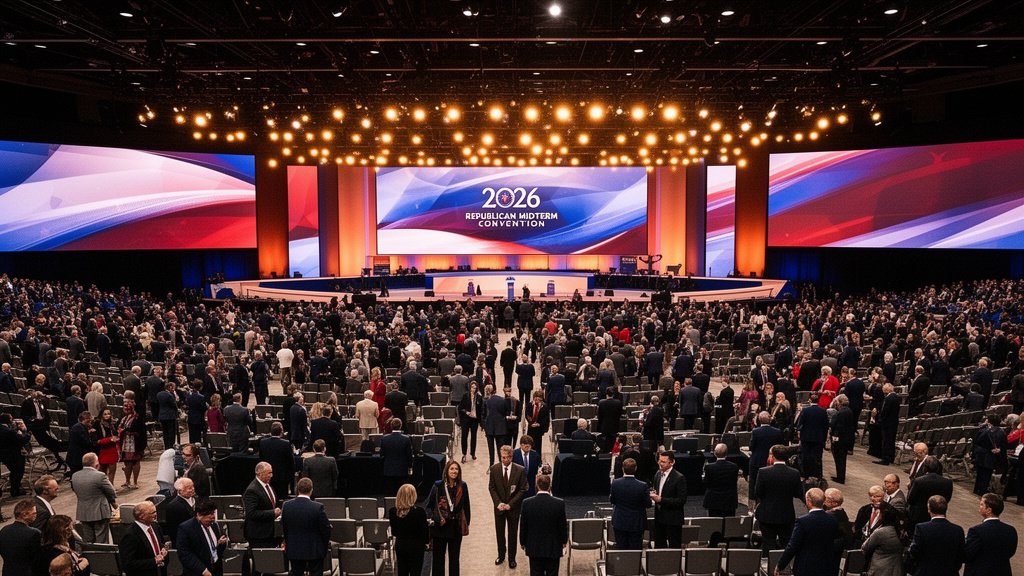
In an unprecedented tactical maneuver, the Republican Party has launched its first-ever national midterm convention in Dallas, bringing together party leadership and grassroots activists in a high-stakes effort to fortify their congressional majorities. Facing significant political headwinds and questions regarding national polling, the event serves as a critical reset for the GOP, aiming to unify a fragmented base and project strength ahead of the November elections. This gathering marks a departure from traditional midterm strategies, signaling a pivot toward more centralized, convention-style mobilization.
Key Highlights
- The Republican Party has convened its first-ever national midterm convention in Dallas to galvanize support for November’s critical elections.
- Former President Donald Trump is scheduled to deliver the keynote address, highlighting the party’s reliance on his continued influence despite broader national polling challenges.
- The convention aims to address the “slim majority” reality of the current congressional landscape, focusing on unified messaging regarding inflation, the economy, and border security.
- Strategists are using the two-day event to test new grassroots organizing tactics designed to overcome the typical enthusiasm gap often seen in non-presidential election years.
The Dallas Blueprint: A New Era of Midterm Strategy
The decision to host a national midterm convention is more than a logistical change; it is a fundamental shift in how the Republican Party approaches the cycle. Historically, midterm elections have been treated as decentralized affairs, where individual campaigns and local committees bore the brunt of the heavy lifting. By gathering in Dallas, the GOP is attempting to nationalize the midterm narrative, ensuring that voters across the country receive a consistent, high-impact message that transcends local legislative races. This centralized approach is intended to provide resources, data, and messaging discipline to candidates in toss-up districts where the margin for error is razor-thin.
Operationalizing the Base
Central to the Dallas effort is the mobilization of the “MAGA” base. Party leaders understand that in a midterm election, turnout is the singular metric that dictates victory. The convention is designed to act as a staging ground for digital and ground-game operations, training volunteers on the latest voter-contact technologies. By creating an event that feels as high-stakes as a presidential nominating convention, the GOP hopes to manufacture a sense of urgency that typically only surfaces when a White House seat is on the ballot. This is not just a policy conference; it is a tactical training camp for the upcoming November battle.
Navigating the ‘Trump Factor’ and National Polling


The shadow of Donald Trump remains the most significant variable in the GOP’s midterm calculus. While Trump’s base remains fiercely loyal, some Republican strategists have expressed concerns that his national polling numbers could alienate independent voters in suburban districts—precisely where the congressional majority will be won or lost. The Dallas keynote is intended to bridge this divide. By bringing Trump to the forefront, the party is betting that his ability to drive base turnout outweighs the potential pushback from moderate demographics.
The Balancing Act
For many candidates in tight races, the challenge is maintaining the support of the former President while simultaneously appealing to swing voters who may be fatigued by political polarization. The convention agenda features a mix of economic populist rhetoric and detailed legislative agendas, a “dual-track” strategy aimed at satisfying both the party’s core constituents and more pragmatic-minded voters. Whether this messaging can successfully navigate the complexities of suburban voter sentiment remains the central question of the event. The GOP is banking on the idea that economic anxiety will serve as a unifying force, superseding personal preferences regarding party leadership.
Economic Realities and Legislative Future
The core of the GOP’s argument in Dallas centers on the intersection of the national economy and legislative control. With inflation rates and cost-of-living concerns dominating the national conversation, Republican leadership is positioning the midterm election as a referendum on the current administration’s economic policies. The convention will highlight the party’s plans for tax reform, energy independence, and regulatory rollbacks—policy staples that the GOP believes will resonate with voters in every corner of the country.
Historical Context of Midterm Shifts
To understand the gravity of the Dallas event, one must look at the historical precedent of midterm “waves.” Historically, the party out of power makes gains during the first midterm election of an opposing presidency. The GOP is aiming to transform this historical pattern into a mandate. However, they face the unique challenge of having a highly energized opposition and a rapidly evolving digital electorate. The convention is not merely about looking backward at past failures or successes, but about establishing a forward-looking, aggressive platform that can withstand the inevitable scrutiny of the final sprint toward November.
FAQ: People Also Ask
Why is the GOP holding its first-ever midterm convention?
This convention is a response to the need for a more unified national message. By consolidating resources and strategy in one location, the party aims to help candidates in close races compete more effectively against better-funded opponents and combat historical midterm trends.
How does this event address the ‘Trump unpopularity’ narrative?
The party is using the convention to frame Trump’s presence as a galvanizing force for base turnout. The strategy relies on the belief that economic dissatisfaction will drive voters to the polls, regardless of individual perceptions of the former President, effectively making the election about policies rather than personalities.
What are the main policy pillars being promoted in Dallas?
The event focuses heavily on economic policy, including inflation control, energy sector expansion, and security-focused legislative initiatives. The goal is to provide every Republican candidate with a “policy toolkit” to use in their local districts.