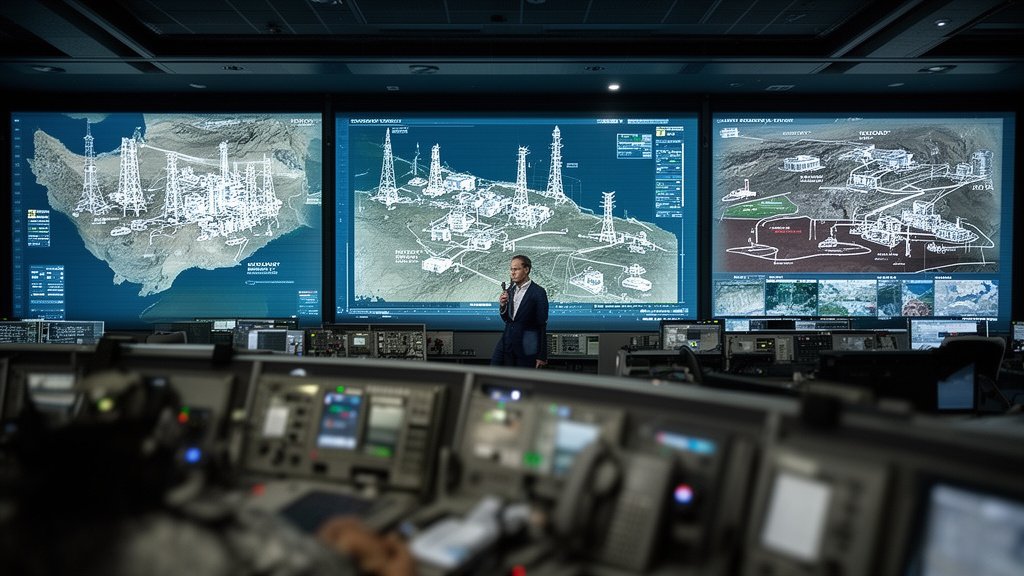
President Trump has issued Executive Order 14421, a decisive move that declares a national emergency to protect the security of the United States bulk-power system. By leveraging this authority, the administration aims to establish new federal safeguards designed to mitigate critical risks to the nation’s electrical infrastructure. This directive signals a strategic shift in how the federal government approaches the defense of vital assets, emphasizing the necessity of proactive intervention in an era of heightened technological and geopolitical instability.
Key Highlights
- National Emergency Declared: Formalizes a state of emergency to address vulnerabilities within the nation’s critical power infrastructure.
- Enhanced Authority: Grants new, specific powers to federal agencies to monitor, intercept, and mitigate risks to the bulk-power system (BPS).
- Strategic Infrastructure Defense: Focuses on securing high-voltage transmission lines, transformers, and control systems against foreign and domestic threats.
- Supply Chain Rigor: Mandates a comprehensive review of equipment and software utilized by utility providers to prevent the integration of malicious components.
Securing the Backbone of American Energy
The signing of Executive Order 14421 represents a significant escalation in the federal government’s effort to insulate the American energy grid from a myriad of evolving threats. The bulk-power system (BPS)—which includes the high-voltage transmission lines, large power transformers, and control systems that enable the movement of electricity across the country—has long been identified by security analysts as a potential point of failure. With the activation of this emergency order, the administration is prioritizing the hardening of these systems against cyber-attacks, physical sabotage, and supply chain interdiction.
The Anatomy of the Bulk-Power System
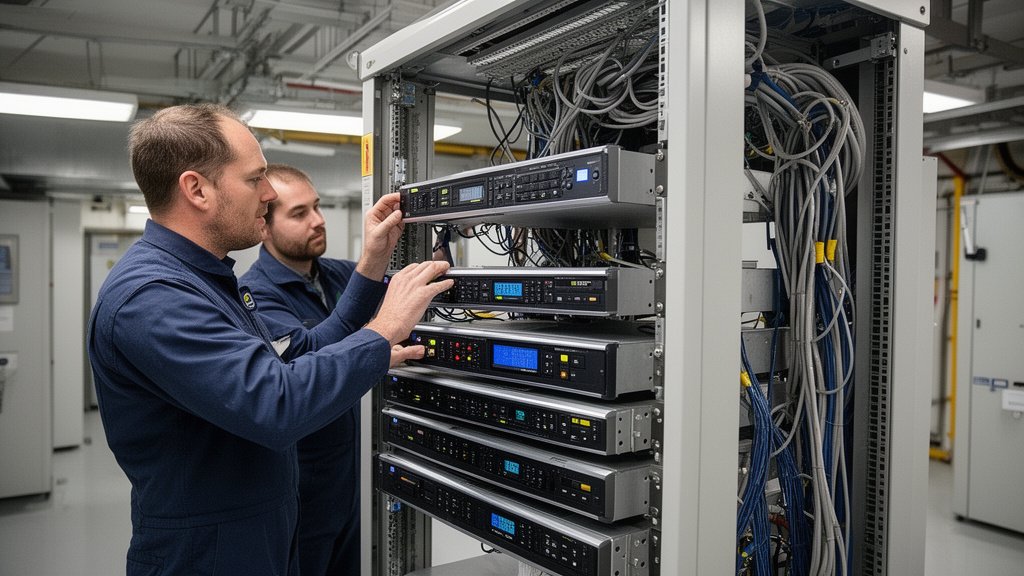
To understand the gravity of this order, one must recognize the complexity of the BPS. Unlike local distribution networks, the bulk-power system operates on a national and regional scale. It relies on a delicate balance of Supervisory Control and Data Acquisition (SCADA) systems and intricate load-balancing software. Under the new directive, the Department of Energy (DOE) is expected to spearhead rigorous inspection protocols. This involves auditing the provenance of high-voltage transformers and circuit breakers, many of which are manufactured abroad. By declaring a national emergency, the government gains the leverage necessary to force utility companies to replace components that are deemed to present an unacceptable security risk, effectively creating a “security-first” procurement model.
Mitigating Foreign Adversarial Threats




A secondary angle of critical importance is the geopolitical dimension of infrastructure security. For years, intelligence agencies have warned that adversaries could embed “logic bombs” or backdoor access points within the grid’s digital architecture. Executive Order 14421 provides the legal framework to isolate these risks. It enables the federal government to limit or prohibit the importation and installation of equipment that could be manipulated by foreign entities. This protectionism is not merely economic; it is a tactical necessity in the age of hybrid warfare. The administration’s focus is to ensure that no adversarial nation-state can leverage the interconnected nature of the grid to cause cascading, multi-state blackouts during a period of international tension.
Economic Implications for Utility Providers
While the directive is framed as a national security necessity, it introduces profound economic considerations for the private utility sector. Replacing legacy hardware is a capital-intensive undertaking. Industry stakeholders are now closely watching how the implementation of the EO will be funded. Will there be federal grants to offset the cost of hardware replacement, or will the financial burden fall on rate-payers? Analysts suggest that this order may spark a new “infrastructure gold rush,” where specialized U.S.-based manufacturers of transformers and secure control software see significant growth. Conversely, the increased regulatory scrutiny may lead to short-term volatility in energy stock portfolios as companies navigate the complexities of compliance with the new DOE standards.
The Future of Grid Resilience
Looking forward, Executive Order 14421 serves as a cornerstone for future grid modernization efforts. The focus is no longer just on capacity or environmental sustainability, but on “resilience by design.” This means moving away from a centralized, brittle grid architecture toward a more decentralized system. Future phases under this emergency declaration may include the integration of AI-driven threat detection systems that monitor real-time traffic across transmission lines. By fostering this tech-forward environment, the administration hopes to create a self-healing grid that can withstand both physical and cyber-attacks, ensuring that the U.S. maintains its industrial and economic momentum regardless of external threats.
FAQ: People Also Ask
Q: What is the primary purpose of Executive Order 14421?
A: The primary purpose is to address the national security risks inherent in the U.S. bulk-power system by declaring a national emergency, which empowers the government to restrict the use of foreign-sourced equipment and mandate security upgrades to protect critical energy infrastructure.
Q: Does this order affect my monthly electricity bill?
A: While the order does not immediately raise rates, the requirement for utility providers to upgrade infrastructure may lead to long-term cost adjustments. Whether these costs are absorbed by the utilities, subsidized by the federal government, or passed to consumers remains a key point of ongoing analysis.
Q: What constitutes the ‘bulk-power system’?
A: The bulk-power system includes the generation facilities and high-voltage transmission lines (typically 100kV or higher) that transfer electricity from power plants to local distribution grids. It is the “interstate highway system” of the electrical grid.
Q: How does this order differ from previous energy security initiatives?
A: Unlike previous guidelines that were often voluntary or sector-specific, the declaration of a ‘national emergency’ elevates this issue to a top-tier security priority, granting federal agencies more binding authority to compel compliance from private industry providers.