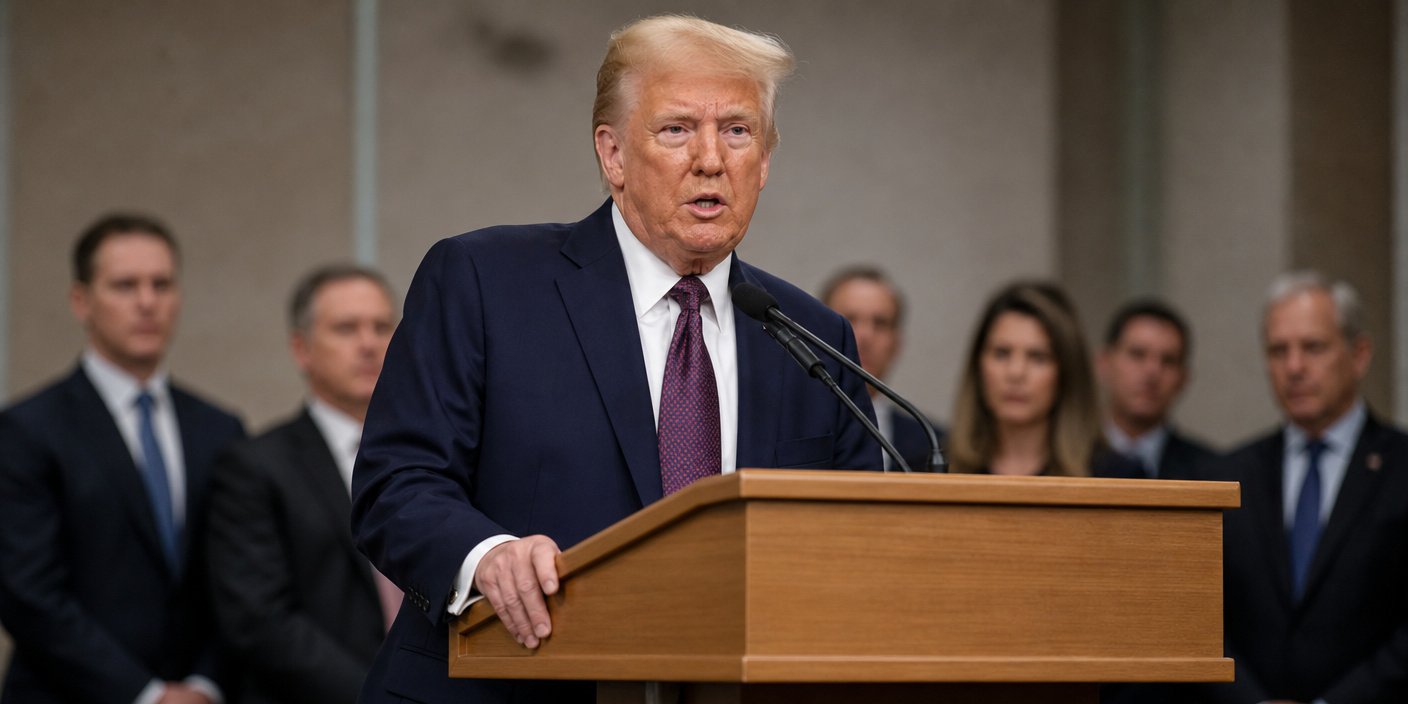
President Donald Trump has officially announced a sweeping, multi-phase agreement aimed at brokering a lasting peace in Gaza, contingent on the full disarmament of Hamas and the subsequent withdrawal of Israeli forces from the territory. The proposal, revealed after intensive closed-door negotiations, outlines a structured pathway intended to transition the region from active conflict toward a long-term stabilization framework. While the White House has framed this as a cornerstone of its current Middle East foreign policy, the deal faces significant hurdles regarding verification, enforcement, and the deep-seated skepticism of both regional powers and internal stakeholders.
Key Highlights
- Multi-Phase Structure: The agreement is categorized into three distinct phases: immediate ceasefire, phased disarmament of Hamas, and the total withdrawal of Israeli Defense Forces (IDF).
- Disarmament Mandate: A central requirement is the full surrender of heavy weaponry and the dismantling of militant infrastructure, to be overseen by an international monitoring coalition.
- Israeli Withdrawal: The deal mandates a staged withdrawal of Israeli forces from Gaza, tied directly to milestones in disarmament and security assurances.
- Stabilization Goals: The ultimate objective of the deal is to shift Gaza from a conflict zone to a monitored, non-militant administrative entity, with promises of significant reconstruction aid.
The Roadmap to Stability: Analyzing the Trump Administration’s Gaza Proposal
The announcement from the White House represents a significant pivot in the approach to the Gaza crisis. By centering the proposal on a rigid, phase-based structure, the administration is attempting to solve the “chicken and egg” dilemma that has plagued previous peace efforts: whether security (disarmament) or sovereignty (withdrawal) should come first. This plan necessitates that both occur in synchronized, verified steps.
The Mechanics of the Multi-Phase Agreement
The deal is designed with specific operational benchmarks. Phase One focuses on a verified ceasefire, creating the environment necessary for humanitarian aid to flow unimpeded. Phase Two, the most contentious, requires Hamas to initiate the handover of its primary ballistic and heavy offensive capabilities. The third phase focuses on the full extraction of IDF personnel from the perimeter and interior of Gaza, contingent upon the successful completion of the previous phases. This sequencing is intended to build “trust in intervals,” a concept often advocated by diplomatic strategists but rarely successfully implemented in the region.
The Disarmament Dilemma: A Historical Challenge




Disarmament is the lynchpin of the deal, but it is historically the most difficult component to execute. Previous attempts to neutralize militant groups in the region have often failed due to a lack of credible enforcement mechanisms. To address this, the current proposal suggests the utilization of neutral, third-party international monitors. However, analysts point out that “disarmament” is a fluid term. Does it include underground tunnel networks? Does it encompass small-arms caches hidden within civilian infrastructure? The definition of what constitutes a successfully “disarmed” Gaza will likely become the primary flashpoint for debate in the coming weeks. The skepticism remains that without a robust, well-funded enforcement body—which has yet to be finalized—compliance will be voluntary at best and performative at worst.
Strategic Withdrawal and Border Security
For the Israeli government, the prospect of withdrawing forces from the Gaza Strip is intrinsically linked to the assurance of border security. The Trump administration’s plan reportedly includes “smart border” technologies and surveillance guarantees to ensure that a withdrawal does not create a power vacuum that could be exploited by other regional proxies. The challenge here is balancing the Israeli requirement for an impenetrable border with the Gazan desire for territorial sovereignty and economic mobility. The proposal aims to use economic reconstruction aid as a carrot to incentivize adherence, but the long-term impact on the regional balance of power remains unclear.
Geopolitical Realignment and Future Predictions
The success of this agreement does not happen in a vacuum. It requires the tacit, if not active, cooperation of regional power brokers, including Egypt, Qatar, and other nations that maintain channels with the various factions in Gaza. If this deal proceeds, it could lead to a significant realignment of alliances in the Middle East. However, the potential for spoilers is high. Internal dissent within Hamas regarding the disarmament clauses and potential political fallout within the Israeli Knesset regarding the risks of withdrawal remain the primary threats to the deal’s longevity. Experts suggest that the next 90 days will be critical; if the initial phases of the disarmament are not met with tangible, documented results, the entire framework risks collapsing into the status quo of intermittent conflict.
FAQ: People Also Ask
What are the main risks associated with the disarmament of Hamas?
The primary risk is the potential for a power vacuum. Without a clearly defined, legitimate governing authority ready to step in immediately, the disarmament could lead to internal power struggles between rival factions in Gaza, potentially exacerbating the humanitarian crisis rather than solving it.
Who will monitor the disarmament process?
While specifics are being finalized, the plan proposes an “International Monitoring Coalition.” This is expected to be a group of neutral nations and international agencies capable of verifying the handover of weaponry and the dismantling of military infrastructure through on-the-ground inspections and satellite surveillance.
How does this deal affect Israeli security concerns?
The deal attempts to address Israeli security concerns through a synchronized withdrawal. This means Israeli forces would only pull back as specific, verified disarmament milestones are met, ensuring that the withdrawal is not immediate or unconditional, thereby attempting to minimize the risk of a renewed militant presence.
Is reconstruction aid contingent on the deal’s success?
Yes. The administration has indicated that large-scale reconstruction aid and economic development packages for Gaza are explicitly tied to the successful, verifiable implementation of the disarmament phases. This is intended to provide a powerful economic incentive for compliance.