Skip to content
Trending
December 16, 2025Major Business News: Manufacturing Sector Surges, Shows Record Optimism in Q4 2025 Survey March 13, 2026Judge Slams DOJ, Quashes Subpoenas in Jerome Powell Probe January 28, 2026Federal Officers Fired Shots in Alex Pretti Encounter, DHS Confirms Amidst Scrutiny May 2, 2025US Measles Cases Surge Past 900, CDC Reports Widespread Outbreaks Driven by Unvaccinated June 26, 2025US Economy Contracts 0.5% in Q1 2025, Driven by Import Surge Ahead of Tariffs July 6, 2025Crisis Deepens in Texas as Flash Floods Claim 43 Lives, 15 Children Among Dead; Search Underway for 27 Missing Camp Mystic Campers April 10, 2025Trump Announces Sudden Tariff Policy Shift: 90-Day Pause for Many Nations, 125% Levy Slapped on China June 28, 2026Survivors & Faith Leaders Target ICE Center June 18, 2026US & Iran Finalize Key MOU April 11, 2026Vance and Iran Envoys Meet in Pakistan Amid Ceasefire Crisis
  • Home
  • Top Stories
  • National News
  • Health
  • Business
  • Tech & Innovation
  • Entertainment
  • Politics
  • Culture & Society
  • Crime & Justice
  • Editorial
  • Home
  • Top Stories
  • National News
  • Health
  • Business
  • Tech & Innovation
  • Entertainment
  • Politics
  • Culture & Society
  • Crime & Justice
  • Editorial
  • Blog
  • Forums
  • Shop
  • Contact
  Tech & Innovation  AI’s Deep Impact: How GPUs Are Reshaping the Core Architecture of Global Computing
Tech & Innovation

AI’s Deep Impact: How GPUs Are Reshaping the Core Architecture of Global Computing

Jessica MoralesJessica Morales—March 17, 20254
FacebookX TwitterPinterestLinkedInTumblrRedditVKWhatsAppEmail

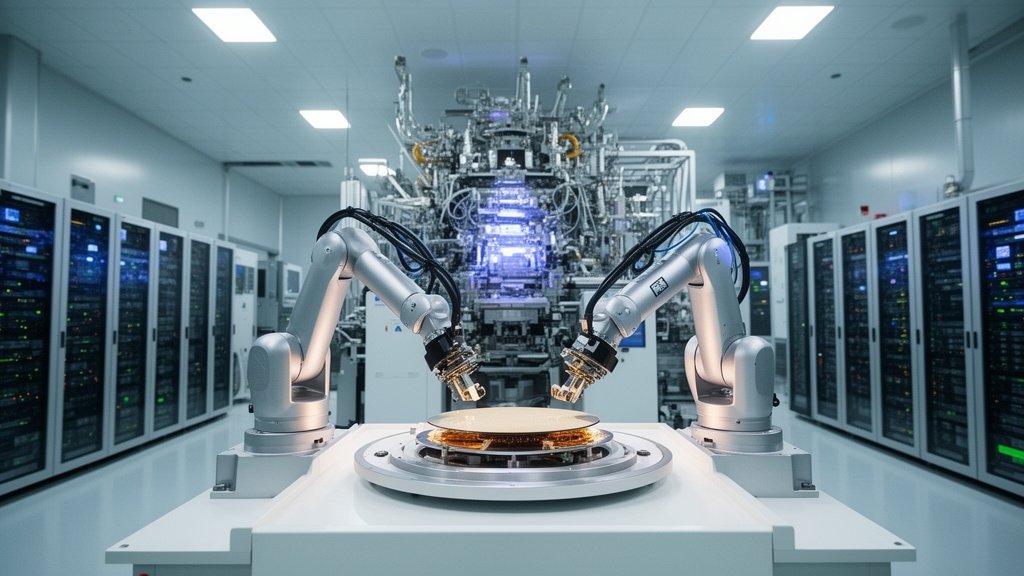
The global pursuit of artificial intelligence is initiating a fundamental transformation in the underlying architecture of computer systems worldwide. This profound shift is principally driven by the intensive computational demands inherent in developing and operating advanced AI models, creating an unprecedented need for specialized processing capabilities.

At the heart of this architectural revolution lies the graphic processing unit, or GPU. These chips, originally conceived and designed primarily for rendering complex visuals in video games, have found a new and central role in the age of artificial intelligence. Their design, which allows for the parallel processing of numerous computations simultaneously, makes them exceptionally well-suited for the mathematical operations critical to training and running modern AI algorithms.

The AI Imperative and the Rise of the GPU

The escalating global race to achieve breakthroughs in artificial intelligence necessitates computing power far exceeding that of traditional systems optimized for sequential tasks. AI workloads, particularly in machine learning and deep learning, involve processing vast datasets and performing millions, if not billions, of parallel calculations. This is precisely where the GPU excels, providing the necessary horsepower efficiently.


More stories

NASA Confirms Axiom 4 Mission Rescheduled to June 25, Clearing Path for Historic International Crew Flight to ISS

June 24, 2025

India Faces Critical AI Skills Gap: Report Forecasts Need for 1 Million Professionals by 2026

June 2, 2025

August 25, 2025: Tech Giants Forge Major AI Deals, Quantum Security Advances, and Supercomputing Power Surges

August 25, 2025

Elon Musk Unveils ‘Imagine’ Feature in Grok AI, Challenging OpenAI and Google in Text-to-Video Technology

August 2, 2025

This intense demand has prompted technology companies to pivot their infrastructure strategies dramatically. They are now focused on the dense packing of GPUs into specialized computing units. This goes far beyond simply adding GPUs to existing servers; it involves designing entirely new systems specifically optimized for the unique requirements of AI computation.

Engineering the AI Supercomputer

This concerted effort by technology giants is leading directly to the creation of a new category of supercomputer. These aren’t the general-purpose high-performance computing clusters of the past, but rather systems purpose-built for the AI era. These specialized machines are characterized by their unprecedented scale and density of GPUs.

Remarkably, these new supercomputers can consist of systems featuring up to 100,000 chips. These chips, primarily GPUs along with necessary support processors and memory, are not merely placed side-by-side but are intricately interconnected within massive data centers. The level of interconnection required to allow these tens of thousands of chips to work cohesively on a single AI task is a significant engineering challenge.

The architecture of these systems – the dense packing of GPUs, the sheer number of chips involved, and their high-speed interconnection – is meticulously designed to facilitate one primary objective: the development and operation of advanced AI models. This includes everything from the initial, computationally expensive training phases to the subsequent deployment and operation of sophisticated AI systems.

Building on Decades of Digital Infrastructure

It is important to view this current transformation not in isolation, but as the next evolutionary step building upon previous large-scale infrastructure investments. The trend of constructing these massive, GPU-dense supercomputers builds directly upon more than two decades of global data center construction undertaken by major technology companies. These companies have spent years and billions of dollars building out the physical and network infrastructure necessary to support the digital age.

The existing global network of data centers provides the physical space, power, cooling, and network connectivity required to house and operate these new, power-hungry AI supercomputers. The prior investment in establishing this digital infrastructure has created the necessary foundation, allowing technology companies to now focus their resources on the specialized computing architecture needed for AI.

The scale of investment by major technology companies in this new AI-centric computing infrastructure underscores the strategic importance they place on leading the global AI race. This shift represents a significant capital expenditure and engineering effort, redirecting resources towards building the computational backbone required for the next generation of artificial intelligence.

In conclusion, the global drive for artificial intelligence is not merely about software algorithms or data; it is fundamentally restructuring the physical hardware and architecture that powers the digital world. By repurposing and densely packing GPUs – chips initially intended for gaming – into colossal, interconnected systems of up to 100,000 chips within existing data center infrastructure, technology companies are engineering a new class of supercomputer specifically optimized for AI. This transformation, building upon two decades of global data center expansion, highlights the profound and far-reaching impact of AI on the very foundations of computing.

FacebookX TwitterPinterestLinkedInTumblrRedditVKWhatsAppEmail

Jessica Morales

AI Drives Computing Revolution: GPUs Power a New Era of Supercomputers
Wall Street Extends Rebound as Stocks Gain, Intel Surges; Fed Meeting Looms
Related posts
  • Related posts
  • More from author
Nokias AI RAN Platform Boosts Network Capacity
Tech & Innovation

Nokia’s AI-RAN Platform Boosts Network Capacity

July 15, 20260
Techs Next Frontier Beyond AI to Real World Impact
Tech & Innovation

Tech’s Next Frontier: Beyond AI to Real-World Impact

June 23, 20260
SoftBank Taps OpenAI for Cybersecurity Leap
Tech & Innovation

SoftBank Taps OpenAI for Cybersecurity Leap

June 16, 20260
Load more
Read also
Politics

Trump Unveils Multi-Phase Gaza Peace Pact: Disarmament and Withdrawal Framework

July 31, 20260
Entertainment

Andrew Garfield Defends ‘Artificial’ Amid Distribution Shakeup

July 31, 20260
Business

Kospi Rockets 17.9% in Record-Breaking AI Chip Rally

July 31, 20260
National News

Trump Unveils Gaza Peace Plan: Hamas Disarmament Accord

July 31, 20260
Top Stories

Ukraine Under Siege: Deadly Strikes Hit Lviv Amid Global Tension

July 30, 20260
Editorial

Lockheed Martin Secures $53.8B Landmark PAC-3 Missile Contract

July 30, 20260
Load more

Recent Posts

  • Trump Unveils Multi-Phase Gaza Peace Pact: Disarmament and Withdrawal Framework
  • Andrew Garfield Defends ‘Artificial’ Amid Distribution Shakeup
  • Kospi Rockets 17.9% in Record-Breaking AI Chip Rally
  • Trump Unveils Gaza Peace Plan: Hamas Disarmament Accord
  • Ukraine Under Siege: Deadly Strikes Hit Lviv Amid Global Tension

Recent Comments

No comments to show.
Social networks
FacebookLikes
X TwitterFollowers
PinterestFollowers
InstagramFollowers
YoutubeSubscribers
VimeoSubscribers
Popular categories
  • Top Stories584
  • National News321
  • Editorial292
  • Politics275
  • Business273
  • Entertainment251
  • Crime & Justice251
  • Health214
  • Tech & Innovation203
  • Culture & Society199
  • Uncategorized2

Trump Unveils Multi-Phase Gaza Peace Pact: Disarmament and Withdrawal Framework

July 31, 2026

Andrew Garfield Defends ‘Artificial’ Amid Distribution Shakeup

July 31, 2026

Kospi Rockets 17.9% in Record-Breaking AI Chip Rally

July 31, 2026

Trump Unveils Gaza Peace Plan: Hamas Disarmament Accord

July 31, 2026

Ukraine Under Siege: Deadly Strikes Hit Lviv Amid Global Tension

July 30, 2026

Awards Season Culminates: Previewing the 97th Academy Awards and Weekend Entertainment Options

4534 Comments

S&P 500 Nears Record as Nasdaq Hits Three-Week High; Major Indexes Post Strong Weekly Gains on February 14, 2025

779 Comments

Google Introduces Premium AI Ultra Subscription Globally: Advanced Capabilities and Pricing Details Emerge

771 Comments

Trump Rallies GOP on Capitol Hill Amidst Doubt for Sweeping Domestic Policy Bill

582 Comments

Future of Telecom: How AI and 5G Convergence is Driving Innovation

542 Comments
    © Copyright 2025, All Rights Reserved
    • About
    • Privacy
    • Contact