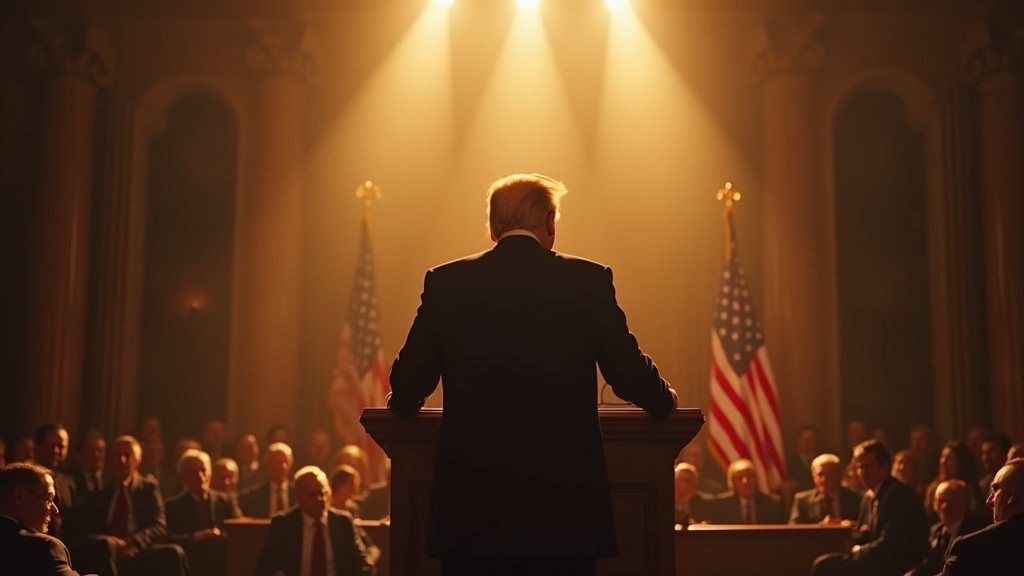
The American political landscape is currently dominated by a series of critical developments, including a deepening government shutdown, a high-stakes special election in California concerning congressional redistricting, and the commencement of a crucial Supreme Court term that promises to tackle some of the nation’s most contentious issues. These interwoven events underscore a period of significant division and intense political maneuvering.
Government Shutdown Intensifies as Partisan Impasse Continues
The federal government has been operating under a partial shutdown since October 1, 2025, marking its sixth day as of October 6. The lapse in funding stems from a failure by Republican and Democratic lawmakers to reach an agreement on appropriations legislation for the upcoming fiscal year. Key disagreements revolve around federal spending levels, proposed foreign aid rescissions, and debates over health insurance subsidies.

President Donald Trump has placed the blame squarely on Democrats, characterizing the shutdown as “Democrat-induced” and signaling that layoffs are already occurring due to the impasse. The shutdown has led to the furlough of approximately 800,000 federal employees, with an additional 700,000 working without pay, creating financial uncertainty for countless American families. Military personnel, despite continuing their duties, are also working without pay, a situation that has strained military families and led to scaled-back support services.
Amidst this crisis, President Trump attended a ceremony marking the U.S. Navy’s 250th anniversary on October 5. While honoring the Navy, Trump used the occasion to criticize his political opponents and assure service members that their pay would be forthcoming, describing the event as a “rally”. The White House has warned that mass layoffs could become a reality if negotiations fail to break the deadlock.
California’s Redistricting Vote: A Battle for House Control
Simultaneously, California is holding a special election on November 4, 2025, to vote on Proposition 50, a ballot measure that could dramatically alter the state’s congressional district maps. Spearheaded by Governor Gavin Newsom, this initiative seeks to temporarily bypass the state’s independent redistricting commission and allow the Legislature to draw new congressional district lines for the 2026, 2028, and 2030 election cycles.
Governor Newsom has framed this effort as a direct response to Republican-led redistricting initiatives in states like Texas, which are designed to create more Republican-leaning districts and bolster the GOP’s majority in the U.S. House of Representatives. The California proposal aims to counter these moves by creating more Democratic-friendly districts, potentially flipping several seats and influencing the balance of power in Congress. The outcome of this vote is seen as a crucial factor in the upcoming midterm elections and a significant move in the ongoing national redistricting war. The proposition has attracted tens of millions of dollars in campaign spending, with figures like former President Barack Obama supporting it and former Governor Arnold Schwarzenegger opposing it.
Supreme Court Opens Term with Landmark Cases
On October 6, 2025, the U.S. Supreme Court convenes for its new term, with a docket packed with cases that could profoundly shape American law and policy. Several cases directly involve policies and actions of the Trump administration, alongside significant social and election-related issues.
Key cases include challenges to the legality of President Trump’s tariffs imposed under emergency powers, raising questions about presidential authority and congressional delegation. The Court will also examine the use of race in drawing congressional districts, specifically a case from Louisiana concerning the Voting Rights Act and potential violations of the 14th and 15th Amendments. Additionally, the justices will hear arguments on a Colorado law banning “conversion therapy” for minors, testing First Amendment free speech protections, and state laws restricting transgender athletes in women’s sports. These cases, along with others concerning executive power and campaign finance, signal a term that will grapple with deeply divisive issues central to American politics and society.
As the government shutdown persists and these critical political battles unfold, the nation watches closely for resolutions that will define the direction of American politics and governance in the coming years.