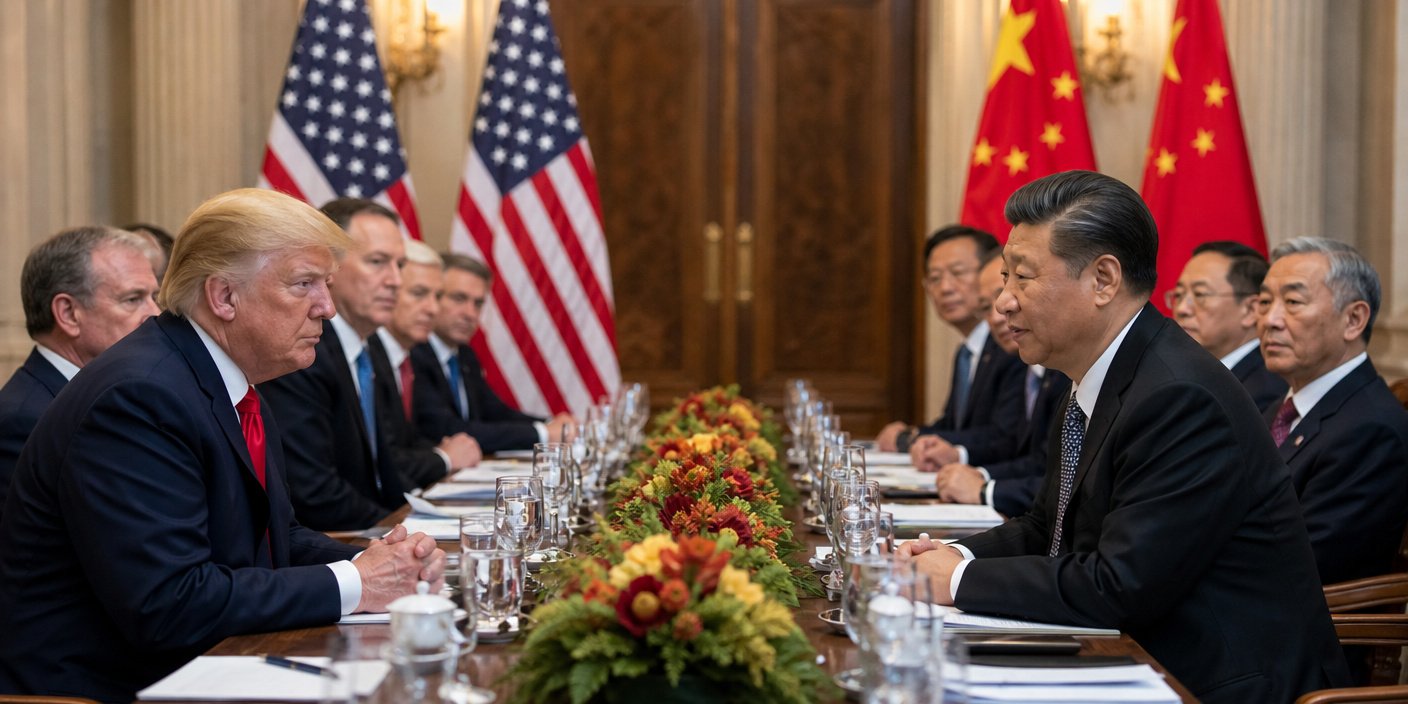
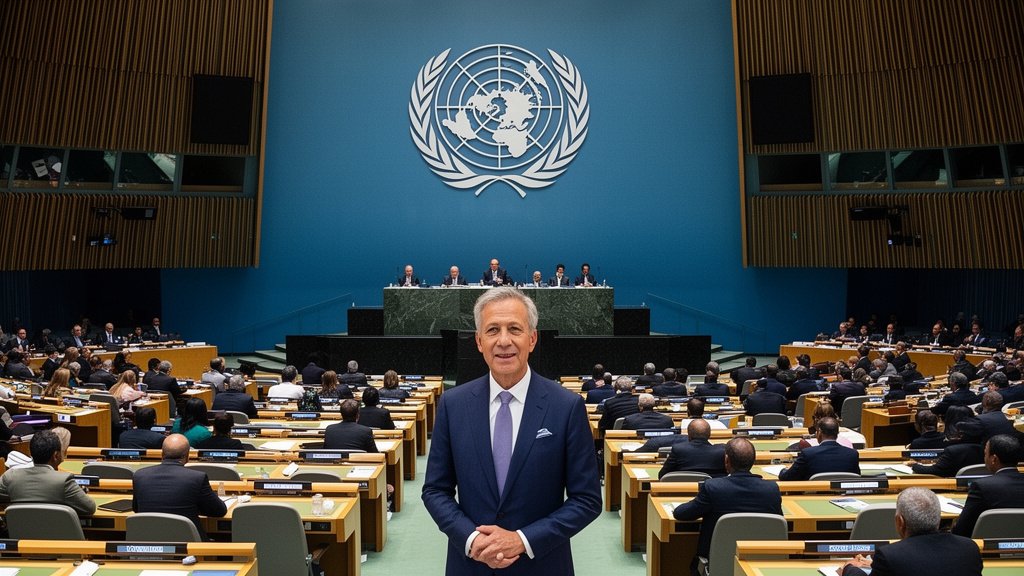
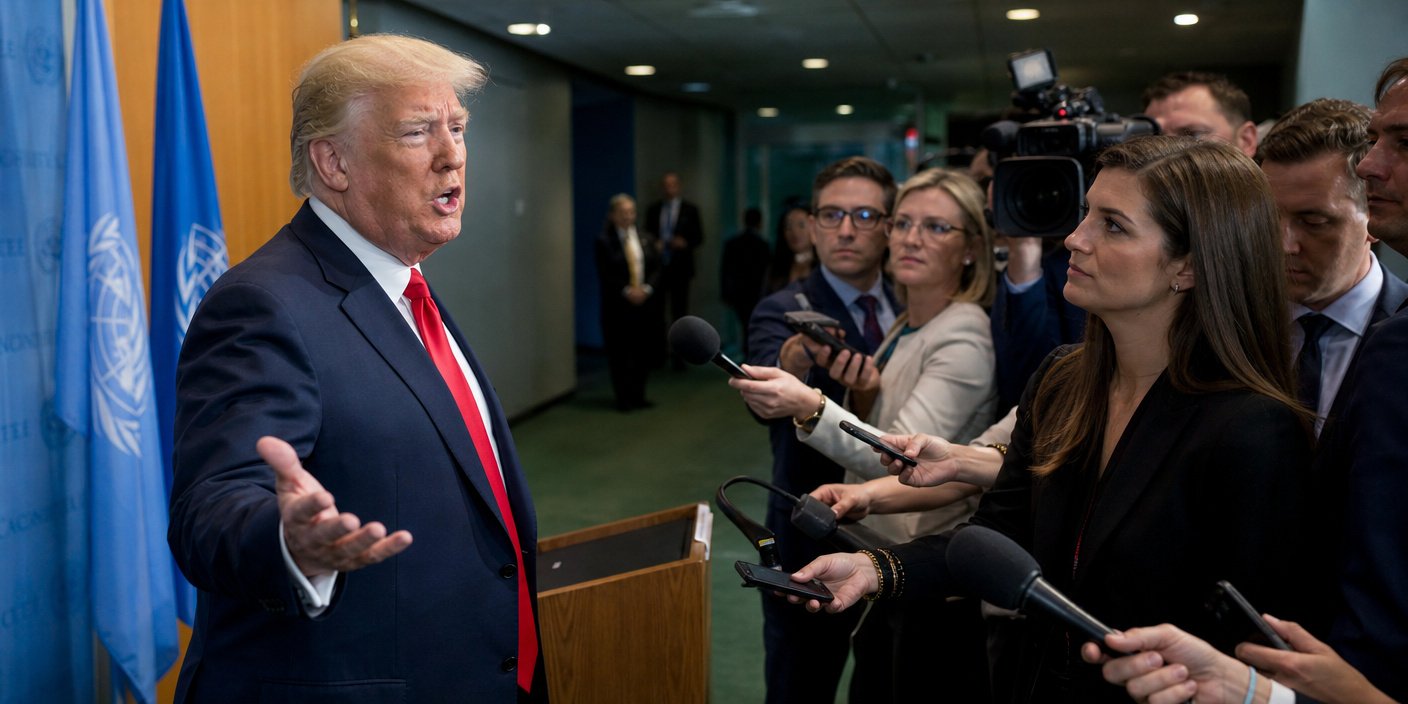
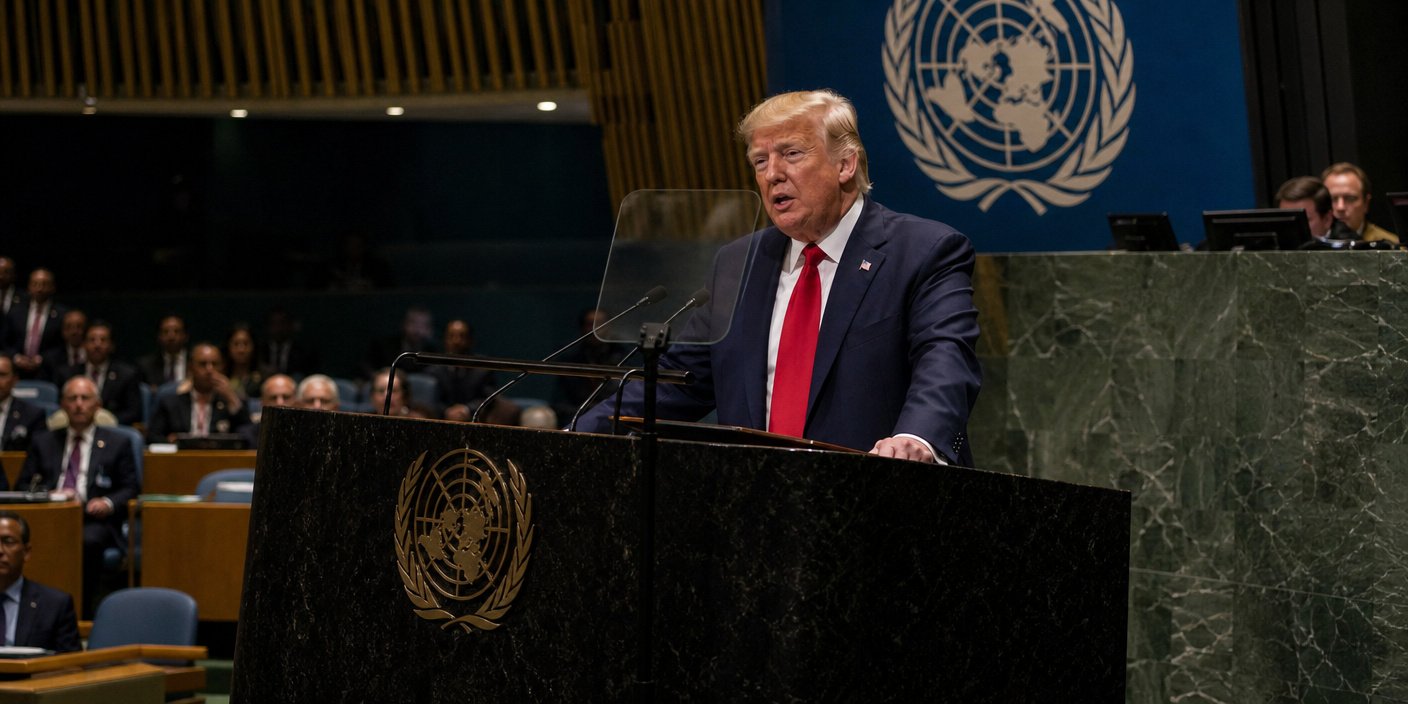
In a blistering address delivered at the United Nations General Assembly, President Trump utilized the global stage to issue an unequivocal ultimatum to the leadership in Tehran. Defining his administration’s stance as a binary choice for the Islamic Republic of Iran, the President declared that the nation must either negotiate a new, comprehensive agreement regarding its nuclear ambitions and regional activities, or face the prospect of being “annihilated.” This rhetoric, which signals a significant escalation from previous diplomatic norms, places the Iranian government at a critical juncture and reverberates throughout the international community, challenging the stability of existing non-proliferation frameworks.
The Anatomy of the Escalation
The declaration of “annihilation” represents a distinct departure from traditional diplomatic language often employed within the halls of the United Nations. By framing the conflict as an existential ultimatum, the Trump administration is effectively abandoning the gradualist approach favored by previous U.S. administrations. This approach is rooted in the “Maximum Pressure” campaign, which aims to leverage comprehensive economic sanctions to force Iran to the bargaining table. The President’s speech underscored a belief that the status quo is fundamentally unsustainable and that the only viable pathway forward for Iran is a total capitulation to U.S. demands, which include not only the cessation of nuclear enrichment but also the curbing of ballistic missile development and regional proxy activities.


For international observers, the inclusion of such violent terminology raises questions about the administration’s end-game. Is this a strategic maneuver designed to extract concessions, or is it a prelude to kinetic conflict? Historically, such language is intended to establish deterrence, suggesting that the United States is operating from a position of absolute strength. However, the efficacy of this strategy remains a subject of intense debate among geopolitical analysts.
The JCPOA and the Failure of Diplomacy
Central to this crisis is the fate of the Joint Comprehensive Plan of Action (JCPOA), the nuclear deal originally brokered in 2015. President Trump has consistently characterized the JCPOA as a flawed agreement that provided Iran with the financial means to fund destabilizing operations across the Middle East. By threatening annihilation, the administration is effectively signaling that it no longer views the JCPOA as a viable architecture for peace.
From the perspective of the U.S. State Department, the deal failed to address the full spectrum of Iranian aggression. The push for a “better deal” implies a new framework—one that is far more restrictive and permanent. This position, however, faces significant headwinds. Iran has consistently maintained that it will not renegotiate an agreement that the U.S. unilaterally withdrew from. The impasse creates a dangerous vacuum where diplomacy is supplanted by brinksmanship, increasing the risk of miscalculation between U.S. naval forces in the Strait of Hormuz and the Iranian Revolutionary Guard Corps (IRGC).
Regional Stability and the Strait of Hormuz
The ripple effects of this UNGA address are immediate and tangible in the Middle East. As rhetoric intensifies, the regional security environment has become increasingly volatile. The Strait of Hormuz, a critical chokepoint for the world’s oil supply, is at the heart of these tensions. Increased naval posturing by the U.S. and its regional allies, met with Iranian drone surveillance and threats to close the waterway, creates a volatile cocktail of military posturing.
Analysts have noted that the “annihilation” rhetoric forces Iran to adopt a more defiant posture to maintain domestic legitimacy. By framing the U.S. as an external existential threat, the Iranian government may attempt to consolidate internal support despite significant economic pressures. Consequently, the strategy of economic strangulation, combined with high-octane verbal warnings, may be inadvertently strengthening the hardline factions within the Iranian government, making any future diplomatic rapprochement even more difficult to achieve.
Future Implications: A New Era of Brinksmanship?
Looking toward the future, the global community must grapple with the implications of this new doctrine of aggressive diplomacy. The shift at the United Nations suggests that multilateralism is being downgraded in favor of bilateral power dynamics. For European signatories of the JCPOA, including the United Kingdom, France, and Germany, the U.S. stance creates a profound diplomatic dilemma. These nations remain committed to the original nuclear framework but find themselves increasingly marginalized by the U.S. “all or nothing” ultimatum.
If the administration continues on this trajectory, we can expect further hardening of alliances. Iran will likely accelerate its pivot toward alternative power brokers in the East, specifically seeking deeper economic and military cooperation with Russia and China. This shift would fundamentally alter the geopolitical map of the Middle East, replacing a U.S.-led order with a more fragmented and competitive multipolar environment. The risk of unintended conflict remains high, and the world is watching to see if this rhetoric is a catalyst for a new deal or a precursor to a wider, more devastating regional confrontation.