Former President Donald Trump’s potential reconsideration of the Iran nuclear deal has ignited a firestorm among Republican hawks, who warn that any move to rejoin or renegotiate the agreement would be a grave strategic error.
Key Highlights:
- Republican national security leaders express strong opposition to re-engaging with the Iran deal.
- Concerns are raised about Iran’s continued support for terrorism and ballistic missile development.
- Calls for a “better deal” that addresses Iran’s broader destabilizing activities.
- The original JCPOA is seen by critics as flawed and insufficient.
GOP Hawks Sound Alarm on Trump’s Iran Deal Stance
Republican stalwarts on national security are voicing sharp criticism and deep concern regarding signals that former President Donald Trump might be open to rejoining or renegotiating the Joint Comprehensive Plan of Action (JCPOA), commonly known as the Iran nuclear deal. These lawmakers, many of whom served in key defense and foreign policy roles during Trump’s administration, argue that such a move would be a significant strategic misstep, emboldening Iran and undermining regional stability.
Backlash Against Rejoining JCPOA


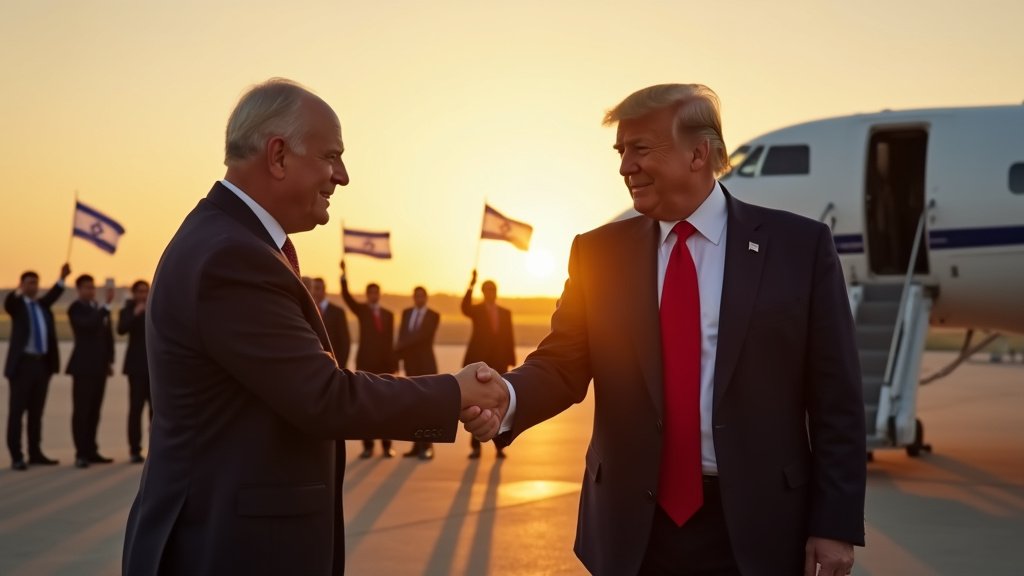
The core of the opposition lies in the perceived fundamental flaws of the original JCPOA, which was unilaterally withdrawn from by the Trump administration in 2018. Critics argue the deal did not adequately address Iran’s ballistic missile program, its support for regional proxy groups, or its human rights abuses. They contend that any deal that does not comprehensively tackle these issues is inherently weak and destined to fail. “Re-engaging with the JCPOA, even in a revised form, would legitimize a regime that remains the world’s foremost state sponsor of terrorism,” stated one senior Republican aide familiar with the ongoing discussions. “We need a deal that curbs Iran’s nuclear ambitions and its dangerous regional behavior, not one that simply kicks the can down the road.”
Concerns Over Iran’s Destabilizing Role
Beyond the nuclear aspect, a major point of contention is Iran’s pervasive influence in the Middle East through groups like Hezbollah, Hamas, and the Houthis. Lawmakers point to Iran’s continued funding and arming of these organizations as proof of its untrustworthy nature and its intent to destabilize U.S. allies and interests. The fear is that returning to the JCPOA framework would inadvertently provide Iran with resources, through sanctions relief, that it could then use to further its disruptive agenda. “The JCPOA was a bad deal then, and it’s an even worse deal now given Iran’s expanded regional footprint and advanced missile capabilities,” commented a former national security advisor under Trump. “A truly effective policy must confront Iran’s entire spectrum of threats, not just focus on a narrow, sunsetting nuclear program.”
Demand for a “Better Deal”
While outright opposition to any deal is prevalent, some within the Republican foreign policy establishment acknowledge the need for a diplomatic solution to prevent Iran from acquiring nuclear weapons. However, their definition of a “better deal” is significantly more stringent than the original JCPOA. They advocate for a long-term, comprehensive agreement that permanently ends Iran’s fissile material production, mandates intrusive inspections of all its nuclear facilities, and explicitly sanctions its ballistic missile program and support for terrorism. “The goal shouldn’t be to salvage the Obama-era deal,” another hawkish voice on Capitol Hill remarked. “It should be to forge a new, robust agreement that permanently secures peace and stability in the region. That requires a much tougher stance and a willingness to walk away if Iran doesn’t fundamentally change its behavior.”
FAQ: People Also Ask
What was the Iran nuclear deal (JCPOA)?
The Joint Comprehensive Plan of Action (JCPOA) was an agreement reached in 2015 between Iran and the P5+1 countries (China, France, Germany, Russia, the United Kingdom, and the United States), plus the European Union. It aimed to limit Iran’s nuclear program in exchange for sanctions relief.
Why did the U.S. withdraw from the JCPOA?
In May 2018, President Donald Trump announced the U.S. withdrawal from the JCPOA, citing concerns that the deal was insufficient in preventing Iran from developing nuclear weapons and did not address Iran’s other malign activities, such as its ballistic missile program and support for terrorism.
What are the main concerns of Republican hawks regarding Iran?
Republican hawks primarily focus on Iran’s continued status as a state sponsor of terrorism, its development and testing of ballistic missiles, its destabilizing influence in the Middle East through proxy groups, and its human rights record. They believe these issues must be addressed in any comprehensive agreement.
What would a “better deal” entail according to critics?
According to critics and Republican hawks, a “better deal” would need to be more comprehensive than the original JCPOA. It would ideally include permanent restrictions on Iran’s nuclear activities, robust verification and inspection mechanisms for all sites, and strict limitations on its ballistic missile program and support for regional militant groups.
What is the current status of Iran’s nuclear program?
Following the U.S. withdrawal from the JCPOA and the reimposition of sanctions, Iran has gradually increased its enrichment of uranium beyond the limits set by the deal and has advanced its capabilities. International Atomic Energy Agency (IAEA) reports monitor these activities.