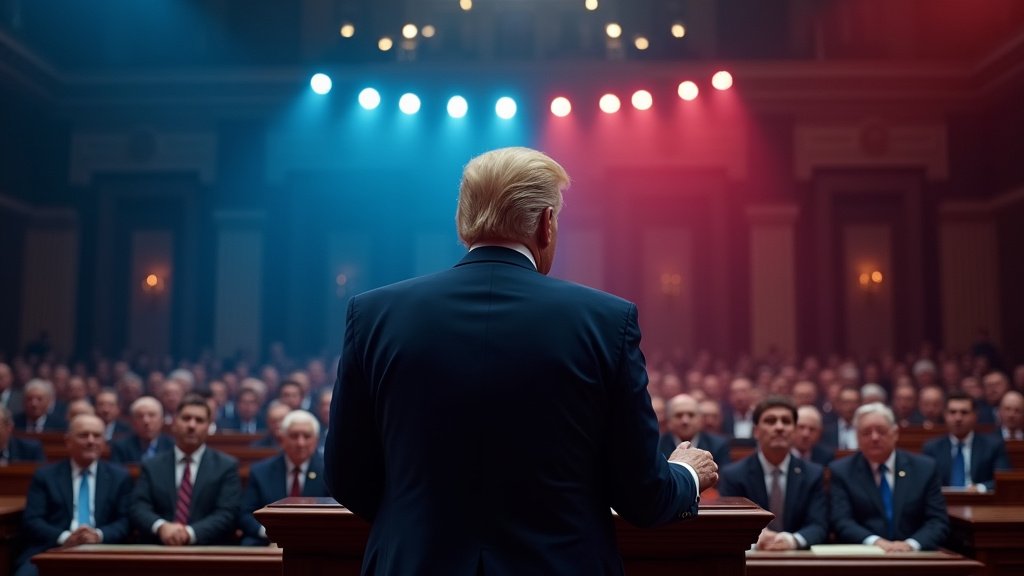
US futures sank sharply on Monday following the announcement of a significant Greenland Tariff Threat by President Donald Trump. This new tariff warning targeted eight European nations, stemming from their opposition to US control of Greenland. The announcement created immediate global market jitters. Major US stock futures saw declines, with S&P 500 futures dropping 0.8% and Dow Jones Industrial Average futures falling 0.7%. European shares also slid, with Germany’s DAX losing 1.1%, France’s CAC 40 shedding 1.3%, and Britain’s FTSE 100 declining 0.3%. This news sent investors seeking safety, causing gold and silver prices to surge to record highs, while the US dollar weakened broadly against major currencies, reflecting the growing transatlantic trade dispute.
The Greenland Ambition and the Greenland Tariff Threat

President Trump has long expressed interest in acquiring Greenland, a move that has now materialized into a significant Greenland Tariff Threat. The world’s largest island holds strategic importance due to its Arctic location and vast mineral resources, making it a strategic asset. The USA already maintains a military presence there via Pituffik Space Base, operating under agreements with Denmark. Trump believes controlling Greenland is vital, citing perceived interests from Russia and China. This push for acquisition, while not new and dating back to his previous term, is met with firm opposition from Greenland itself, whose government insists on self-determination. The current situation underscores the complex interplay between geopolitical ambitions and the economic levers of Trump trade policy.
A Tariff Ultimatum: Escalating the Greenland Tariff Threat
Trump declared new tariffs would affect imports from eight European allies: Denmark, Norway, Sweden, France, Germany, the United Kingdom, the Netherlands, and Finland. This direct Greenland Tariff Threat starts with a 10% tariff on February 1, rising to 25% by June 1, and will continue until a Greenland purchase deal is struck. Trump stated the USA is open to negotiation, framing this as a matter of national security. This move represents a direct challenge, testing crucial transatlantic relationships and adding to European alliance strain. Many allies were surprised by the severity of the threat.
United European Rejection of the Greenland Tariff Threat
European nations responded swiftly to the Greenland Tariff Threat, issuing a strong joint statement denouncing Trump’s demands. The statement warned that such actions “undermine transatlantic relations” and risked a “dangerous downward spiral.” Leaders called the tariffs unacceptable, with French President Macron stating no intimidation would sway them and UK Prime Minister Starmer calling the move “completely wrong.” European allies pledged unity, committed to upholding their sovereignty. Even Italy’s Prime Minister Meloni, a close ally, called it a “mistake.” The European Union is considering strong countermeasures, including retaliatory tariffs and trade sanctions, demonstrating a united front against this aspect of Trump trade policy.
Market Shockwaves and Global Impact of the Greenland Tariff Threat
The tariff threats surrounding the Greenland Tariff Threat disrupted global markets, making investors cautious about US trade policy. Stephen Innes of SPI Asset Management noted the situation is testing strategic alignment and straining trust in US partnerships, potentially leading to a “slow rebalancing” of capital away from US assets. The news also impacted other regions; while China reported its 2025 GDP grew 5%, Q4 growth slowed, though strong exports helped cushion weaker domestic demand. Oil prices fell amid the risk-off sentiment, further illustrating the broader economic consequences of this transatlantic trade dispute.
Broader Geopolitical Concerns Amidst the Greenland Tariff Threat
This escalating dispute adds to global uncertainty and geopolitical uncertainty. Experts warn it could benefit adversaries, as divisions between the US and Europe might widen, creating openings for China’s influence. The World Economic Forum in Davos faces a tense backdrop, with international cooperation already under strain. Trump’s actions are viewed as unpredictable, raising questions about US policy credibility. The prospect of tariffs over sovereign territory is unsettling, adding a new layer to existing geopolitical flashpoints. This national news highlights deep trade tensions, and the long-term consequences for global stability remain uncertain, with the USA facing renewed scrutiny over its approach to US Europe relations.
A Precarious Outlook Following the Greenland Tariff Threat
President Trump’s Greenland Tariff Threat has created significant market volatility and highlighted potential European alliance strain. European allies stand united against this pressure and are prepared to defend their interests. The situation raises serious questions about future US-European relations and tests the foundation of alliances. The economic fallout could extend beyond tariffs, signaling a period of heightened geopolitical and trade uncertainty. Markets will watch closely for further developments stemming from this significant Greenland Tariff Threat.