Washington D.C. / Global Affairs
The global geopolitical landscape remained volatile on November 17, 2025, as significant developments unfolded across multiple continents. The United States announced its intention to designate Venezuela’s “Cartel de los Soles” as a Foreign Terrorist Organization, while its most advanced aircraft carrier entered the Caribbean Sea amidst rising tensions with Caracas, showcasing the complexities of the current geopolitical landscape. The Middle East saw continued conflict with an Israeli strike in southern Lebanon and a deadly raid in the West Bank’s Askar refugee camp. Meanwhile, international climate diplomacy faced its own challenges as Türkiye pushed its bid to host COP31, and diplomatic efforts around a UN Security Council resolution concerning Gaza and a Palestinian state continued, further shaping the evolving geopolitical landscape.
US Escalates Pressure on Venezuela: Navigating the Geopolitical Landscape with Terrorist Designation and Naval Presence
In a significant move, U.S. Secretary of State Marco Rubio announced Sunday evening that the United States intends to designate the Venezuela-based Cartel de los Soles as a Foreign Terrorist Organization (FTO), with the designation set to take effect on November 24th. Rubio accused Venezuelan President Nicolás Maduro and other high-ranking officials of leading the cartel, alleging their responsibility for “terrorist violence throughout our hemisphere” and drug trafficking into the United States and Europe. This designation, an escalation from previous Treasury Department sanctions, grants the U.S. government broader powers to combat the group and its associates, impacting the regional geopolitical landscape.
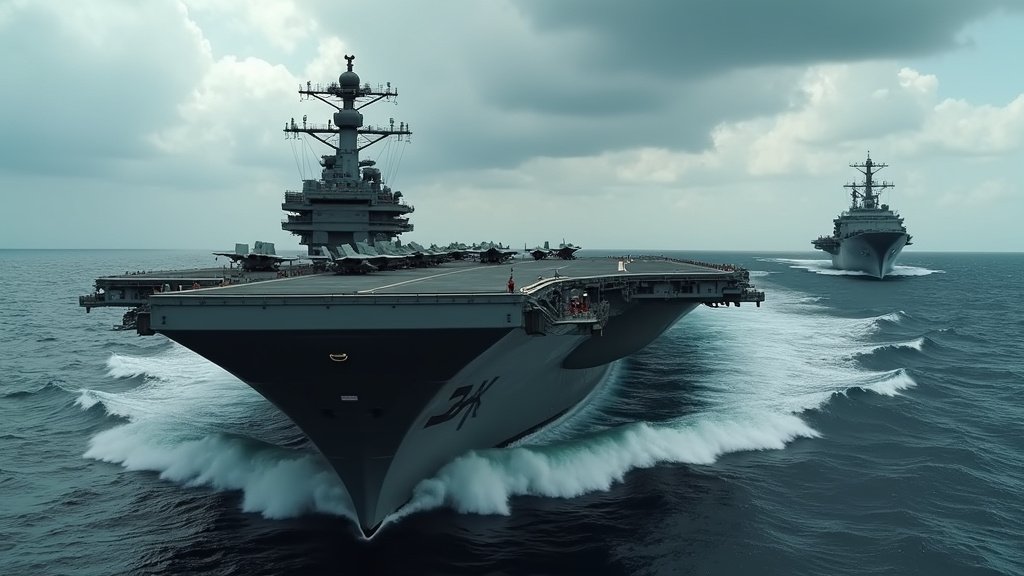
Coinciding with this announcement, the USS Gerald R. Ford, the American Navy’s most advanced aircraft carrier, entered the Caribbean Sea. Its deployment, part of the newly christened “Operation Southern Spear,” signifies a substantial Caribbean naval buildup of U.S. naval power in the region and is characterized by the U.S. Southern Command as a critical step to “combat the transnational threats that seek to destabilize our region” and protect the “American Homeland”. U.S. officials have framed these operations as counter-narcotics and counter-terrorism efforts, though they are also viewed as escalating pressure tactics against President Maduro’s regime within the complex geopolitical landscape.
Middle East Tensions Flare: Fatal Strikes and Raids Impacting the Geopolitical Landscape
In southern Lebanon, an Israeli strike in southern Lebanon on the town of Mansouri killed Mohammad Shuweikh, identified by Lebanese media as the principal of the local public school and by the Israeli military as a Hezbollah operative responsible for liaising on economic and military matters for the group. The strike, which occurred Sunday evening, is reported by Lebanese outlets as a violation of a ceasefire agreement. The ongoing Mideast tensions flare as these events unfold.
Simultaneously, in the West Bank, an Israeli military raid on the Askar refugee camp near Nablus resulted in the death of a Palestinian teenager, Hasan Sharkasi, who sustained a fatal gunshot wound to the chest. Another youth was injured during clashes with Israeli forces. Israeli forces also conducted raids in other West Bank areas, while settlers were reported to have vandalized Palestinian vehicles in the town of Sinjel. These events highlight the persistent instability in the region, a key aspect of the global geopolitical landscape.
Iran Seizes Commercial Tanker in Strait of Hormuz; US Condemns Action within the Geopolitical Landscape
U.S. Central Command reported that Iranian forces “illegally” boarded and seized the Marshall Islands-flagged commercial tanker M/V Talara in international waters in the Strait of Hormuz on Friday. According to CENTCOM, Islamic Revolutionary Guard Corps (IRGC) personnel arrived by helicopter, boarded the vessel, and then steered it into Iranian territorial waters. The U.S. military command condemned the act as a “blatant violation of international law” that undermines freedom of navigation and called on Iran to articulate the legal basis for its actions. Iranian state media, however, claimed the tanker was violating regulations and carrying unauthorized cargo, suggesting it was involved in illegal exports of Iranian petrochemicals. This incident is a significant development in the Middle East’s geopolitical landscape.
Türkiye Pursues COP31 Hosting Amidst Diplomatic Maneuvers in the Geopolitical Landscape
Türkiye continues its strong bid to host and chair the 31st Conference of the Parties (COP31) to the UN Framework Convention on Climate Change, planned for 2026. The country is highlighting principles of cooperation and inclusiveness in its efforts. However, a stalemate persists with Australia, the other candidate country, over the terms of hosting. While Türkiye proposed a co-chairing model, Australia has largely rejected this, citing UN rules and a desire to focus on a Pacific-led agenda. Turkish officials have indicated readiness to host the conference independently if a consensus cannot be reached. The decision on the host is expected to be made soon, with a failure to agree potentially leading to the summit being held in Bonn, Germany, an outcome that would further shape the international geopolitical landscape.
UN Security Council Gaza Resolution: A Pivotal Moment in the Geopolitical Landscape
Discussions intensified around a U.S.-drafted resolution for the UN Security Council Gaza, which aims to endorse President Donald Trump’s plan for ending the conflict and potentially pave a “credible pathway to Palestinian self-determination and statehood”. The proposed resolution includes provisions for a “Board of Peace” to oversee Gaza’s governance and reconstruction, and the establishment of an International Stabilization Force (ISF). However, Israeli Prime Minister Benjamin Netanyahu has publicly vowed to oppose any attempt to establish a Palestinian state, a stance that creates significant diplomatic tension ahead of the anticipated UN vote. Hamas and other Palestinian factions have also voiced concerns, warning against proposals perceived as biased towards Israel and depriving Palestinians of self-management. This complex situation is a critical element of the current geopolitical landscape.
This day’s news cycle underscores a world grappling with multifaceted challenges, from counter-terrorism initiatives and regional conflicts to climate diplomacy and complex peace processes. The interconnectedness of these events signals a period of heightened geopolitical activity and strategic maneuvering on the global stage, impacting international relations and security dynamics. The ongoing reports also highlight the vast scope of contemporary news, spanning serious geopolitical matters and lighter entertainment or sports updates, all contributing to our understanding of the dynamic geopolitical landscape.