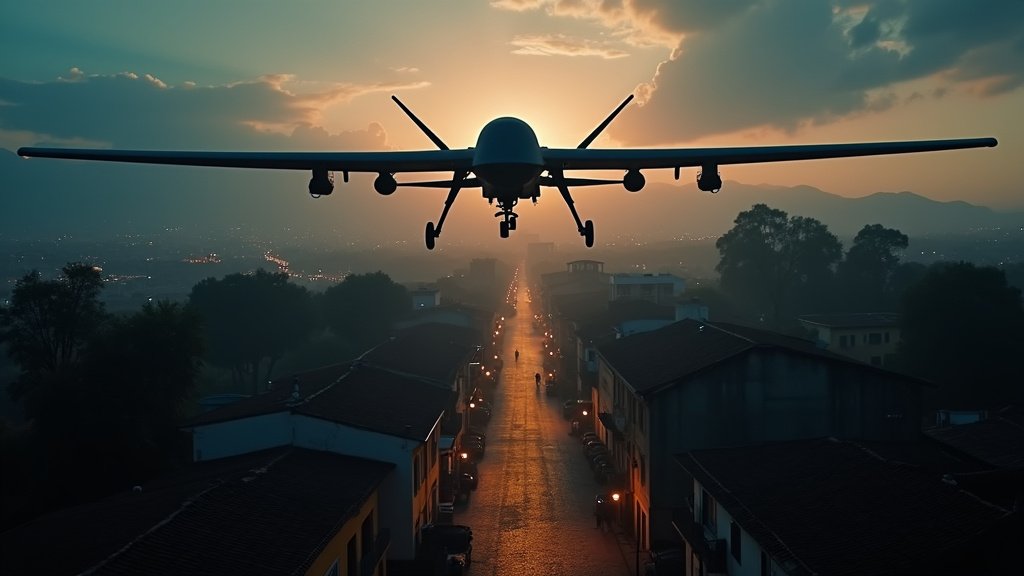
Recent US actions have deeply impacted **US Latin America** relations, raising concerns about regional stability and historical anxieties regarding **US intervention**. President Trump’s assertive stance, including a significant strike in Venezuela and threats against Colombia, Cuba, and Mexico, has revived these concerns. Many governments in the region oppose these developments, yet face a considerable military imbalance compared to the **US military power**.
The Unmatched American Military Might in US Latin America Relations
The United States possesses overwhelming military superiority, a critical factor in **US Latin America** relations. Its defense budget far surpasses that of any regional power, creating a stark military imbalance. This vast spending translates into advanced conventional capabilities, including tanks, aircraft, and naval forces, which Latin American militaries cannot realistically contest. For instance, Brazil’s defense budget, while the largest in the region, is a mere fraction of the US expenditure, highlighting the immense disparity in **US Latin America** military capabilities. While US forces operate with global reach, regional forces are primarily focused on internal security and localized conflicts, impacting the broader **US Latin America** geopolitical dynamics.
Latin America’s Defense Landscape and US Military Power
While Brazil boasts the strongest military in Latin America, ranking globally, and countries like Colombia possess experienced forces due to sustained conflict, their capabilities are largely geared towards internal security and counter-insurgency rather than conventional warfare against a superpower. Mexico’s military, for example, is heavily engaged with powerful drug cartels that function as de facto paramilitary forces. Similarly, Cuba and Venezuela rely on large paramilitary and militia groups capable of asymmetric warfare. However, these unconventional strengths offer limited deterrence against direct **US intervention**, a recurring theme in **US Latin America** history and **Latin America defense**.
A History of US Intervention and Present Threats in US Latin America
The history of **US Latin America** relations is marked by frequent **US intervention**, dating back to the Monroe Doctrine. From covert operations and coups to direct military engagements during the Banana Wars, the US has repeatedly asserted its influence to protect its interests. The recent threats and actions by the US administration, justified by concerns over drug trafficking and national security, echo these past justifications and heighten **regional tensions**. These actions are viewed by many as violations of **national sovereignty**, fueling widespread condemnation and shaping the current **US Latin America** discourse. The persistent **US military power** and the potential for **US intervention** remain significant considerations in **american affairs**.
Conclusion on US Latin America
The profound military imbalance between the United States and Latin American nations continues to shape **US Latin America** relations. While regional forces have developed expertise in asymmetric conflict and internal security, their capacity to resist conventional **US intervention** is limited. The region’s governments continue to champion their **national sovereignty** and express opposition to perceived overreach. However, the dominant **US military power** casts a long shadow, influencing regional stability and contributing to ongoing **geopolitical dynamics** within **US Latin America** and beyond.