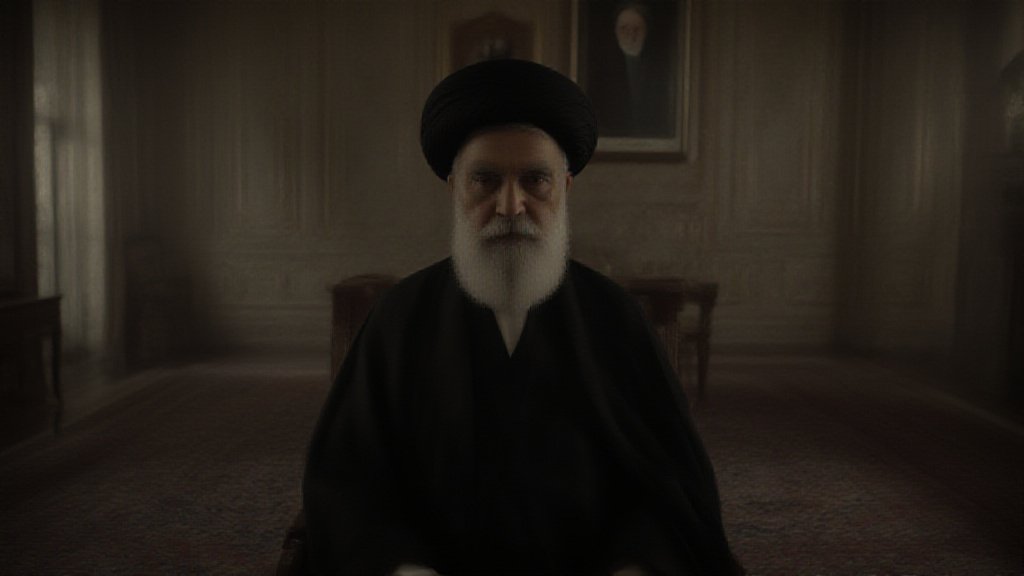
In an era of profound political division and shifting societal norms, some observers, particularly those with firsthand experience of historical upheaval, detect a disquieting familiarity in the current American landscape. The specter of China’s Great Proletarian Cultural Revolution, a decade of immense sociopolitical turmoil from 1966 to 1976, is increasingly invoked to describe aspects of contemporary American political culture under Donald Trump, and this Trump China Resonance is a topic of considerable discussion among those who recall that tumultuous period. The Trump China Resonance points to striking similarities that warrant careful examination.
The Scars of the Cultural Revolution
Mao Zedong launched the Cultural Revolution with the stated goal of preserving true Communist ideology by purging capitalist and traditional elements from Chinese society and reasserting his own authority after the failures of the Great Leap Forward. This movement mobilized millions of young people, primarily students organized as Red Guards, to challenge established institutions, intellectuals, and perceived enemies of the revolution. The period was characterized by widespread violence, public humiliation, the destruction of cultural heritage, the closure of schools and universities, and a pervasive atmosphere of fear and distrust. It left deep scars on Chinese society, disrupting education, crippling the economy, and inflicting lasting psychological trauma, with estimates of deaths ranging from hundreds of thousands to millions. The legacy of this era continues to shape China’s national consciousness, serving as a stark warning against unchecked ideological fervor and personality cults.
Echoes in American Society: Loyalty, Institutions, and Enemies, and the Trump China Resonance
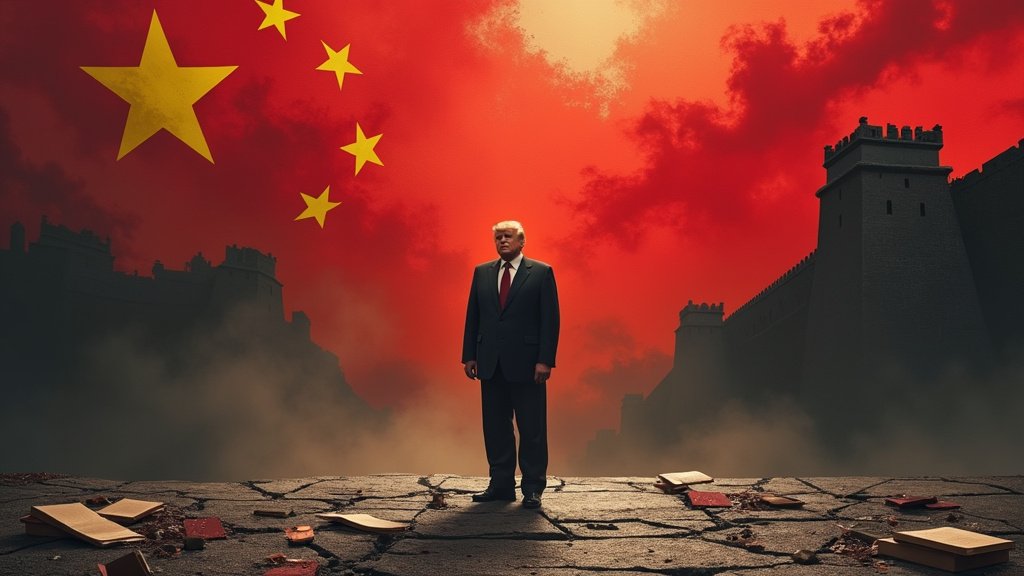

From the perspective of many who lived through Mao’s era, the political climate in Trump’s America presents striking parallels, highlighting a significant Trump China Resonance. Observers note a similar emphasis on loyalty over expertise, a pattern seen in both Mao’s purges of party officials and Trump’s appointments of loyalists over experienced professionals. The demand for absolute loyalty to the leader, with dissenters demonized as traitors, is a theme frequently drawn. Furthermore, the attacks on established institutions resonate deeply. Just as Mao’s Red Guards targeted intellectuals, teachers, and cultural artifacts, Trump has frequently assailed the press, the judiciary, academic institutions, and government agencies, often labeling them as part of a “deep state” or “enemies of the people.” This erosion of trust in foundational societal structures mirrors the chaos of the Cultural Revolution, contributing to the pervasive Trump China Resonance.
The Cult of Personality and Mobilization: A Shared Trump China Resonance
Both Mao and Trump cultivated powerful personality cults, where the leader’s image and words became paramount. Mao’s Little Red Book served as a sacred text, and his image was ubiquitous. Similarly, Trump’s rhetoric and the accompanying MAGA merchandise have fostered a fervent following, with supporters often exhibiting unwavering faith, creating a noticeable Trump China Resonance. This phenomenon is amplified by a shared strategy of mobilizing a segment of the population, particularly youth, to challenge existing power structures and perceived elites. While Mao utilized the Red Guards for direct action, Trump has galvanized grassroots movements and online communities to push his agenda and confront opponents, showcasing the evident Trump China Resonance.
Cultural Shifts and Ideological Purges: Exploring Trump China Parallels
The Cultural Revolution sought to eradicate “old ideas, old customs, old culture, and old habits.” In contemporary America, a similar impulse manifests as intensified culture wars. Observers point to efforts to dismantle “liberal culture,” ban books in schools and libraries, and challenge established norms surrounding diversity, equity, and inclusion (DEI) initiatives. This mirrors Mao’s attack on traditional Chinese culture, albeit with different ideological underpinnings and without the same level of systematic state violence. The rhetoric of “making America great again” is seen by some as a call to return to a nostalgic, idealized past, echoing the revolutionary fervor that sought to erase historical continuity, offering further insight into the Trump China Resonance.
From State Violence to Stochastic Terrorism: Understanding the Trump China Resonance
While the comparison must acknowledge significant differences in method and scale, particularly regarding violence, the effect of targeting perceived enemies is seen as similar, contributing to the broader Trump China Resonance. Mao’s China employed overt state-sponsored persecution, torture, and executions. In Trump’s America, while laws generally prevent such extremes, the discourse has been linked to an increase in “stochastic terrorism” – violence incited by rhetoric without direct orders, creating an atmosphere of intimidation for journalists, educators, and marginalized communities. The language used by leaders, the denigration of opponents, and the promotion of alternative narratives that disregard factual reporting contribute to a climate where trust in shared reality erodes, reinforcing the Trump China Resonance.
Lessons from China: A Familiar Unease and Trump China Parallels
For Chinese individuals who experienced the Cultural Revolution, the events unfolding in the United States can evoke a profound sense of unease. The breakdown of trust in institutions, the demand for ideological purity, the scapegoating of perceived enemies, and the cult of personality all tap into painful memories, underscoring the Trump China Resonance. While the American system has checks and balances that differ vastly from Maoist China, the resonance highlights a shared vulnerability within societies to demagoguery, intense political polarization, and the subversion of democratic norms. The institutional attacks, particularly on knowledge institutions, including universities and research bodies, especially stand out as echoes of a period that crippled intellectual and scientific progress, adding another layer to the Trump China Resonance.
Conclusion: A National Reckoning and the Enduring Trump China Resonance
The comparison between Trump’s America and China’s Cultural Revolution, while not a perfect one-to-one analogy, serves as a potent warning and highlights the undeniable Trump China Resonance. It underscores how populist movements, fueled by nationalist sentiment and a rejection of established order, can profoundly alter the fabric of a society and its institutions. For those watching from China, it represents a familiar pattern of upheaval, one that underscores the fragility of democratic institutions and the enduring importance of safeguarding intellectual freedom, robust public discourse, and a commitment to factual news and objective reality in the national conversation. The ongoing debates about national identity and societal direction in America reflect a complex interplay of political forces, where the echoes of past revolutions offer a somber lens through which to view contemporary challenges and the persistent Trump China Resonance. The **Cultural Revolution echoes** in these dynamics are particularly chilling for those who witnessed them firsthand, contributing to the overall Trump China Resonance.