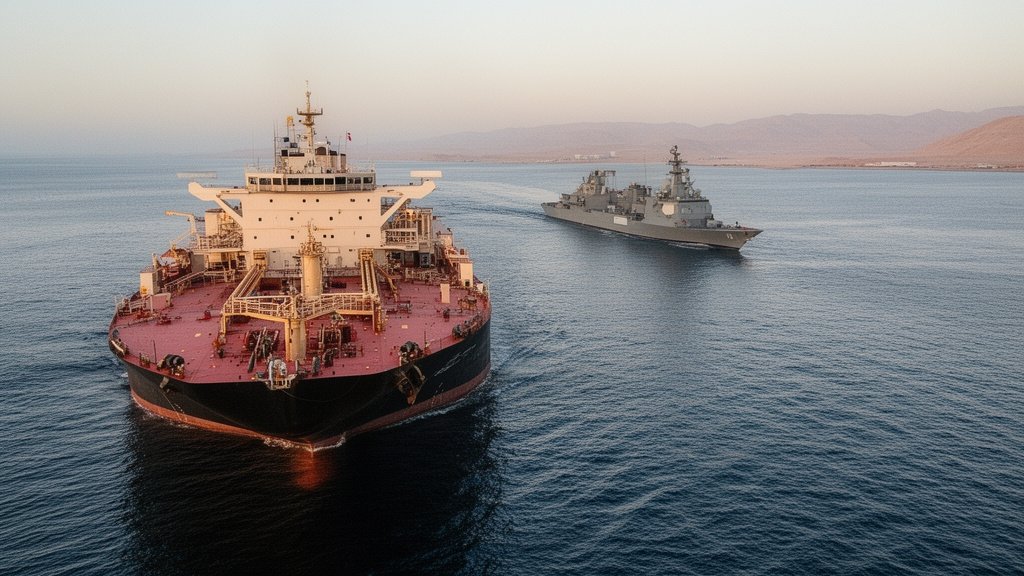
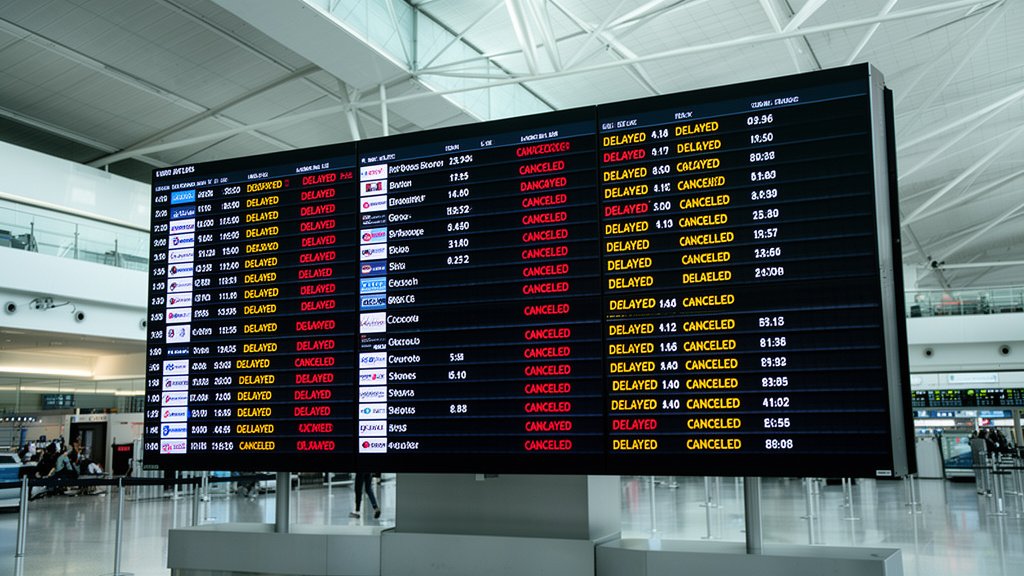
Two massive oil tankers were struck by naval mines and subsequently engulfed in flames south of the strategic Strait of Hormuz, marking a significant escalation in maritime tensions within one of the world’s most vital energy arteries. Iran’s Islamic Revolutionary Guard Corps (IRGC) has issued a statement regarding the incident, claiming the vessels were attempting to bypass authorized navigation routes and, crucially, were operating with their automatic identification system (AIS) tracking devices disabled. This development has sent shockwaves through global energy markets and triggered immediate scrutiny from international maritime authorities regarding the safety of transit through the Persian Gulf.
Key Highlights
- The Incident: Two commercial oil tankers sustained damage and caught fire south of the Strait of Hormuz following strikes identified by local forces as naval mines.
- The IRGC Accusation: The Islamic Revolutionary Guard Corps stated that the vessels were operating in a clandestine manner, having disabled their tracking transponders to avoid detection.
- Geopolitical Sensitivity: The Strait of Hormuz serves as the world’s most critical oil choke point, carrying approximately one-fifth of the global oil consumption.
- Security Implications: The use of naval mines suggests a shift toward ‘grey zone’ warfare, designed to harass shipping without triggering a full-scale conventional military conflict.
The Anatomy of a Maritime Flashpoint
The incident south of the Strait of Hormuz represents a complex intersection of international maritime law and regional power projection. The Strait itself—a narrow, 21-mile-wide channel—is the sole gateway for oil exports from the Persian Gulf to the Indian Ocean. Because of its narrow width, tankers are forced into specific shipping lanes that run close to the territorial waters of both Iran and Oman. When vessels enter this zone, their vulnerability to asymmetrical threats increases exponentially.
The specific report that the tankers were struck by naval mines introduces a sophisticated layer of warfare. Unlike direct missile strikes, which are instantly attributable and invite immediate retaliatory action, the use of sea mines provides a degree of plausible deniability. Mines are indiscriminate weapons that turn commercial vessels into hostages of the sea, effectively weaponizing the maritime environment itself. The IRGC’s claim that these vessels were ‘bypassing authorized navigation routes’ adds a layer of operational friction. In international maritime law, while ships are generally free to navigate, they are expected to keep tracking systems active for collision avoidance and safety. Disabling AIS, while sometimes done by vessels to avoid piracy or circumvent sanctions, is a highly visible act that immediately raises the alarm profile of any ship in the region.
The ‘Grey Zone’ Strategy




This incident highlights a growing reliance on ‘grey zone’ warfare. This strategy exists between the thresholds of peace and open war. By utilizing mines or harassing vessels based on alleged technical violations—such as disabling AIS—state actors can disrupt the flow of global commerce and exert political pressure without engaging in overt military conflict. The IRGC’s insistence on the tracking status of the vessels is a tactical attempt to frame the strikes as a defensive or regulatory enforcement action rather than an unprovoked attack. It allows them to argue that the vessels were operating suspiciously, thereby justifying the heightened security presence in the area.
Economic Vulnerability and Global Markets
Beyond the immediate tactical and security concerns, the incident carries profound economic implications. The Strait of Hormuz is not merely a geographic chokepoint; it is the jugular vein of the global energy economy. Any threat to shipping in this region—even a localized fire on two tankers—immediately impacts the ‘war risk’ premiums applied to maritime insurance. When these premiums spike, the cost of shipping oil globally increases, which is inevitably passed down to the end consumer.
Historically, the market reaction to such events is immediate and volatile. Oil futures often surge as traders account for the potential of supply chain disruptions. If the Strait were to be physically closed or significantly restricted due to further mining or attacks, the global energy market would face a supply shock that could trigger widespread inflation. The vulnerability of these large, slow-moving tankers to inexpensive and relatively easy-to-deploy naval mines is a strategic nightmare for global navies tasked with protecting freedom of navigation.
Historical Context: The Tanker War
To understand the gravity of the current situation, one must look back to the 1980s, during the Iran-Iraq War. That conflict saw a sustained ‘Tanker War,’ where both sides attacked the other’s oil infrastructure, including the vessels transporting that oil. The current incident, while distinct in scale, echoes the psychological warfare of that era. The fear is not just the loss of two ships, but the precedent that maritime commercial trade is no longer safe from regional power struggles. The international community, led by various naval coalitions, has historically responded by increasing patrols, but as the technology of sea mines advances, the challenge of securing the Strait becomes significantly more complex.
FAQ: People Also Ask
1. What is the Automatic Identification System (AIS) and why does it matter here?
AIS is an automated tracking system used on ships to identify and locate vessels by electronically exchanging data with other nearby ships and VTS (Vessel Traffic Service) stations. When a ship ‘goes dark’ by disabling AIS, it becomes invisible to standard tracking, which is often perceived as an act of evasion or clandestine operation.
2. Why is the Strait of Hormuz considered the world’s most important oil chokepoint?
Approximately 20-30% of the world’s total global petroleum liquids consumption passes through the Strait daily. It is the primary maritime route for oil exports from major producers like Saudi Arabia, Iran, the UAE, Kuwait, and Iraq.
3. Does disabling a tracking system justify a mine attack?
Under international maritime law, absolutely not. Navigational violations do not authorize the use of force, especially the deployment of indiscriminate weapons like naval mines in international shipping lanes, which endanger the lives of crews and threaten the environmental stability of the region.
4. What are the next steps for international naval forces?
Naval forces in the region will likely increase reconnaissance flights and surface patrols, employing sonar to detect mines. Diplomatic efforts will also intensify to prevent further escalations, likely involving the UN and other international bodies to ensure the continued freedom of navigation.