Trump’s Gaza Peace Push: Envoys in Egypt as Bombardment Continues Amidst Crucial Ceasefire Talks
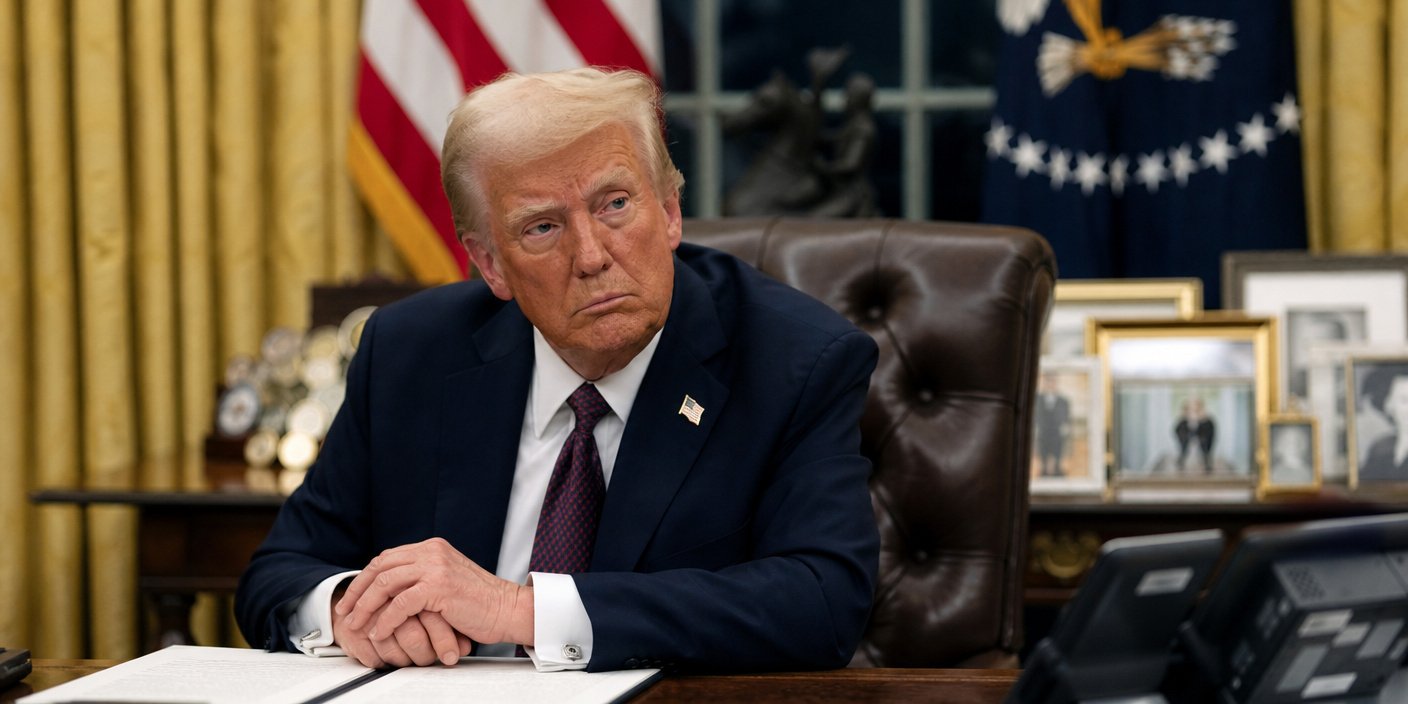
In a high-stakes diplomatic push, former U.S. President Donald Trump has issued a stark warning to Hamas, urging swift action on a peace plan while Israel continues its aerial bombardment of Gaza. Trump’s administration is deploying key envoys, including his son-in-law Jared Kushner and top aide Steve Witkoff, to Egypt for critical ceasefire and hostage release negotiations, signaling a renewed, albeit tense, pursuit of an end to the nearly two-year conflict.
The urgency is palpable as Trump declared on his Truth Social platform, “Hamas must move quickly, or else all bets will be off.” He emphasized his intolerance for delays, stating, “I will not tolerate delay… Let’s get this done, FAST.” This ultimatum comes amid reports of ongoing Israeli strikes in Gaza that have resulted in significant Palestinian casualties. Despite Trump’s public call for Israel to “stop bombing Gaza immediately” to facilitate the release of hostages, on-the-ground reports indicate that Israeli airstrikes and shelling continued across the besieged Strip on Saturday, killing at least 70 Palestinians in the preceding 24 hours. These continued strikes underscore the precariousness of the diplomatic efforts and the grim reality faced by civilians.
A Fragile Path to Negotiations
The current diplomatic flurry follows Hamas’s conditional acceptance of a 20-point peace proposal outlined by President Trump. The group has signaled willingness to release all remaining Israeli hostages and transfer administration of Gaza to a technocratic Palestinian authority. In return, the proposal reportedly includes a ceasefire, a phased Israeli withdrawal from Gaza, the release of hundreds of Palestinian prisoners, and the allowance of humanitarian aid and reconstruction efforts.




However, significant sticking points remain, notably Hamas’s reluctance to address disarmament, a key demand from Israel. Analysts suggest Hamas’s response, while outwardly flexible, may represent a “tactical retreat” rather than a “strategic surrender,” aiming to buy time and preserve its role in future governance. The precise terms of the withdrawal lines and the timeline for implementation are also subjects requiring further detailed negotiation.
Israeli Prime Minister Benjamin Netanyahu has expressed hope that all remaining hostages could be released “in the coming days,” stating his delegation was in Egypt to “finalize technical details.” Netanyahu, however, has reiterated that Israel would not agree to a complete withdrawal from Gaza, emphasizing that Israeli forces would maintain control of territories. The prospect of disarming Hamas, whether diplomatically or militarily, remains a firm Israeli objective.
US Envoys Arrive Amidst Ongoing Hostilities
The arrival of Jared Kushner and Steve Witkoff in Egypt signifies the direct involvement of the Trump administration in the intricate negotiations. Their mission is to finalize the technical aspects of a potential hostage exchange and discuss the framework for a lasting ceasefire. Kushner, a former senior advisor whose tenure included brokering the Abraham Accords, brings extensive experience in Middle East diplomacy. Witkoff, a real estate executive, also has a background in international negotiations, including previous work on hostage releases. Their involvement highlights the administration’s commitment to leveraging unofficial diplomatic channels to break deadlocks.
Despite the intense diplomatic activity, the reality on the ground in Gaza remains dire. Scores of Palestinians, including women and children, have been killed in Israeli strikes in the past 24 hours, with reports of attacks on residential homes and displacement camps. The Gaza health ministry reports a devastating toll, with over 67,000 Palestinians killed and more than 169,000 injured since the conflict began in October 2023. The humanitarian situation is catastrophic, with hospitals overwhelmed, a severe lack of fuel and medical supplies, and widespread displacement leaving civilians with nowhere safe to go. The World Health Organization (WHO) warns that nearly 42,000 people are living with life-changing injuries, a figure that accounts for a quarter of all reported injuries.
Background and Escalating Tensions
The current crisis stems from the protracted conflict that erupted following the Hamas-led attacks on Israel on October 7, 2023, which resulted in approximately 1,139 deaths and the capture of around 200 hostages. Israel’s subsequent military campaign in Gaza has been characterized by intense bombardment and ground operations aimed at dismantling Hamas’s military capabilities.
The near two-year war has inflicted immense suffering on the Palestinian population, leading to widespread destruction, displacement, and a severe humanitarian crisis. International organizations have repeatedly called for unimpeded humanitarian access and an immediate ceasefire to alleviate the suffering of civilians caught in the crossfire.
A World Watching
The international community has largely welcomed Hamas’s partial acceptance of Trump’s peace plan, viewing it as a critical opportunity to end the protracted conflict. Leaders from Germany, the UK, France, Jordan, New Zealand, and Turkey have expressed hope that the current diplomatic momentum will lead to a lasting peace, urging all parties to seize the moment. The United Nations Secretary-General Antonio Guterres has also encouraged parties to “seize the opportunity to bring the tragic conflict in Gaza to an end.”
However, the path forward remains fraught with uncertainty. The continued Israeli strikes, despite the diplomatic overtures, highlight the deep divisions and the complex challenges inherent in achieving a comprehensive and lasting peace. The coming days in Cairo will be crucial in determining whether the current diplomatic push can overcome the ingrained animosities and pave the way for a de-escalation, or if the cycle of violence and conflict will persist, leaving the people of Gaza in continued peril. This is a top news story with potential implications for global stability and the future of the Middle East. The world is watching closely as these critical top-level negotiations unfold.