In a dramatic culmination to a closely watched trial, Ryan Wesley Routh was found guilty by a federal jury on September 23, 2025, for the attempted assassination of then-presidential candidate Donald Trump. The conviction stems from a meticulously planned sniper attack orchestrated at Trump International Golf Club in West Palm Beach, Florida, on September 15, 2024. The proceedings took another shocking turn immediately after the verdict was delivered when Routh, representing himself, made a desperate attempt to stab himself in the neck with a pen, an act that was swiftly thwarted by U.S. Marshals.
A Calculated Plot Unfolds at Trump’s Golf Course
The events leading to Routh’s conviction paint a chilling picture of a deliberate assassination plot. Prosecutors presented evidence showing that Routh, a 59-year-old man from North Carolina who had recently relocated to Hawaii, spent weeks meticulously planning his assault. He allegedly purchased a military-grade weapon, conducted extensive reconnaissance of Trump’s movements, and utilized multiple burner phones to conceal his identity and intentions. Court filings revealed that Routh made at least 17 trips to scout the golf course, eventually lying in wait for nearly 10 hours on the day of the planned attack. He concealed himself in thick shrubbery overlooking the sixth hole green, armed with an SKS-style semi-automatic rifle with a deliberately obliterated serial number.
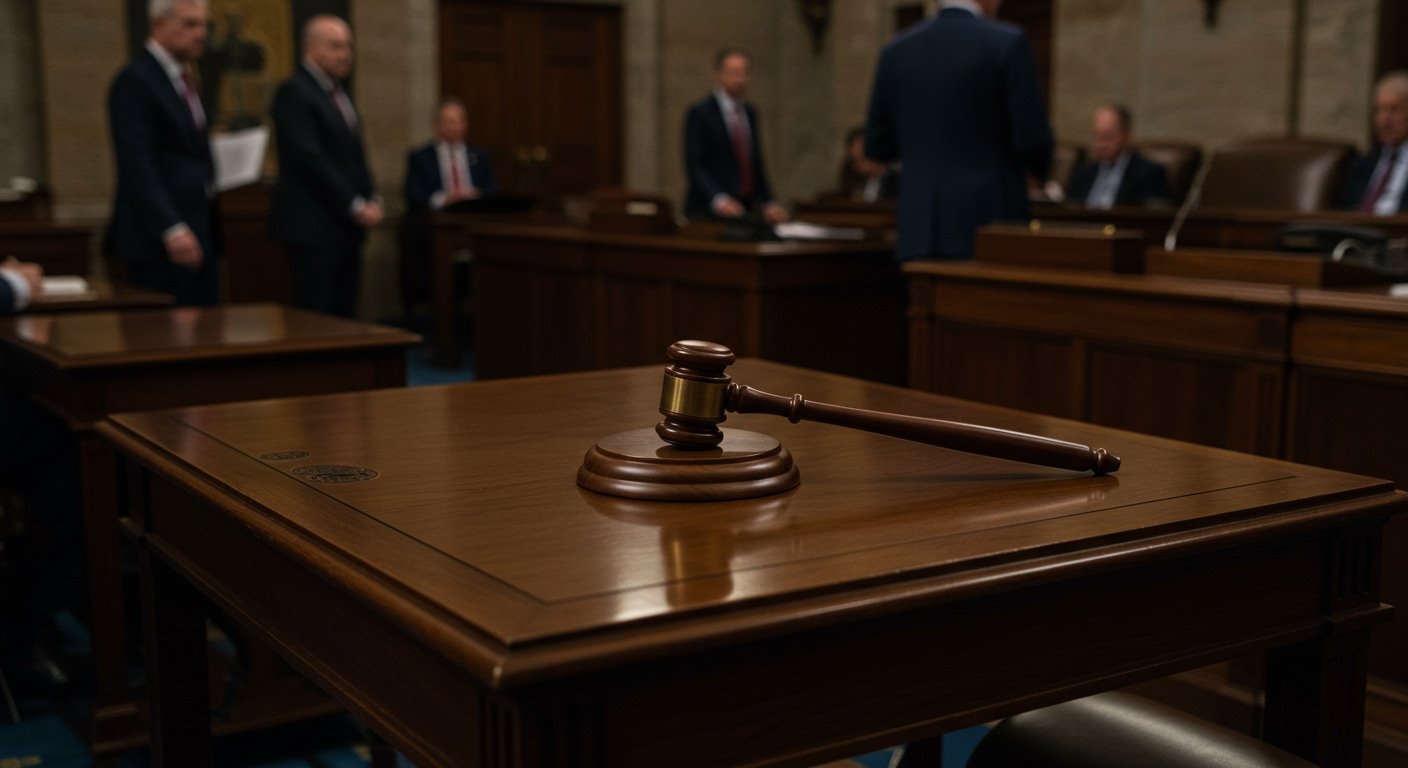



The intended target, Donald Trump, was golfing on the course that day with real estate investor Steve Witkoff. Routh’s position was strategically chosen, reportedly a spot sometimes used by paparazzi to photograph Trump. As Trump’s party moved between holes five and six, a Secret Service agent patrolling ahead of the former president’s group spotted Routh in the bushes. The agent testified that Routh aimed his rifle directly at him. In response, the agent fired at Routh, who then dropped his weapon and fled the scene in a vehicle without firing a shot. Trump was immediately escorted off the course by his security detail. While no shots were fired by Routh and Trump was unharmed, the Secret Service treated the incident as a serious assassination attempt.
Guilty Verdict on All Counts
After a trial that captivated national attention, the jury deliberated for less than three hours before returning a guilty verdict on all five federal charges against Routh. These included attempted assassination of a major presidential candidate, possessing a firearm in furtherance of a crime of violence, assaulting a federal officer, being a convicted felon in possession of a firearm and ammunition, and possessing a firearm with an obliterated serial number. Prosecutors successfully argued that Routh’s actions, including his extensive planning and possession of a loaded weapon, demonstrated a clear intent to kill Trump, despite Routh’s own closing arguments that no crime was committed because the trigger was never pulled.
Post-Verdict Meltdown and Self-Harm Attempt
The courtroom drama escalated immediately after the verdict was read. In a moment of apparent desperation or despair, Ryan Routh grabbed a pen from his desk and attempted to stab himself in the neck. Witnesses described U.S. Marshals quickly swarming him, tackling him to the ground, and restraining him before he could inflict serious injury. The pen used was reportedly a flexible, non-metallic type designed to prevent self-harm among detainees, mitigating the potential for serious injury. Routh’s daughter, Sara, who was present in the courtroom, cried out in distress, pleading with her father not to harm himself and expressing disbelief at the verdict, which she described as “rigged.”
Background and Unclear Motive
Investigators have been working to piece together Ryan Routh’s background and his motivations for targeting Trump. Routh, a former construction worker from North Carolina, had also spent time in Ukraine, where he reportedly sought to recruit foreign soldiers and displayed erratic behavior. He authored a self-published book in 2023 titled “Ukraine’s Unwinnable War,” which contained controversial passages, including encouragement for Iran to assassinate Trump, whom Routh described as a “buffoon” and “fool.” This sentiment appeared to contradict his past support for Trump, as he had voted for him in 2016. Prosecutors also revealed a note Routh left for friends, stating, “This was an assassination attempt on Donald Trump but I failed you. It is up to you now to finish the job.” The FBI has stated they are continuing to investigate whether Routh acted alone or had any accomplices, though current information suggests he was a lone actor.
Legal Ramifications and Sentencing
With his conviction on all five federal counts, Ryan Routh faces a maximum sentence of life in prison. The charges carry significant penalties: attempted assassination and possession of a firearm in furtherance of a crime of violence both carry maximum life sentences, while assaulting a federal officer carries up to 20 years, and the firearm possession charges carry additional prison time. His sentencing is scheduled for December 18, 2025. In addition to the federal charges, Routh also faces state charges in Florida for attempted felony murder, attempted first-degree murder, and terrorism. Attorney General Pamela Bondi lauded the verdict, stating it “illustrates the Department of Justice’s commitment to punishing those who engage in political violence” and that the attempt was “an attack on our Republic and on the rights of every citizen.” Deputy Attorney General Todd Blanche echoed this sentiment, emphasizing that such actions are an “attack on our Republic.”
Broader Security Concerns
The assassination attempt on Donald Trump at his Florida golf course was the second such incident in 2024, following the shooting at a Pennsylvania rally in July that grazed his ear. These events have intensified scrutiny on the U.S. Secret Service and its protective strategies for former presidents and presidential candidates. The agency has acknowledged the need for a “paradigm shift” in its approach, moving towards a “readiness model” rather than a purely reactive one, citing stretched resources during a particularly intense and divisive campaign season. Traditionally, former presidents and candidates receive less protection than sitting presidents, but Trump’s continued high profile and the heightened threat environment have led to discussions about augmenting security protocols and resources to meet contemporary challenges. This top American story underscores the persistent threat of political violence and the challenges in safeguarding public figures.
A Nation’s Reckoning
The conviction of Ryan Routh marks a significant moment in the ongoing narrative of political violence in the United States. While the immediate threat posed by Routh has been neutralized by the justice system, the incident serves as a stark reminder of the fragility of political discourse and the severe consequences that can arise from extreme ideologies. The attempts on Donald Trump’s life, and the subsequent legal proceedings, highlight the persistent challenges faced by law enforcement and the nation in ensuring security and maintaining public order amidst deep political divisions.