Washington D.C. – In a significant legal blow to the Trump administration’s immigration policies, two federal judges on Tuesday blocked the government from using the antiquated Alien Enemies Act of 1798 to expel Venezuelan immigrants without affording them due process protections.
The rulings represent the latest in a series of judicial challenges that have constrained the administration’s efforts to implement mass deportation plans, particularly those based on novel or rarely invoked legal authorities.
Key Judicial Interventions
Separately but concurrently, two distinct court orders delivered on Tuesday targeted the administration’s application of the Alien Enemies Act against Venezuelan nationals. In New York, US District Court Judge Alvin Hellerstein issued a ruling that effectively halted the removal of immigrants falling under the jurisdiction of his court in the Southern District of New York. Judge Hellerstein’s order prevents the government from utilizing the 1798 wartime statute as a basis for expelling these individuals without standard immigration proceedings.
Adding to the legal pressure, US District Judge Charlotte Sweeney in Colorado issued a preliminary injunction. This order specifically bars officials acting on behalf of the Trump administration from removing Venezuelan immigrants who have been detained within Colorado. Judge Sweeney’s injunction provides protection to a specific population of detained individuals, preventing their expulsion under the controversial act while the legal challenge proceeds.



These judicial actions underscore a fundamental disagreement between the courts and the executive branch regarding the scope and applicability of the Alien Enemies Act in contemporary immigration enforcement.
Legal Basis and Previous Challenges
The administration’s attempt to invoke the Alien Enemies Act, a law signed by President John Adams, was predicated on the claim that the influx of migrants, particularly from Venezuela, constituted an ‘invasion.’ Enacted during a period of heightened tension with France, the 1798 wartime law permits the president, in a time of declared war or invasion, to apprehend, restrain, secure, or remove from the territory of the United States any non-citizen who is a native, citizen, denizen, or subject of the hostile nation or government.
The recent rulings follow an earlier, permanent setback for the administration’s use of this specific authority. A Trump-appointed judge in Texas previously issued a permanent ruling against the administration’s invocation of the 1798 law for mass expulsions. That Texas ruling notably rejected the premise central to the administration’s justification – the claim of an invasion – finding it an insufficient basis to circumvent standard immigration procedures and due process rights guaranteed under modern law.
Critics have argued that applying a 200-year-old wartime statute designed for conflicts with specific foreign governments to broad categories of asylum-seekers and migrants is an unprecedented and legally dubious expansion of executive power.
Intelligence Assessments Contradict Administration Claims
Adding another layer of complexity and challenge to the administration’s position, reports indicate that US intelligence agencies have privately contradicted a key claim used to justify invoking the Alien Enemies Act against Venezuelans. According to these reports, intelligence agencies rejected the administration’s assertion that the Venezuelan government actively directs ‘trenda’ – a term reportedly used to characterize certain migrant movements or criminal activities associated with Venezuelan nationals.
This alleged intelligence assessment directly undermines a factual premise that the administration reportedly presented as central to its decision to classify Venezuelan nationals, at least in certain contexts, as potentially subject to the Alien Enemies Act.
Case Highlights Human Impact
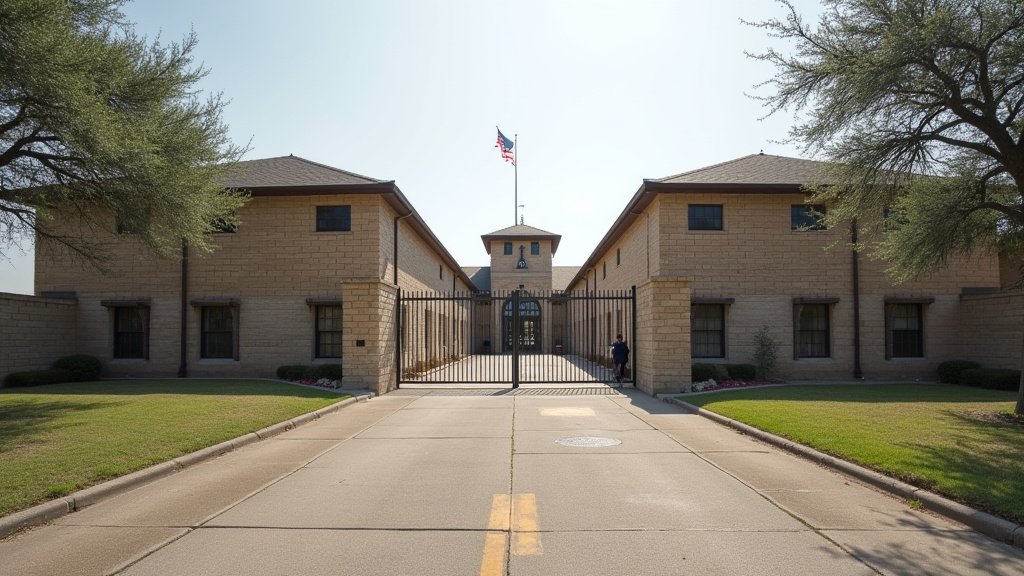
The legal battles are unfolding concurrently with disturbing details emerging from specific cases involving Venezuelan nationals. The case of Daniel Lozano Camargo provides a stark illustration of the potential consequences of aggressive, potentially unlawful removal actions. Lozano Camargo, a 20-year-old Venezuelan man, was reportedly sent illegally to El Salvador’s maximum security mega-prison in March.
His removal from the United States by Trump officials allegedly occurred in violation of a 2024 legal settlement. That settlement specifically prohibited immigration authorities from deporting Lozano Camargo while his asylum application remained pending adjudication. His case drew judicial intervention, and a federal judge in Maryland last month ordered his return to the United States, highlighting the legal complexities and human stakes involved in these immigration enforcement actions.
The combined effect of the recent rulings in New York and Colorado, coupled with the previous Texas decision and the troubling details of individual cases like Lozano Camargo’s, signals ongoing significant judicial skepticism regarding the Trump administration’s attempts to utilize historical and wartime statutes to bypass established immigration laws and due process requirements for non-citizens within the United States.