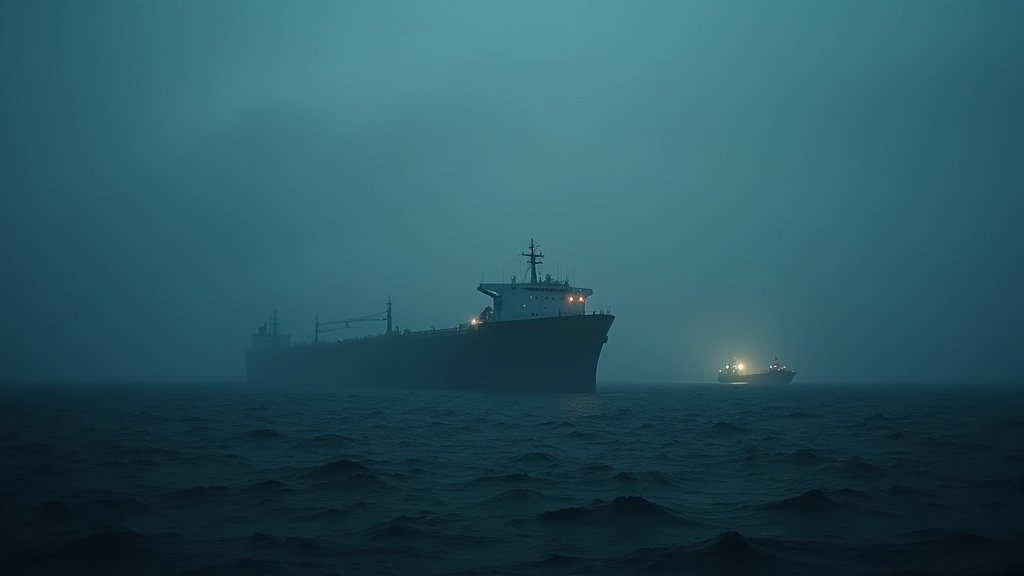
Global energy markets were jolted on Monday as Brent crude prices surged past $103 a barrel, driven by a direct escalation in the ongoing regional conflict. The spike comes immediately following President Donald Trump’s announcement that the US Navy would initiate a formal blockade of all Iranian ports, including critical transit zones within the Strait of Hormuz. The order, set to take effect at 10 a.m. ET, follows the sudden collapse of intensive ceasefire negotiations in Islamabad, which had previously offered a glimmer of hope for stabilizing the volatile energy corridor. As trading opened in Asia, indices faltered, and global commodities traders braced for what analysts are describing as a ‘worst-case’ supply chain disruption scenario.
Key Highlights
- Benchmark Surge: Brent crude soared by 8% to top $103 per barrel, while West Texas Intermediate (WTI) climbed sharply, reflecting deep anxiety over potential supply cutoffs.
- The Blockade Directive: The US Central Command (CENTCOM) confirmed the blockade will be enforced impartially against all vessels entering or departing Iranian ports, though transit through the broader Strait remains open for non-Iranian traffic.
- Diplomatic Breakdown: The move was triggered by the failure of 21-hour marathon ceasefire talks in Pakistan, leaving the status of the previously agreed two-week truce in total limbo.
- Chokepoint Vulnerability: With the Strait of Hormuz facilitating approximately 20% of global oil shipments, the threat of sustained blockage poses a severe risk to energy security, particularly for Asian economies heavily reliant on Middle Eastern imports.
The Geopolitical Anatomy of the Strait of Hormuz
The Strait of Hormuz is more than a waterway; it is the jugular vein of the global economy. Stretching roughly 21 miles at its narrowest point between Oman and Iran, this narrow passage acts as the primary maritime exit for the vast majority of oil and natural gas exports from Saudi Arabia, Iraq, the UAE, Kuwait, and Iran. When shipping through this corridor is threatened—as it has been since the conflict intensified in late February—the psychological and logistical impact on the global energy market is instantaneous and profound.
For weeks, the ‘de facto’ blockade imposed by Tehran during the heat of the war had already created a fractured market. While a fragile ceasefire had offered a brief, tepid recovery in shipping volumes, the latest announcement from the White House effectively terminates any residual stability. By pivoting to an active US naval enforcement model, the conflict has shifted from a regional skirmish to a direct confrontation over global trade infrastructure. Analysts at major financial firms are already revising their short-term forecasts upward, noting that the ‘risk premium’ on every barrel of oil passing through the Middle East has effectively doubled overnight.
The Failure of the Pakistan Negotiations


The collapse of the talks in Islamabad is being viewed by geopolitical experts as a watershed moment. The negotiations, which lasted nearly 21 hours, were designed to secure a long-term ceasefire and, crucially, to guarantee the unhindered flow of commercial shipping. When these talks failed, the primary leverage Tehran held—control over the Strait—was met with an equal and opposite force by Washington. The decision to blockade Iranian ports specifically is a strategic maneuver designed to choke the source of the conflict’s economic engine, effectively isolating Iran’s ability to export crude while maintaining the facade of ‘freedom of navigation’ for the rest of the world’s energy flows. However, the market reaction suggests that traders remain skeptical of this ‘impartial enforcement’ rhetoric, fearing the inevitable escalation if an Iranian-flagged vessel or a tanker chartered by a partner nation attempts to defy the blockade.
Economic Fallout and the New Energy Reality
The immediate financial reaction has been visceral. Asian stock markets, particularly those in Tokyo, Seoul, and Hong Kong, have seen significant dips as manufacturing hubs realize that the price of energy inputs is once again becoming untethered from fundamentals. For countries like India, Malaysia, and Japan, the volatility is not just an economic statistic; it is a threat to domestic industrial production and consumer price stability.
Secondary Angles: Long-term Consequences
1. The Infrastructure Lag: Even if the blockade were lifted tomorrow, the physical damage to regional ports and the logistical ‘bottleneck’ effect means that supply chains would take weeks, if not months, to recover. The infrastructure is not designed for sudden stops and starts.
2. The Shift to Alternative Benchmarks: We are seeing an accelerated push by emerging economies to secure long-term, non-Middle Eastern energy contracts. This could permanently alter the buyer-supplier dynamic that has dominated energy markets since the 1970s, as nations look to diversify away from the volatile Gulf corridor.
3. The Role of Non-State Actors: There is a growing concern about how independent shipping entities and shadow fleets will navigate the blockade. As sovereign nations maneuver, the ‘gray market’ for oil could see an explosion in activity, further complicating the enforcement of international sanctions and naval directives.
As the blockade commences, the eyes of the world are turned to the Strait. The intersection of naval military strategy and global energy supply is perhaps at its most precarious point in decades. With Brent holding above the triple-digit threshold, the pressure on Washington to achieve a swift diplomatic resolution—or for the blockade to demonstrate immediate, non-violent compliance—is mounting by the hour. We are entering a period of extreme market fragility, where the smallest incident in the Strait could ripple through the global economy in ways that traditional monetary policy is ill-equipped to combat.
FAQ: People Also Ask
Q: How long is the US naval blockade of Iran expected to last?
A: There is no official expiration date provided by the White House or CENTCOM. The duration is linked to the broader security situation in the region and the status of diplomatic relations, which are currently at a stalemate.
Q: Will this blockade affect oil shipments from other Gulf countries?
A: The US Central Command has stated that the blockade is intended to be ‘enforced impartially’ against vessels associated with Iran. However, the operational reality of managing naval checkpoints in such a congested waterway creates inherent risks and delays for all commercial traffic.
Q: Why did oil prices spike so dramatically on this news?
A: Markets thrive on certainty and panic when that certainty evaporates. The threat of a full blockade of the Strait of Hormuz—the world’s most important energy chokepoint—creates a ‘supply shock’ premium, where traders bid up prices due to the legitimate fear of physical shortages of crude oil.
Q: What is the current status of the Strait of Hormuz ceasefire?
A: The ceasefire, which was intended to facilitate the reopening of the Strait, is effectively void following the failure of negotiations in Pakistan and the subsequent announcement of the US blockade.