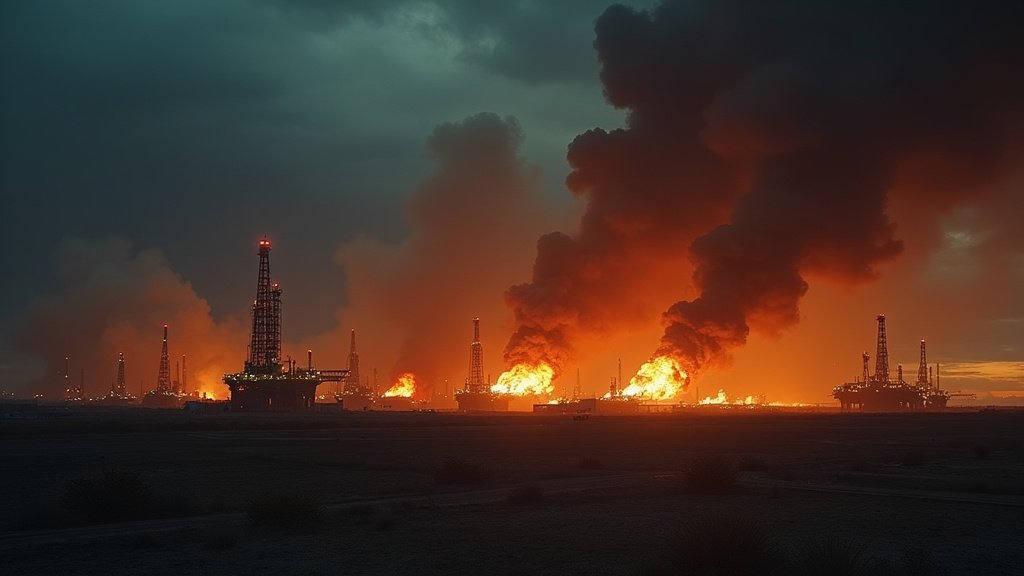
The Middle East is on high alert as escalating conflicts and security threats prompt urgent warnings and military actions. Overnight, the U.S. Embassy in Baghdad issued a critical advisory for all American citizens to depart Iraq immediately, citing a second attack on the diplomatic mission. This comes as the U.S. military confirmed the deaths of four service members in a refueling plane crash within Iraq. Concurrently, reports indicate that Israel is preparing for a substantial ground invasion of southern Lebanon, a move that could further destabilize the already volatile region. These developments underscore the deepening crisis and rising tensions involving the United States, Iran, Iraq, and Israel.
The Deep Dive
US Embassy Attack and Evacuation Warning
The situation in Iraq has reached a critical juncture, compelling the U.S. Embassy in Baghdad to issue an immediate evacuation notice for all American citizens. This drastic measure follows a second overnight attack on the embassy, with the U.S. State Department directly attributing these actions to militias allied with Iran. These groups are accused of conducting a series of targeted attacks against facilities and interests associated with the United States. The warning explicitly advised Americans against approaching the embassy or the U.S. consulate in Erbil, recommending overland travel to neighboring countries due to the disruption of commercial flights. The advisory highlighted the growing threat to American lives and interests in the country, signaling a significant deterioration in security conditions.
Fatal Aircraft Crash in Iraq



Adding to the grim news from Iraq, the U.S. military has confirmed the tragic loss of four service members. The service members were aboard a U.S. refueling aircraft that crashed while on a combat mission in western Iraq. The U.S. Central Command (CENTCOM) stated that the crash occurred over friendly territory and was not a result of hostile fire, either from enemy or allied forces. While the exact cause of the crash is still under investigation, the incident underscores the inherent risks faced by military personnel operating in active conflict zones. The loss of these four individuals represents a significant blow to the U.S. military presence and ongoing operations in the region.
Israeli Ground Invasion Plans for Lebanon
In a parallel development that significantly raises the stakes in the region, Israel has reportedly finalized plans for a “massive” ground invasion of southern Lebanon. Citing U.S. and Israeli officials, reports suggest the operation aims to push back the Iran-backed Hezbollah militant group from the border and dismantle its extensive network of weapons and positions. The planned offensive is said to encompass the entire area south of the Litani River, a strategic waterway bisecting Lebanon. This operation is seen by Israeli officials as inevitable following a large-scale rocket attack launched by Hezbollah on northern Israel earlier in the week. The potential for a full-scale ground war between Israel and Hezbollah carries profound implications for regional stability and could draw in other international actors.
Broader Regional Implications and Global Concerns
The confluence of these events—embassy attacks, military losses, and impending ground invasions—creates a deeply concerning picture for the broader Middle East and the global community. The ongoing conflict with Iran, whether direct or through proxy militias, continues to be a primary driver of instability. The U.S. advisory to leave Iraq is a stark indicator of the perceived threat level. Similarly, Israel’s planned offensive in Lebanon risks a significant escalation, with potential for widespread conflict and humanitarian crisis. Global powers are closely monitoring the situation, with concerns about the impact on international shipping lanes, particularly through the Strait of Hormuz, and the potential for a wider conflagration that could disrupt global energy markets and plunge the region into further chaos. The interconnectedness of these conflicts means that actions taken by one state or group can have cascading effects across the region and beyond.
FAQ: People Also Ask
Why are U.S. citizens being urged to leave Iraq?
U.S. citizens are being urged to leave Iraq due to a significant increase in security threats, including a second attack on the U.S. Embassy in Baghdad. U.S. officials attribute these attacks to Iran-aligned militias, which are also reportedly targeting other U.S. interests in the country. The situation has led to an immediate advisory for Americans to depart for safety reasons.
What caused the U.S. refueling plane to crash in Iraq?
The U.S. military has confirmed that four service members died when a refueling aircraft crashed in western Iraq. While the crash occurred over friendly territory and was not attributed to hostile fire, the exact cause is still under investigation. Military operations in such environments carry inherent risks.
What is the significance of Israel’s potential ground invasion of southern Lebanon?
Israel’s reported plans for a large-scale ground invasion of southern Lebanon are a significant development aimed at dislodging Hezbollah from the border region. Such an operation carries the risk of a major escalation of conflict, potentially leading to widespread devastation and a humanitarian crisis, with far-reaching implications for regional stability.