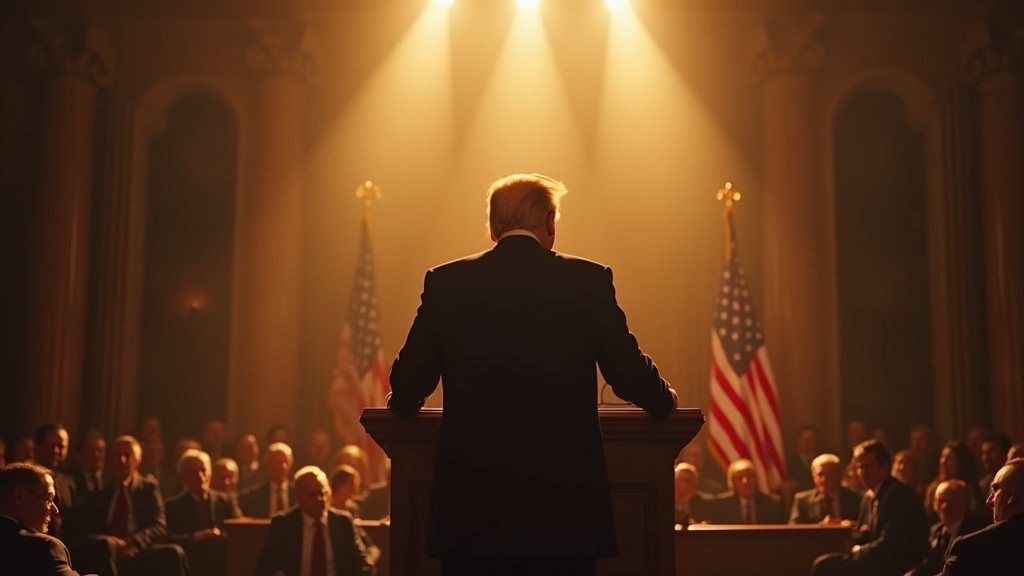
In a significant political development, the U.S. Senate has confirmed a large batch of 48 nominees put forward by President Donald Trump, utilizing newly implemented procedural rules to expedite the confirmation process. This action clears a backlog of executive branch positions that had been slowed by Democratic opposition. The Senate Republicans, frustrated by what they termed “stalling tactics,” revised chamber rules to allow for the confirmation of multiple nominees in large groups, or “en bloc,” with a simple majority vote, a process previously subject to a single senator’s objection. Senate Majority Leader John Thune stated the move “fixed a broken process,” while critics, including Senate Minority Leader Chuck Schumer, argued it allows for the “rubber stamp” approval of nominees. Among those confirmed were Kimberly Guilfoyle as Ambassador to Greece and Callista Gingrich as Ambassador to Switzerland and Liechtenstein. These confirmations highlight a dynamic shift in American politics regarding the efficiency of presidential appointments.
Trump Eyes Return to Bagram Air Base
Concurrently, former President Donald Trump announced that the United States is actively seeking to regain control of Bagram Air Base in Afghanistan, a facility he described as a critical strategic asset. Trump cited the base’s strategic proximity to China’s nuclear weapons facilities as a primary reason for its importance, stating it is “an hour away from where China makes its nuclear weapons”. He heavily criticized the 2021 withdrawal under the Biden administration as a “total disaster,” asserting that the base was “given away for nothing”. Bagram Air Base, once the largest U.S. military installation in Afghanistan, served as a crucial hub for American operations for two decades before the withdrawal. Regaining control of Bagram would reestablish a significant military and intelligence foothold in Central and South Asia, potentially allowing the U.S. to monitor and counterbalance regional powers like China, Russia, and Iran. Trump has claimed China currently occupies the base, an assertion denied by Afghan authorities and the Taliban, who maintain control of the facility. Trump hinted at ongoing diplomatic efforts, suggesting the Taliban “need things from us” to potentially facilitate the base’s return.
Trump’s Stance on the Ukraine War
In remarks made during a joint press conference with British Prime Minister Keir Starmer, Trump also addressed the ongoing Russia-Ukraine conflict. He expressed disappointment with Russian President Vladimir Putin, stating he “really let me down” and that he believed the war would have been “easiest” to resolve due to his personal relationship with Putin. Trump reiterated his criticism of European nations for their reliance on Russian oil, describing it as a strategic liability and suggesting that a reduction in oil prices or cessation of Russian sales could lead to a settlement. He further proposed that if the European Union were to impose sanctions or tariffs on China, the largest purchaser of Russian oil, it might compel an end to the war. Trump indicated that while he would help “secure the peace” after the conflict, the timing for such actions was not yet appropriate, and any intervention would be “harsh”. His comments reflect a complex geopolitical landscape where American foreign policy and international relations are being actively shaped.
Broader Political Context
The confirmation of numerous nominees under expedited rules, coupled with Trump’s assertive foreign policy pronouncements on Bagram and Ukraine, underscore significant currents within American politics. The Senate’s procedural changes signal a strategic move to enhance the administration’s capacity to fill key positions, while Trump’s foreign policy statements indicate a proactive approach to geopolitical challenges and strategic competition. This news update highlights the intersection of domestic political maneuvering and international affairs.