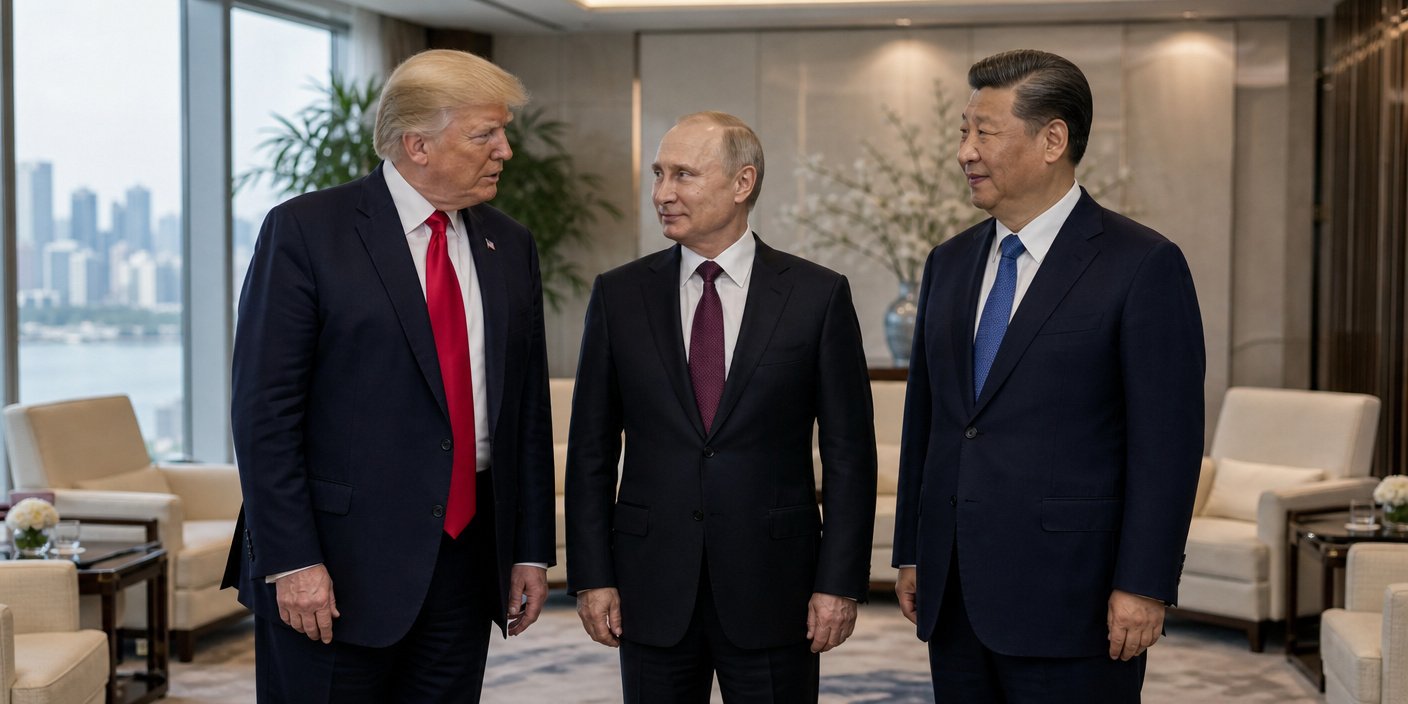
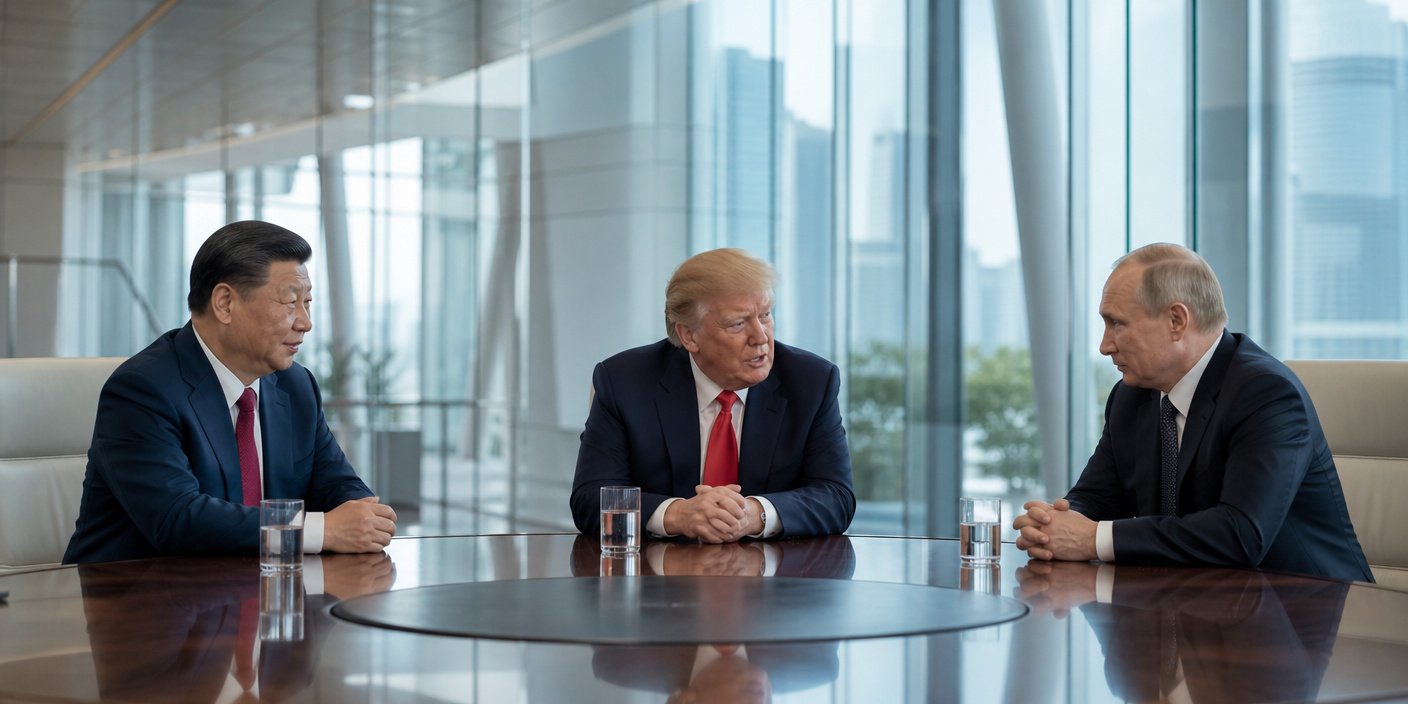
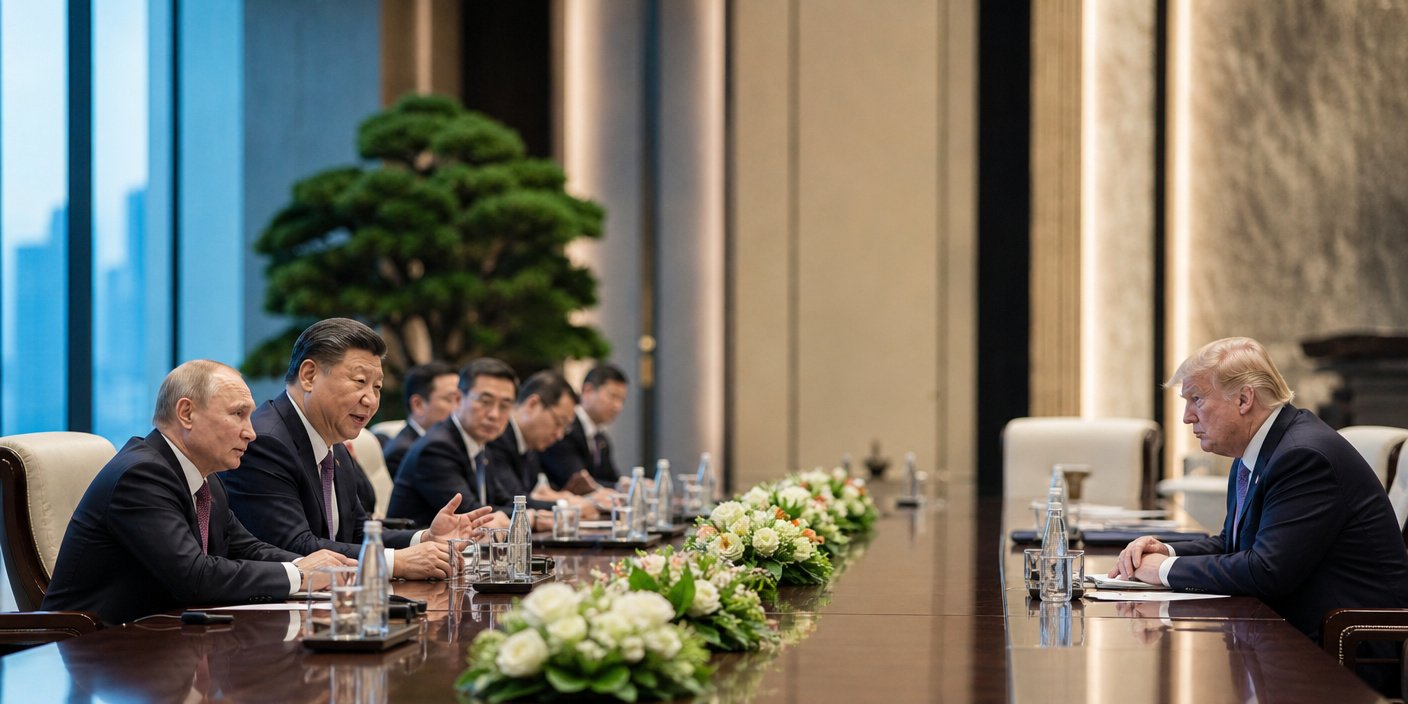
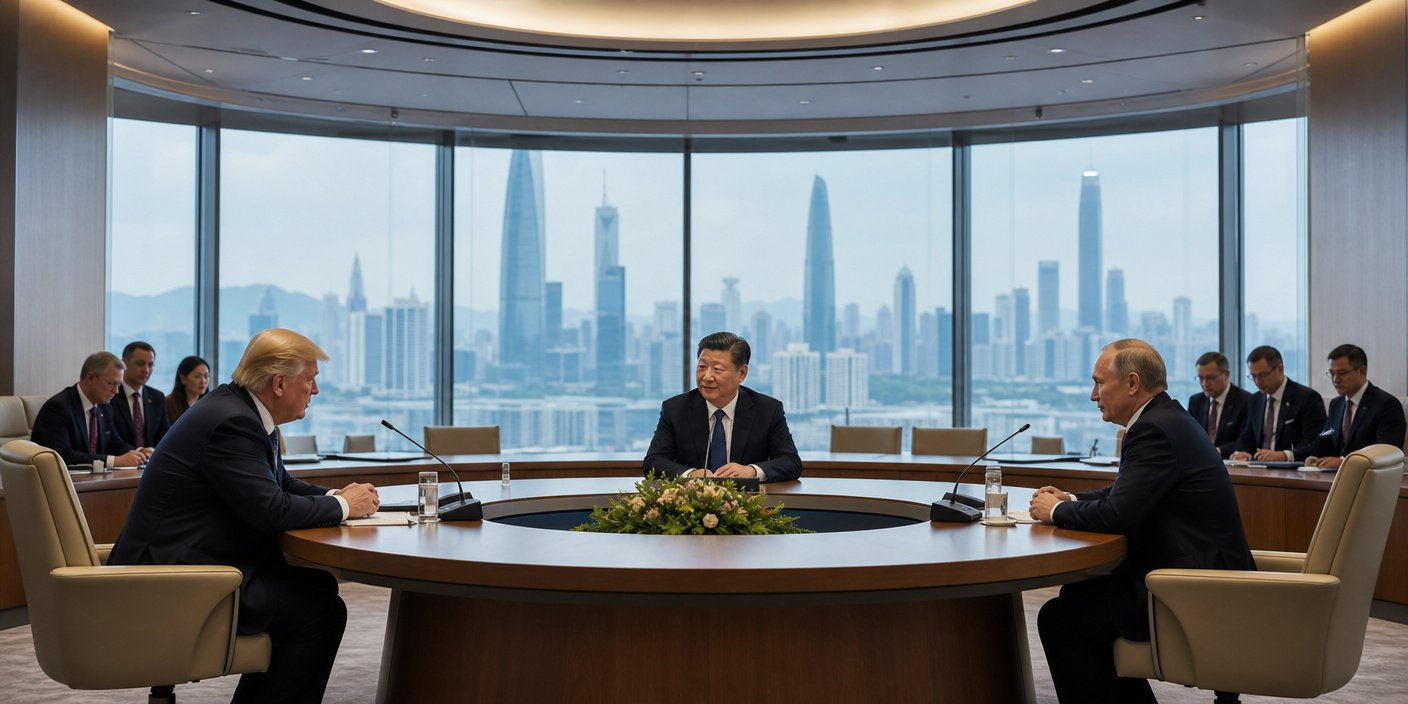
In a rare and highly orchestrated trilateral summit held on the sidelines of the APEC summit in Shenzhen, China, U.S. President Donald Trump, Chinese President Xi Jinping, and Russian President Vladimir Putin convened for high-level discussions aimed at stabilizing a rapidly fragmenting global order. The meeting, which marks a significant departure from standard diplomatic protocol, centered on the urgent necessity of recalibrating nuclear arms control agreements and addressing the escalating geopolitical instability surrounding the ongoing conflicts in Ukraine and Iran. As the world watches, this meeting represents the most direct attempt in years to bridge the widening strategic chasm between the three nuclear superpowers.
Key Highlights
- Trilateral Summit: President Trump, President Xi, and President Putin held a closed-door session in Shenzhen to address existential security threats.
- Nuclear Arms Control: The leaders prioritized dialogue on modernizing non-proliferation frameworks and preventing unintended escalation.
- Geopolitical Crisis Management: Concrete discussions were held regarding the de-escalation of the conflict in Ukraine and diplomatic pathways for the Iranian situation.
- APEC Integration: The meeting was strategically timed alongside the APEC summit, signaling an intent to link global economic stability with security architecture.
Re-Engineering Global Stability: The Shenzhen Accord
The Shenzhen trilateral meeting stands as a pivotal moment in contemporary international relations. By gathering in a focused, high-stakes environment, the U.S., Chinese, and Russian delegations sought to bypass traditional multilateral bottlenecks that have long stifled progress on core security issues. This summit, hosted in the technological hub of Shenzhen, was not merely ceremonial; it was a deliberate, tactical maneuver to address the ‘strategic trinity’—the interplay between the U.S. global security umbrella, China’s economic expansion, and Russia’s regional territorial goals.
The Nuclear Architecture
At the forefront of the agenda was the modernization of the Non-Proliferation Treaty (NPT) and the status of existing bilateral treaties. For decades, the global nuclear order has rested on the dual pillars of U.S. and Russian compliance. However, with China’s accelerating nuclear modernization program, the existing frameworks are viewed by many experts as insufficient.
During the talks, the leaders explored a potential tripartite mechanism for data exchange regarding ICBM testing and missile defense installations. The primary goal is to establish a ‘hotline’ architecture—a modern update to the classic Cold War era communication channels—designed to prevent the miscalculation of strategic movements. The International Atomic Energy Agency (IAEA) has long advocated for increased transparency, and this Shenzhen meeting serves as a realization of that pressure. Analysts suggest that any framework coming out of these talks would likely involve rigorous verification protocols to ensure that neither party gains a decisive technological advantage that could upset the balance of mutually assured destruction (MAD).
Navigating the Ukraine and Iran Flashpoints



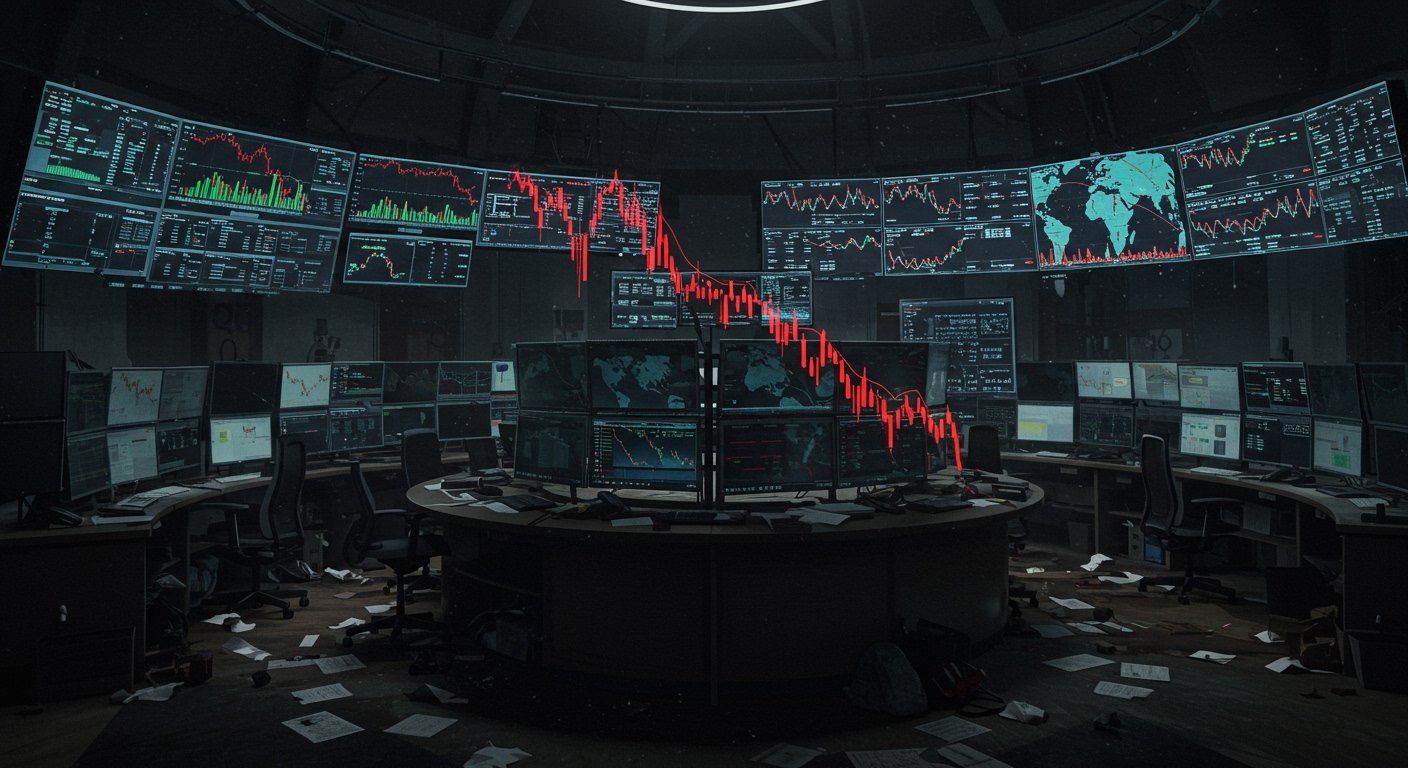
Beyond nuclear posture, the leaders engaged in substantive debate regarding current hot-war scenarios. The conflict in Ukraine remains the most significant hurdle for U.S.-Russian relations, while the Iranian regional influence continues to challenge the stability of the Middle East and the global energy market.
Regarding Ukraine, the discussions reportedly touched upon the necessity of an immediate cease-fire framework that could be managed by neutral oversight committees. While details remain shielded, the focus was on ‘off-ramps’ that would allow for a reduction in hostilities without forcing any party into a position of perceived strategic defeat.
Simultaneously, the situation in Iran presents a complex web of economic and security interests. Both China and Russia have maintained strong economic ties with Tehran, while the U.S. remains focused on containing Iranian nuclear proliferation and regional support for proxy militias. The Shenzhen talks aimed to create a ‘quarantine’ effect for these conflicts—ensuring that regional territorial disputes do not trigger a wider, globalized confrontation between the three superpowers.
Strategic Interdependence and Future Projections
We are witnessing the end of a unipolar era and the birth of a complex, multipolar reality where security cannot be separated from economic interdependence. The Shenzhen venue is symbolic in this regard; as a global center for technology and supply chain logistics, it underscores that any security collapse would lead to immediate economic catastrophe.
The secondary angle of this summit is the potential for a ‘Grand Bargain’—a series of interconnected concessions. If the U.S. can secure cooperation on the Iran front, it may be willing to offer concessions regarding technological trade restrictions that currently hamper Chinese growth. Conversely, Russia is looking for a path to reintegrate into the global financial system, which hinges heavily on its posture regarding the Ukraine conflict. The Shenzhen meeting has set the stage for a period of intense ‘shuttle diplomacy’ that will test the resolve and flexibility of all three administrations.
FAQ: People Also Ask
Q: Why was the meeting held in Shenzhen?
A: Shenzhen, as a global nexus for high-tech manufacturing and the ‘Silicon Valley of China,’ symbolizes the intersection of modern economic prosperity and national security. Hosting the event here emphasizes that global security is inextricably linked to technological stability.
Q: Is there an official ‘Shenzhen Treaty’ resulting from this?
A: As of this report, the leaders have agreed to a ‘framework of principles’ rather than a binding treaty. This is designed to serve as a roadmap for lower-level diplomatic teams to follow in the coming months.
Q: How does this impact the UN Security Council?
A: The trilateral nature of these talks bypasses the UN Security Council’s frequent gridlock. While the UN remains the official forum for international law, this meeting suggests the three leaders are prioritizing direct, high-level negotiation to resolve disputes that the Security Council has failed to settle.
Q: What is the significance of the nuclear focus?
A: With the proliferation of hypersonic technology and the expiration of several older arms control treaties, the ‘strategic stability’ of the world has been at its lowest point in decades. This meeting is an attempt to define new ‘rules of the road’ for the 21st-century nuclear landscape.