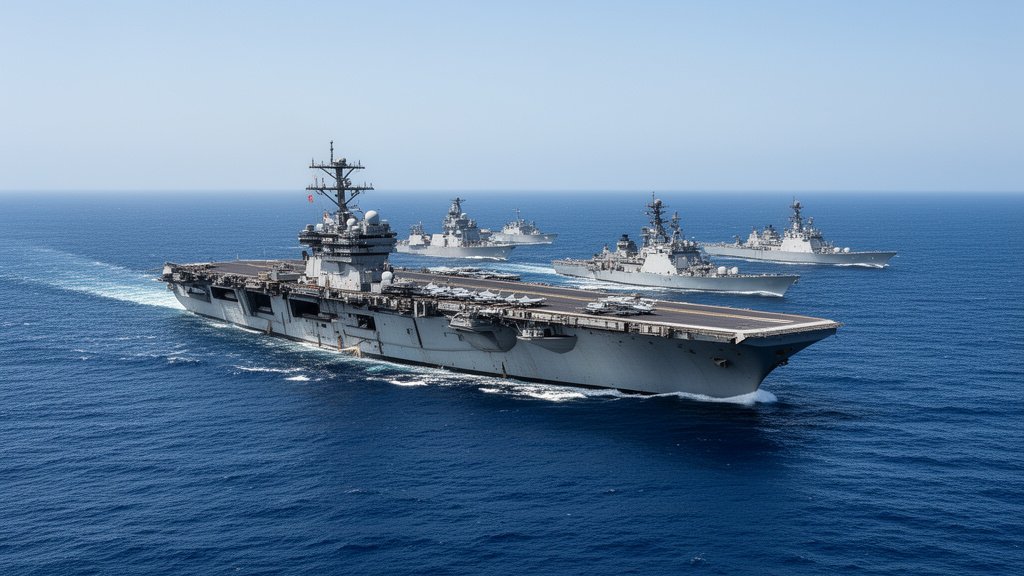
The USS Abraham Lincoln, the crown jewel of the U.S. Navy’s carrier fleet, has officially docked in San Diego, marking the conclusion of a historic and arduous 321-day deployment. For nearly eleven months, the vessel and its accompanying strike group remained stationed in the Middle East, serving as the primary instrument of American military deterrence during a period of escalating friction with Iran. This homecoming, a welcomed event for the thousands of sailors and their families, arrives at a critical juncture in U.S. foreign policy. President Donald Trump has concurrently signaled a shift in strategy, confirming that the administration will avoid authorizing further military strikes against Iranian targets until after the midterm elections, aiming to stabilize the geopolitical landscape during a volatile domestic political cycle.
Key Highlights
- Record Deployment: The USS Abraham Lincoln concludes a 321-day mission, one of the longest continuous carrier deployments in modern naval history.
- Operational Theater: The strike group operated primarily in the Middle East, maintaining a constant presence to counter Iranian military posturing.
- Political Shift: President Trump has officially paused new kinetic military actions against Iran to focus on the domestic political climate surrounding the upcoming midterm elections.
- Naval Readiness: The return triggers a major maintenance cycle for the carrier, highlighting the wear and tear caused by an extended operational tempo.
The Strategic Marathon: 321 Days at Sea
The return of the USS Abraham Lincoln to Naval Air Station North Island is more than just a logistical conclusion to a mission; it represents a significant stress test for the United States Navy’s operational capabilities. A standard carrier deployment typically lasts between six and seven months. Stretching this duration to 321 days requires immense coordination, supply chain resilience, and endurance from the crew. Throughout this nearly year-long absence, the USS Abraham Lincoln served as a floating airfield and a projection of power that forced regional adversaries to calibrate their responses based on American proximity.
This deployment was characterized by an exceptionally high operational tempo. Unlike training exercises, the mission in the Middle East necessitated constant readiness. Aircraft from the carrier were frequently scrambled, and the Aegis-equipped destroyers within the strike group were tasked with monitoring Iranian naval movements and ballistic missile threats. The physical toll on the ship—the corrosion from saltwater, the mechanical strain on the propulsion systems, and the degradation of flight deck non-skid surfaces—is a physical testament to the high-stakes environment the crew inhabited for the better part of a year.
The Middle East Operational Theater
For the duration of the deployment, the USS Abraham Lincoln functioned as the centerpiece of U.S. regional strategy. The Middle East remains a complex theater where traditional naval doctrine meets asymmetric warfare. By maintaining the carrier group in the region, the U.S. sent a clear message regarding the protection of international shipping lanes, particularly through the Strait of Hormuz.



However, the presence of such a massive asset also drew constant scrutiny. The carrier strike group had to navigate sensitive diplomatic waters, balancing the need to project strength against the necessity of avoiding accidental escalation. The intelligence-gathering capabilities of the carrier’s air wing provided the Pentagon with real-time data, which was instrumental in managing the U.S. war with Iran. Now that the ship has returned, the power vacuum left by its absence will require a recalibration of U.S. assets in the region, testing the flexibility of the remaining naval forces stationed in the Persian Gulf and the surrounding waters.
Domestic Policy and the Trump Doctrine
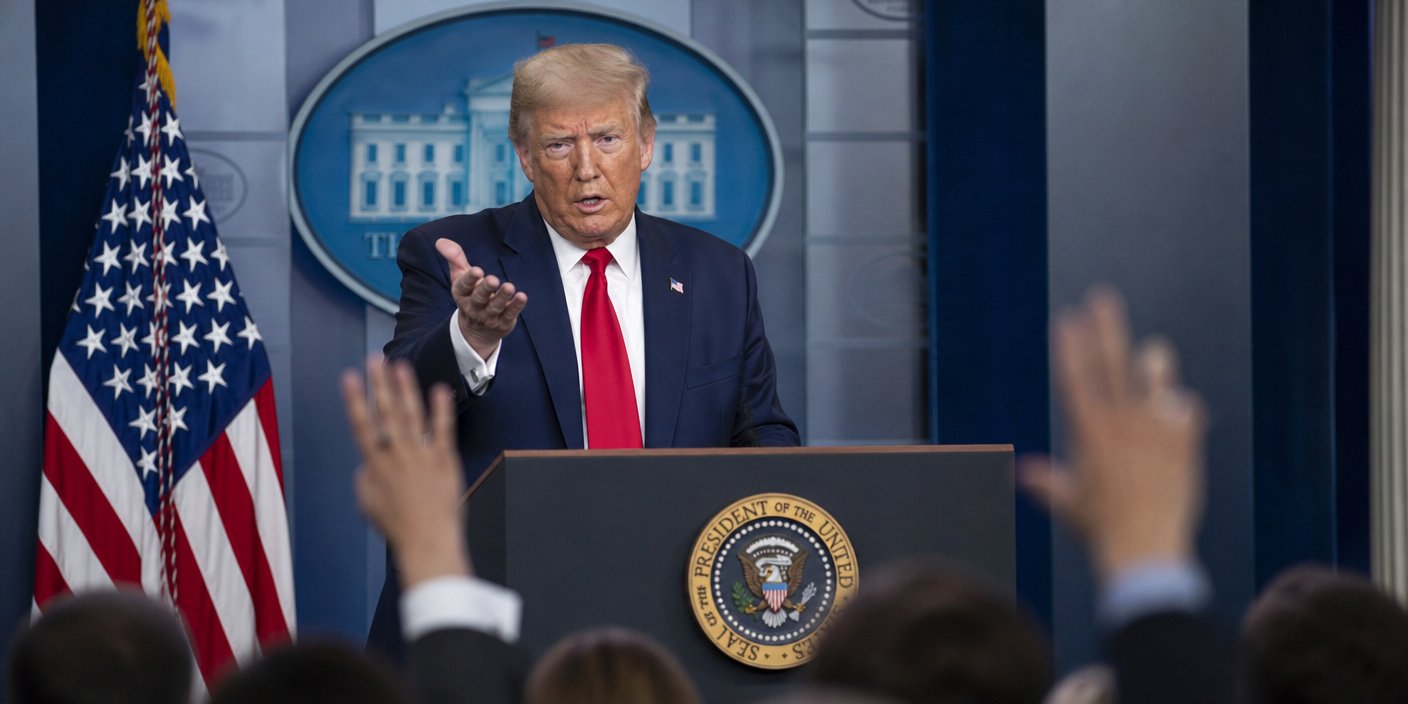
The timing of the carrier’s return coincides with a pivotal shift in the White House’s approach to the conflict. President Trump’s announcement that the U.S. will hold off on further strikes against Iran until after the midterm elections is a tactical decision that blends foreign policy with domestic electoral strategy. By removing the immediate threat of further kinetic military action, the administration appears to be prioritizing domestic stability and focusing voter attention on economic and social issues, rather than foreign conflicts.
Critics of the administration argue that this “election-year truce” might be perceived as a weakness or an opening for Iranian proxies to reorganize. Conversely, proponents argue that the decision prevents the possibility of a surprise escalation that could roil global energy markets or cause an unpredicted shock to the economy just weeks before citizens head to the polls. This freeze on military action is effectively a pause button on the “hot” phase of the conflict, allowing the intelligence community to reassess Iranian capabilities while the political landscape stabilizes.
Post-Deployment: Maintenance and Personnel Recovery
Now that the Lincoln is home, the immediate focus shifts to “resetting” the ship and its crew. A 321-day deployment takes an immense toll on morale. The “deployment fatigue” that accompanies such long stretches at sea is a well-documented issue within the Navy. Sailors are slated for substantial leave, but the ship itself requires a massive overhaul.
Maintenance crews are already preparing for a “Dry Dock” period, which is essential for a ship of this age and operational history. This phase will involve repairing flight deck arresting gear, updating radar systems, and performing deep-hull inspections that cannot be conducted while the ship is underway. Furthermore, the air wing—the pilots and ground crew who kept the aircraft in the air throughout the mission—will require extensive retraining and recertification. The return of the Lincoln serves as a reminder that American global power is not just about the ships themselves, but the human and industrial infrastructure required to keep them battle-ready. As the U.S. Navy prepares for future maritime challenges, the lessons learned from the Lincoln’s 321-day ordeal will be studied to refine deployment models and ensure that such extreme mission lengths do not become the new standard.
FAQ: People Also Ask
Q: Why was the USS Abraham Lincoln deployed for 321 days instead of the usual 6 months?
A: The extended deployment was necessitated by the heightened state of tension in the Middle East. The Navy required a continuous, high-readiness presence to deter Iranian aggression, which took precedence over standard rotation schedules.
Q: Does the return of the ship signal an end to the U.S. involvement in the Iran conflict?
A: No. While the President has paused new strikes until after the midterms, it is a strategic pause rather than a cessation of hostilities. The U.S. maintains significant regional assets to respond to threats.
Q: What happens to the sailors after a 321-day deployment?
A: Sailors typically enter a period of “post-deployment leave” to reconnect with their families, followed by specialized training and the commencement of the ship’s maintenance and repair cycle.
Q: How does the election-year strike pause affect military readiness?
A: It allows for maintenance and restructuring. While kinetic operations are paused, intelligence gathering, surveillance, and diplomatic efforts continue to ensure the U.S. retains its defensive advantage.