Skip to content
Trending
July 4, 2025Tesla’s Optimus Robot Project Hits Supply Chain Snag, Undergoes Major Design Overhaul November 4, 2025World Leaders Unite in Doha for Just Societies: Landmark Declaration Promises Action on Poverty, Jobs, and Equality March 28, 2026Luxury & Street: How This Partnership Drives Culture May 22, 2025US Business Activity Accelerates in May as Inflation Pressures Mount, PMI Data Reveals February 13, 2026Rose Byrne Crowned Harvard’s 2026 Hasty Pudding Woman of the Year October 13, 2025Warner Bros. Discovery Rejects Paramount’s $20 Per Share Takeover Bid, Citing Undervaluation Amid Industry Consolidation June 26, 2026Rangers Defy Trump Order: Black History Lives On June 12, 2026Trump’s Iran Gambit: War Hopes & Unmet Goals May 20, 2025WHO Approves Pandemic Preparedness Accord Amidst Severe Funding Crisis Impacting Healthcare in 70+ Countries October 16, 2025US Obesity Rates: States Achieve First Decline in Over a Decade Amidst Funding Concerns
  • Home
  • Top Stories
  • National News
  • Health
  • Business
  • Tech & Innovation
  • Entertainment
  • Politics
  • Culture & Society
  • Crime & Justice
  • Editorial
  • Home
  • Top Stories
  • National News
  • Health
  • Business
  • Tech & Innovation
  • Entertainment
  • Politics
  • Culture & Society
  • Crime & Justice
  • Editorial
  • Blog
  • Forums
  • Shop
  • Contact
  Culture & Society  The Art Trump Didn’t Want: The Legacy of Federal Grant Wars
Culture & Society

The Art Trump Didn’t Want: The Legacy of Federal Grant Wars

Curtis BradleyCurtis Bradley—September 26, 20260
FacebookX TwitterPinterestLinkedInTumblrRedditVKWhatsAppEmail

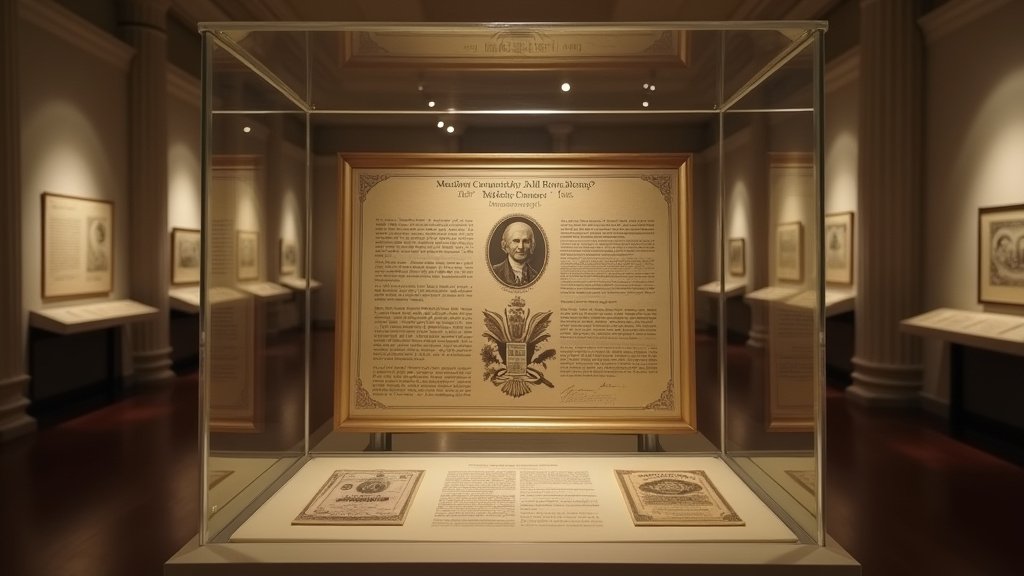
The budgetary threats directed toward the National Endowment for the Arts (NEA) and the National Endowment for the Humanities (NEH) during the Trump administration were, in many ways, a performative ritual of partisan politics. Year after year, the White House proposed the total elimination of these agencies—a bold, headline-grabbing move that signaled to the conservative base that the era of taxpayer-funded ‘elites’ was over. However, the reality on the ground was far more complex than the binary of ‘defunded vs. funded.’ A rigorous investigation by Reveal News highlights that while the agencies survived thanks to consistent bipartisan pushback from Congress, the relentless political assault created a ‘chilling effect’ that fundamentally altered how arts organizations operate, apply for grants, and perceive their own boundaries.

The Legislative Tug-of-War: A Repeat Performance

For four consecutive fiscal years (2018–2021), the Trump administration’s proposed budgets sought to zero out the NEA and NEH. These proposals were not subtle; they were explicit demands to terminate cultural funding. Yet, each time, the House and Senate Appropriations Committees—controlled by varying majorities—rebuffed the administration. These budget cycles became a recurring drama where arts organizations lived in a state of suspended animation. While federal appropriations remained stable, the looming threat of sudden cancellation forced many nonprofits and state arts agencies to diversify their funding streams rapidly, often at the expense of risky, experimental, or politically sensitive programming.

The Chilling Effect: When Self-Censorship Becomes Policy

More stories

Filipino Towns Across America: Vibrant Cultural Hubs Preserving Heritage and Elevating Community Visibility

October 18, 2025

Majority of Americans Express Worry Over Trump Administration’s Early Prospects, Poll Finds

February 25, 2025

Historic Vatican Conclave Elects First American Pope: Cardinal Robert Francis Prevost Becomes Pope Leo XIV

May 8, 2025

National School Board Battles Intensify Over Content, Culture Wars Reach Classrooms

May 24, 2025

Perhaps the most damaging legacy of this period is not a lack of funding, but the pervasive ‘chilling effect’ reported by artists and administrators. Reveal News’ findings suggest that the constant threat of defunding forced cultural institutions into a position of defensive caution. Curators, directors, and artists began to internalize the administration’s hostility. Projects that focused on controversial or polarizing topics—such as climate change, systemic racism, or LGBTQ+ narratives—were quietly deprioritized in grant proposals.

This form of ‘soft censorship’ is notoriously difficult to track, as it occurs in the silence of rejected pitches and the hesitation of project directors. When the agency overseeing your grants is publicly threatened with extinction, you do not test the limits of what is acceptable; you conform to the safest possible denominator. This shift effectively eroded the mandate of the NEA: to support the full breadth of American culture, including that which is avant-garde, provocative, and challenging. The psychological toll on the arts sector was a withdrawal from the ‘culture wars,’ an attempt to maintain a low profile in a climate where visibility equaled vulnerability.

Administrative Obstacles and the Erosion of Accessibility

Beyond the psychological impact, the administrative landscape became noticeably more hostile. The investigation highlights an increase in bureaucracy and reporting requirements that functioned as a barrier to entry. For small, regional, or rural arts organizations—groups that often rely on federal support to bridge the gap between amateur and professional output—the sheer volume of administrative compliance became an economic hurdle.

During the tenure of politically appointed leadership at these agencies, grant review panels were scrutinized with heightened intensity. While standard peer-review processes remained largely intact, the underlying directive was clear: projects must be ‘unobjectionable.’ This created a scenario where smaller organizations, lacking the administrative muscle of major museums or universities, were disproportionately affected. They did not have the legal or grant-writing infrastructure to navigate potential audit risks, leading many to avoid applying for federal funds altogether, thus ceding federal support to larger, more established institutions that were better equipped to survive the scrutiny.

The Long-Term Economic and Cultural Impact

We are now witnessing the medium-term repercussions of this era. The disruption caused by the administrative uncertainty between 2017 and 2021 did more than just tighten belts; it fractured the long-term planning capabilities of the arts sector. Many organizations delayed capital projects, reduced staff, or shifted to safer, ‘blockbuster’ programming to ensure ticket sales could replace the perceived volatility of federal support.

This shift toward commercial sustainability to insulate against political risk has fundamentally changed the ecosystem of American art. Smaller, community-centric organizations, which are the incubators for the next generation of creative talent, are now more fiscally fragile than ever. The resilience of the NEA and NEH is a matter of record, but the ‘Art Trump Didn’t Want’ remains a silent casualty of this era—an untold number of projects that were never conceived, never proposed, and never seen by the public because the artists and institutions responsible for them simply decided it wasn’t worth the risk.
Related coverage

  • Treasury Art: How Official Design Sculpted the American Dream
  • Burning Man Ages as AI Power Use Sparks Outrage
  • Trump Proposes ‘Revitalization Act’ for US Film Production
FacebookX TwitterPinterestLinkedInTumblrRedditVKWhatsAppEmail

Curtis BradleyNational Editor / The USA Sentinel

Oversees political, economic, and regional reporting teams.

America’s Got Talent Eyes Exit From LA for Season 22
Related posts
  • Related posts
  • More from author
Culture & Society

Treasury Art: How Official Design Sculpted the American Dream

September 18, 20260
Culture & Society

Burning Man Ages as AI Power Use Sparks Outrage

September 10, 20260
Culture & Society

Trump Proposes ‘Revitalization Act’ for US Film Production

September 5, 20260
Load more
Read also
Entertainment

America’s Got Talent Eyes Exit From LA for Season 22

September 25, 20260
Editorial

Court Overturns White House Media Ban: A Vital First Amendment Win

September 25, 20260
Business

Wall Street Retreats: Oil Hits $107 as Geopolitical Storm Clouds Gather

September 25, 20260
National News

Trump-Xi Summit: High-Stakes Diplomacy at White House

September 25, 20260
Top Stories

Trump, Xi Meet at Andrews: Trade Truce Extended to Jan

September 24, 20260
Crime & Justice

Ballot Box Battle: 9 States Set to Reshape Criminal Justice in 2026

September 24, 20260
Load more

Recent Posts

  • The Art Trump Didn’t Want: The Legacy of Federal Grant Wars
  • America’s Got Talent Eyes Exit From LA for Season 22
  • Court Overturns White House Media Ban: A Vital First Amendment Win
  • Wall Street Retreats: Oil Hits $107 as Geopolitical Storm Clouds Gather
  • Trump-Xi Summit: High-Stakes Diplomacy at White House

Recent Comments

No comments to show.
Social networks
FacebookLikes
X TwitterFollowers
PinterestFollowers
InstagramFollowers
YoutubeSubscribers
VimeoSubscribers
Popular categories
  • Top Stories634
  • National News344
  • Editorial315
  • Politics298
  • Business288
  • Crime & Justice266
  • Entertainment264
  • Health221
  • Tech & Innovation211
  • Culture & Society208
  • Uncategorized2

The Art Trump Didn’t Want: The Legacy of Federal Grant Wars

September 26, 2026

America’s Got Talent Eyes Exit From LA for Season 22

September 25, 2026

Court Overturns White House Media Ban: A Vital First Amendment Win

September 25, 2026

Wall Street Retreats: Oil Hits $107 as Geopolitical Storm Clouds Gather

September 25, 2026

Trump-Xi Summit: High-Stakes Diplomacy at White House

September 25, 2026

Awards Season Culminates: Previewing the 97th Academy Awards and Weekend Entertainment Options

4534 Comments

S&P 500 Nears Record as Nasdaq Hits Three-Week High; Major Indexes Post Strong Weekly Gains on February 14, 2025

779 Comments

Google Introduces Premium AI Ultra Subscription Globally: Advanced Capabilities and Pricing Details Emerge

771 Comments

Trump Rallies GOP on Capitol Hill Amidst Doubt for Sweeping Domestic Policy Bill

582 Comments

Future of Telecom: How AI and 5G Convergence is Driving Innovation

542 Comments
    © Copyright 2025, All Rights Reserved
    • About
    • Privacy
    • Contact