The legal landscape surrounding the prosecution of Luigi Mangione, accused in the high-profile killing of UnitedHealthcare CEO Brian Thompson, has undergone a significant procedural shift. With Mangione’s recent entry of a guilty plea to federal charges—specifically stalking and firearms offenses—the New York State murder trial, which was poised to be a focal point of the American legal system this year, has been officially postponed. This decision marks a critical turning point in a case that has drawn national attention for its implications on corporate security and the intersection of mental health and targeted violence. The federal plea effectively places the state proceedings on hold, allowing the federal judiciary to resolve its case against Mangione before the state’s pursuit of murder charges can proceed to trial.
The Mechanics of the Procedural Delay
The decision to delay the state murder trial is a calculated legal maneuver that reflects the complexities of the U.S. dual-sovereignty doctrine. When a defendant faces charges in both federal and state courts, logistics dictate that one jurisdiction must take precedence. By pleading guilty to the federal charges, Mangione has accelerated the timeline of the federal prosecution, necessitating that the state court pause its own proceedings to accommodate the sentencing process. This is not uncommon in high-stakes litigation, but the gravity of the charges—a murder investigation of a Fortune 500 executive—amplifies the public and political scrutiny.
Legal experts note that the federal case often involves more streamlined evidentiary requirements compared to the nuance required for a state murder trial. By clearing the federal docket, the defense and prosecution are likely seeking to stabilize the trajectory of the litigation. For the court, this creates a ‘wait-and-see’ approach, ensuring that sentencing guidelines, which may influence future parole or incarceration eligibility, are firmly established before the state attempts to secure a conviction for the most severe charge: second-degree murder.
The Shadow of the Federal Charges
Luigi Mangione, identified as the primary suspect in the December 2024 shooting of Brian Thompson in Manhattan, had initially maintained a posture of innocence. However, the federal government’s case, which centered on interstate stalking and weapon-related charges, proved formidable. The plea deal suggests a strategic calculation by the defense, likely attempting to avoid a prolonged multi-front legal battle that could exhaust resources and potentially lead to cumulative consecutive sentencing.
Entities involved in the case, including the U.S. District Court, the New York State Supreme Court, and federal prosecutors, are now coordinating on a timeline that prevents constitutional double jeopardy issues while ensuring justice is served. The charges related to the interstate transport of firearms have become the linchpin of this phase. Because federal law allows for severe mandatory minimums regarding weapons offenses used in the commission of a violent crime, this plea significantly limits the defendant’s room for maneuver in the upcoming state trial.
Implications for the New York Murder Trial
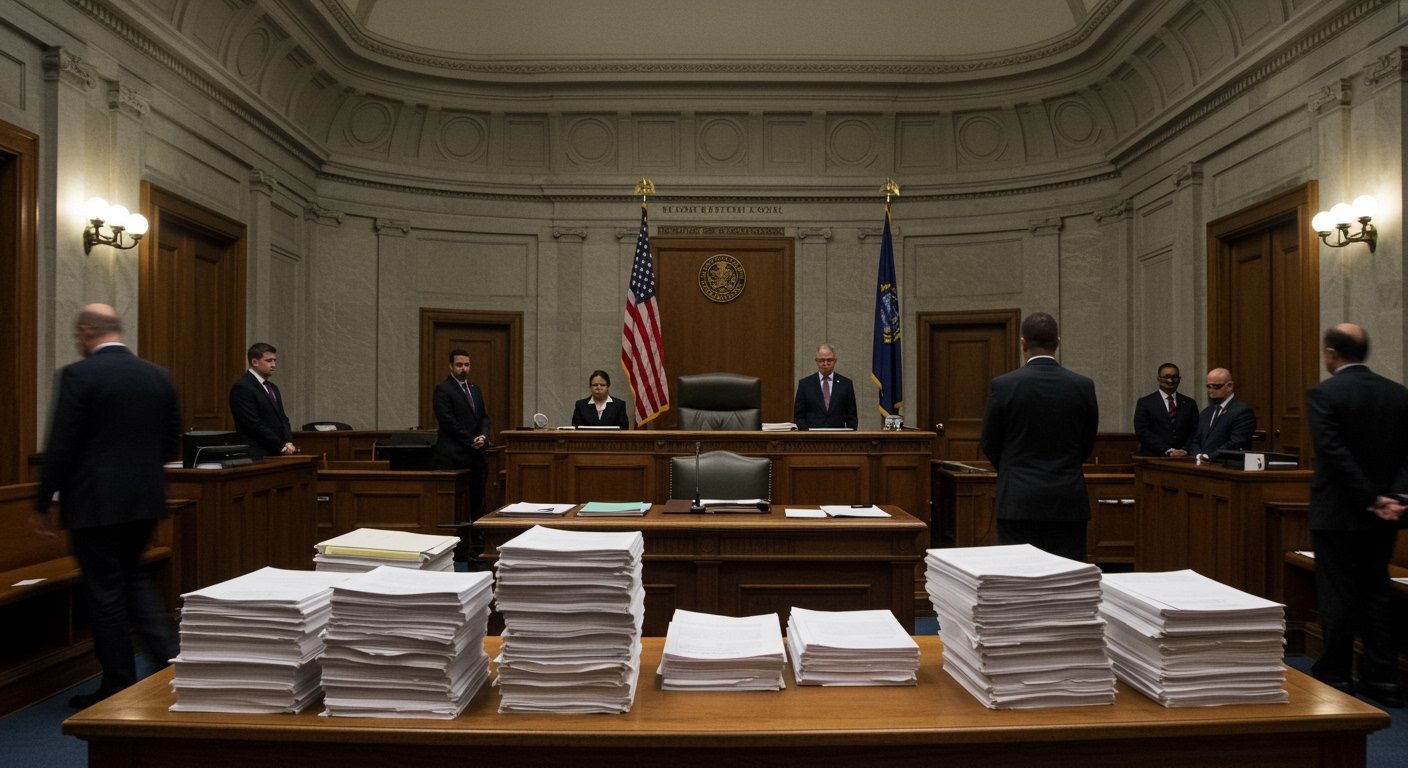


While the federal plea is a milestone, it does not absolve Mangione of the most serious allegation: the cold-blooded murder of Brian Thompson. The New York State prosecution remains intact, and prosecutors in Manhattan have signaled that they are prepared to move forward as soon as the federal window closes. The delay, while frustrating for those seeking swift closure, allows the state to further refine its evidence, particularly regarding premeditation and the broader context of the attack on UnitedHealthcare’s leadership.
Analysts are watching to see if this federal plea will lead to a ‘cooperation’ scenario, though there is currently no public evidence suggesting Mangione is providing information beyond his own admission. Instead, the focus remains on the logistical impact. The postponement of the state trial provides a cooling-off period, perhaps avoiding the media circus that would have coincided with the immediate aftermath of the shooting. Furthermore, it allows the judicial system to manage the high-security requirements of a defendant who has become a lightning rod for discussions regarding corporate violence and the efficacy of law enforcement in the digital age.
Secondary Angles: A Broader Context
1. The Precedence of Federal Jurisprudence: This case serves as a masterclass in how federal agencies use ‘interstate’ elements to assert jurisdiction in local crimes. By focusing on the movement of a weapon across state lines, federal authorities established a foothold that allowed them to take primary control of the legal timeline.
2. Corporate Security and Institutional Trust: The murder of Brian Thompson sent shockwaves through the C-suite of major American corporations. This legal delay continues the period of uncertainty for UnitedHealthcare and its investors, who are still awaiting a final verdict that clarifies the nature and motive of the attack.
3. The Victims’ Rights Perspective: Families and stakeholders often view the ‘delay’ as a form of secondary victimization. The legal system’s adherence to procedural due process—necessary as it may be—frequently conflicts with the public’s desire for the immediate finality of a murder conviction.
FAQ: People Also Ask
Why does the federal case take priority over the state murder trial?
Under the doctrine of dual sovereignty, both the federal and state governments have the right to prosecute crimes that violate their respective laws. Federal cases often proceed first when there are overlapping charges, or when federal authorities secure a guilty plea that mandates immediate sentencing, essentially ‘locking in’ the defendant’s legal status before state courts take over.
Does the guilty plea in federal court mean Mangione is admitting to the murder?
No. The guilty plea pertains specifically to the federal charges of stalking and firearms offenses. While these charges are related to the broader incident, they are legally distinct from the New York state charge of second-degree murder, which Mangione still intends to contest or defend against.
How long is the state trial postponed?
The exact duration of the postponement is not indefinite. It is tied to the federal sentencing schedule. Once the federal court determines the sentence for the stalking and firearms counts, the state will be free to resume its prosecution. This typically adds months, rather than years, to the timeline.
What happens to the evidence gathered by federal investigators?
Evidence gathered for federal charges—including digital forensics, firearm ballistics, and electronic communications—is generally admissible in state court, provided it adheres to state rules of evidence. Prosecutors in the murder trial will likely utilize the federal investigation to bolster their own case.