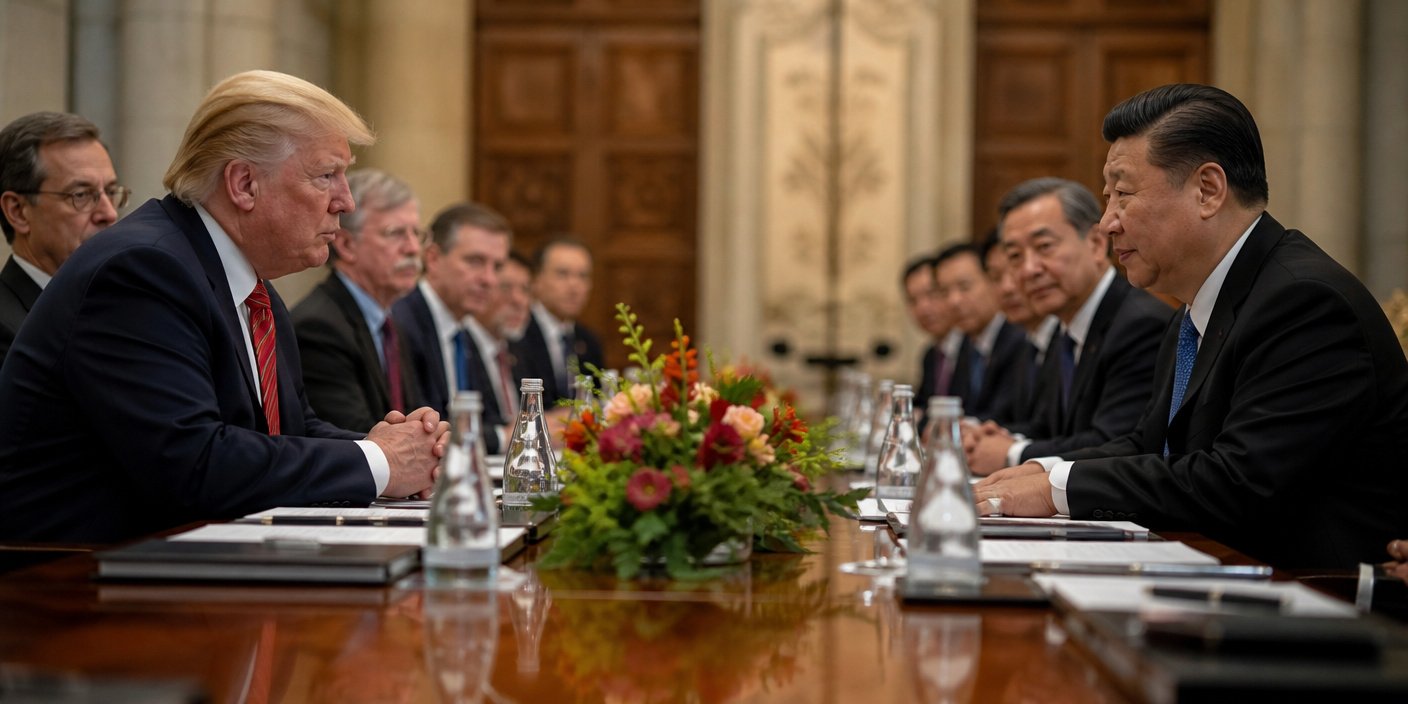
Asian shares experienced a broad uptick, while oil prices saw a decline, following statements from former U.S. President Donald Trump indicating that peace talks concerning a potential war with Iran were progressing.
Key Highlights:
- Global markets reacted positively to perceived de-escalation signals regarding Iran.
- Oil prices retreated as geopolitical tensions eased.
- The economic sentiment in Asia was buoyed by the news.
- Investor focus shifts to corporate earnings and central bank policies.
Geopolitical Tensions Ease, Markets Respond
The markets in Asia largely followed a positive trajectory today, with major indices showing gains. This sentiment appears to be significantly influenced by remarks attributed to former President Donald Trump, who suggested that diplomatic efforts to avert a wider conflict with Iran were making headway. The prospect of reduced geopolitical instability in the Middle East, a region critical for global energy supply, has evidently provided a boost to investor confidence across the Asian continent. Concurrently, crude oil prices experienced a noticeable drop. This decline in oil prices is a direct consequence of the easing of fears surrounding a potential military confrontation, which had previously driven up the cost of energy commodities due to supply disruption concerns.
Economic Repercussions and Market Sentiment



The interplay between geopolitical developments and market performance is a recurring theme in financial news. In this instance, the mere suggestion of progressing peace talks has been enough to shift market sentiment. For Asian economies, which are often sensitive to global energy prices and regional stability, this development is particularly welcome. Lower oil prices can translate into reduced import costs for many Asian nations, potentially boosting corporate margins and consumer spending. The positive ripple effect is visible in the stock markets, where a more optimistic outlook can encourage investment and trading activity.
Entities in Focus
Several key entities and concepts are central to understanding this market movement. The mention of Donald Trump highlights the influence of significant political figures on global economic affairs. Iran remains a focal point due to its strategic position and the global implications of its nuclear program and regional policies. The Middle East as a geographical entity is crucial for understanding energy markets. Oil prices, specifically crude oil, are a direct indicator of geopolitical risk premiums. Finally, the broader market response in Asian shares reflects the interconnectedness of global finance and the sensitivity of these markets to international events.
Secondary Angles and Future Outlook
While the immediate market reaction is positive, several secondary angles warrant consideration. Firstly, the historical context of U.S.-Iran relations suggests that progress on peace talks can be volatile and subject to setbacks. Investors will likely remain cautious, awaiting concrete actions rather than just statements. Secondly, the economic impact extends beyond just oil prices; any sustained de-escalation could lead to increased foreign investment in the region and facilitate trade. Looking ahead, the focus will inevitably shift back to fundamental economic drivers, such as inflation rates, central bank monetary policies (particularly those of the U.S. Federal Reserve and the European Central Bank), and the ongoing corporate earnings season. The current positive sentiment might be short-lived if these underlying economic factors do not align favorably.
FAQ: People Also Ask
What impact do geopolitical tensions in the Middle East have on global markets?
Geopolitical tensions in the Middle East, especially concerning Iran, can significantly impact global markets by creating uncertainty around oil supply. This can lead to price spikes in crude oil, affecting transportation costs, inflation, and corporate profitability worldwide. It also increases volatility in financial markets as investors react to potential disruptions.
How do falling oil prices benefit Asian economies?
Falling oil prices generally benefit most Asian economies, as many are net importers of oil. Lower energy costs reduce import bills, improve trade balances, decrease inflationary pressures, and can boost consumer spending and corporate profits, leading to higher stock market valuations.
What are the key indicators to watch for a de-escalation in Iran-related conflicts?
Key indicators for de-escalation include official statements from involved parties confirming dialogue, the cessation of hostile rhetoric, verifiable steps towards diplomatic resolution (like prisoner exchanges or agreement on specific treaty points), and a reduction in military posturing or sanctions. International monitoring and mediation efforts also signal progress.
How does former President Trump’s influence affect international markets?
Former President Trump’s statements and policies have historically demonstrated a significant capacity to influence international markets. His pronouncements on trade, geopolitical conflicts, and economic policy can create immediate market reactions, impacting currency values, commodity prices, and stock market sentiment globally.