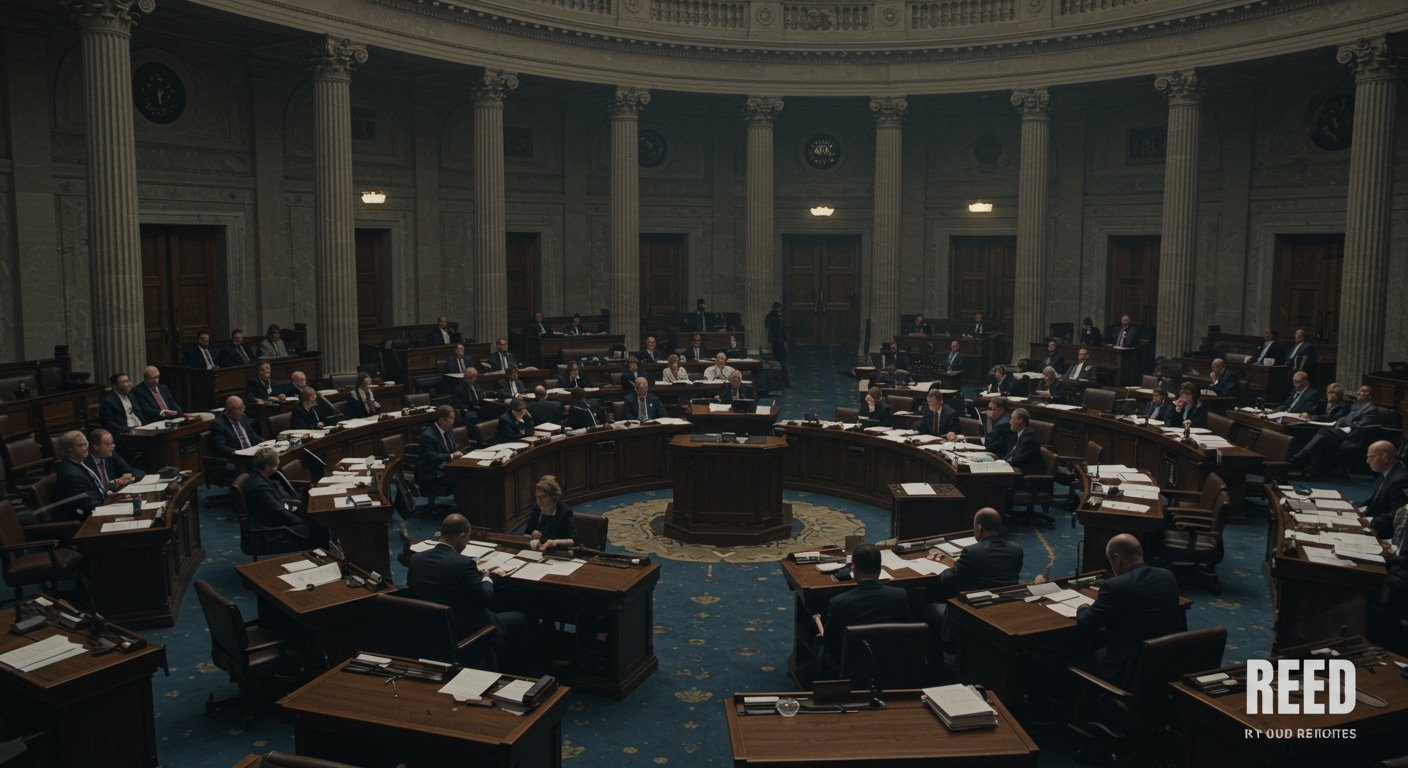
Washington D.C. – The United States Senate on Friday, March 14, successfully passed a critical six-month spending bill, clearing the path for it to reach President Donald Trump’s desk and, potentially, avert an imminent government shutdown. The measure, which had previously secured passage in the House of Representatives, navigated the Senate floor just hours before a critical funding deadline loomed, underscoring the urgency of the legislative action.
The vote in the Senate was a demonstration of the challenging political landscape surrounding federal appropriations, passing with a margin of 54-46. This outcome reflects significant sharp Democratic opposition to the contents of the bill, although enough bipartisan support ultimately coalesced to push the legislation forward towards enactment.
Averted Crisis and Legislative Action
The passage of this bill marks a crucial moment in the ongoing fiscal negotiations between Congress and the executive branch. Without legislative action, funding for large swathes of the federal government was set to expire, potentially leading to a partial government shutdown. Such events can disrupt essential services, furlough federal employees, and inject uncertainty into the national economy. The swift passage through both chambers, particularly the final sprint in the Senate on Friday, March 14, highlights the eleventh-hour nature of the agreement.
The legislative journey saw the bill originate and pass the House before arriving in the Senate for consideration. The debate in the Senate, while concluding in a relatively narrow vote, allowed senators to voice concerns and support for various aspects of the comprehensive measure. The 54-46 vote starkly illustrates the partisan divide, with a significant bloc of senators, primarily Democrats, casting votes against the bill.
Key Provisions of the Spending Measure



At its core, the legislation is designed to extend government funding through September 2025. This timeframe provides a temporary period of fiscal stability, delaying the next major appropriations battle until later in the year. The bill does not represent a full-year spending package but rather a bridge solution intended to keep government operations funded and functional.
The bill encompasses a range of significant provisions that reflect current policy priorities debated within Congress and the administration. These include:
* An increase in defense spending, addressing concerns related to national security and military readiness. This allocation is often a point of negotiation, balancing strategic needs with fiscal constraints.
* Enhanced funding for veterans’ health care, aimed at improving services and access for former service members. Support for veterans remains a broadly bipartisan priority, though the level of funding is subject to debate.
* A decrease in non-defense spending below 2024 levels. This aspect of the bill proved particularly contentious and likely contributed to the sharp Democratic opposition, as it necessitates cuts or level funding in various domestic programs and agencies compared to the previous fiscal year.
* Additional funding for Immigration and Customs Enforcement (ICE). This provision addresses priorities related to border security and interior immigration enforcement, an area that has been a central focus of the Trump administration.
The inclusion of these specific measures – boosting defense, veterans’ health, and immigration enforcement while reducing non-defense spending – underscores the political compromises and priorities embedded within the legislation necessary to garner sufficient votes for passage in both chambers.
Path to Enactment
With the Senate’s approval, the six-month spending bill has completed its journey through the legislative branch. It now proceeds to the desk of President Donald Trump for his signature. Presidents typically sign spending bills passed by Congress to avoid government shutdowns, particularly when their administration has been involved in the negotiations leading to the bill’s formulation.
President Trump is expected to review the legislation, but given the need to avert a government shutdown and the inclusion of provisions aligning with his administration’s priorities, such as increased defense spending and additional funding for Immigration and Customs Enforcement (ICE), his signature is widely anticipated. Once signed, the bill will become law, ensuring funding continuity through September 2025 and implementing the specified spending levels and allocations.
Significance of the Passage
The successful passage of this bill, despite the sharp Democratic opposition and the close vote of 54-46 in the Senate, avoids a potential crisis that could have had ripple effects across the nation. It provides federal agencies with the certainty of funding through September 2025, allowing for continued operations and planning.
However, the nature of it being a six-month spending bill, rather than a full annual appropriations package, indicates that further fiscal negotiations and potential funding deadlines will need to be addressed later in the year. The policy choices embedded within the bill, particularly the decrease in non-defense spending below 2024 levels and the increase in additional funding for Immigration and Customs Enforcement (ICE), defense, and veterans’ health care, signal the legislative priorities able to gain traction in the current political environment.
As the bill heads to President Donald Trump for his final approval, the focus shifts to implementation and the impact these budgetary decisions will have on government programs and services over the next six months.