Florida Summit: Trump Netanyahu Gaza Ceasefire Challenges and Middle East Diplomacy
President Donald Trump will meet Israeli Prime Minister Benjamin Netanyahu on Monday, December 29, 2025, at Trump’s Mar-a-Lago estate in Florida. This pivotal meeting occurs at a critical juncture for Gaza. A U.S.-brokered ceasefire is in place, but this truce faces potential stalling. The leaders aim to inject new momentum into peace efforts, particularly concerning Gaza. Trump seeks to leverage his strong relationship with Netanyahu to accelerate the peace process and address the complex issues surrounding Trump Netanyahu Gaza. Netanyahu, facing criticism for delays, is a key figure in this ongoing narrative of Middle East diplomacy and US foreign policy. This encounter is a top story in American foreign policy, with the future of Gaza hanging in the balance of their discussions.
Trump Netanyahu Gaza: Ceasefire Status and Stalling Progress
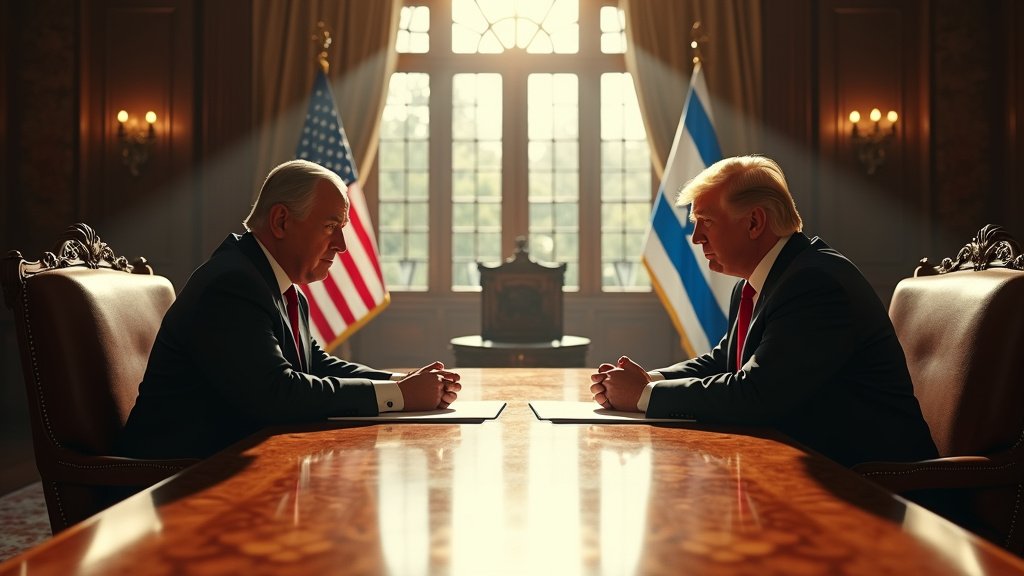
The Gaza ceasefire, initiated in October 2025, marked the end of a devastating two-year war. While the initial phase of the truce has largely held, progress has slowed significantly. Both sides accuse each other of violations, and divisions have emerged among the U.S., Israel, and Arab nations regarding the next steps. This lack of agreement complicates the path forward, making the second phase of the Gaza ceasefire particularly challenging. The discussions surrounding Trump Netanyahu Gaza are crucial for overcoming these hurdles.
Trump’s Comprehensive Israel Peace Plan and Gaza Reconstruction
President Trump has outlined a detailed 20-point plan, a significant component of the Israel peace plan, aimed at ending Hamas’s rule in Gaza and fostering Gaza reconstruction. This plan, approved by the U.N. Security Council, offers a vision for Gaza’s future, including the establishment of an International Stabilization Force (ISF) to aid security and train a new Palestinian police force. The ISF’s mandate encompasses demilitarization and dismantling terror infrastructure. The plan also calls for extensive rebuilding efforts in Gaza, with the UAE pledging financial support for Gaza reconstruction. However, the specifics of this future plan and the pledged funds for Gaza reconstruction remain under discussion.
Key Challenges and Disagreements in Trump Netanyahu Gaza Talks
Significant disagreements persist regarding the ISF’s mandate, with troop-contributing countries seeking clarity on rules of engagement, and Israel’s security demands adding another layer of complexity. US officials express frustration over delays, with some believing Netanyahu may be undermining the peace process by advocating for a tougher stance on Gaza. Israel’s demand for Hamas’s disarmament is a major sticking point, although Hamas has shown some willingness to discuss freezing its arsenal, while asserting a right to resistance. The mandate for the ISF remains a complex issue, and clarity on legal authority is crucial for securing troop commitments. UN Security Council Resolution 2803 (2025) endorsed Trump’s plan and authorized the ISF under the Board of Peace, a transitional administration headed by President Trump. These discussions are central to the Trump Netanyahu Gaza dialogue.
Discussion on Iran Nuclear Program and Middle East Diplomacy
The leaders are also expected to address Iran’s nuclear program, a significant point of divergence. Israel favors preemptive action, while the U.S. has pursued diplomatic engagement. Joint U.S.-Israeli strikes in June 2025 targeted Iranian nuclear sites, with Trump declaring the program obliterated, though assessments suggest it was set back by months. Iran maintains its program is peaceful, and the debate over handling Iran continues, with Netanyahu reportedly seeking a tougher U.S. stance and a green light for further strikes. This aspect of Middle East diplomacy is deeply intertwined with the security concerns of the region.
Gaza Reconstruction and Future Palestinian Governance
The second phase of the plan focuses on Gaza reconstruction and establishing future Palestinian governance. A Palestinian technocratic committee is envisioned to manage daily affairs under the Board of Peace’s supervision. The UAE’s commitment to fund Gaza reconstruction, estimated at $70 billion, is a significant development, though many plans are still unsettled. The opening of the Rafah crossing in both directions, proposed by Netanyahu, faced internal opposition. American demands regarding the crossing are also a focus, with the Trump administration appearing frustrated by Israeli actions concerning Gaza.
The American Perspective on Trump Netanyahu Gaza
Top Trump aides have voiced frustration, suggesting that Netanyahu may be sabotaging the ceasefire and delaying progress. Some aides reportedly no longer favor Netanyahu, arguing that Israel is not fully adhering to the ceasefire. U.S. officials are concerned about civilian casualties in Gaza and the stability of the Palestinian Authority. This meeting is a key test of Trump’s approach to Middle East diplomacy, with major announcements anticipated in early January. The direction of peace hinges significantly on the outcomes of this Trump Netanyahu Gaza summit.
Conclusion
President Trump and Prime Minister Netanyahu face immense challenges in their discussions on Trump Netanyahu Gaza. They must navigate complex issues including the Gaza ceasefire’s future and Iran’s nuclear program. The meeting aims to push forward a stalled peace process and address Gaza reconstruction. Success will depend on their ability to find common ground, making this crucial meeting a defining moment in Middle East diplomacy and US foreign policy. The future of Trump Netanyahu Gaza and broader regional stability hangs in the balance.