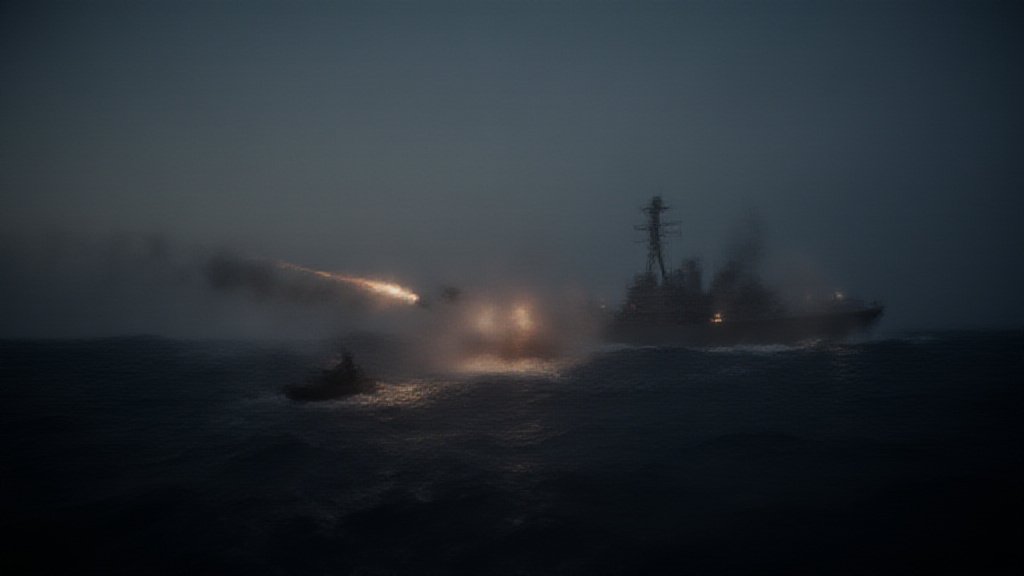
The U.S. military conducted its 20th kinetic strike against an alleged drug-trafficking vessel on Monday, November 10, 2025, resulting in the deaths of four individuals in the Caribbean Sea. This latest action, part of the newly announced Operation Southern Spear, marks a grim milestone in the escalating campaign launched by the Trump administration to combat illicit narcotics transiting through South American waters and the Eastern Pacific. The strike brings the total death toll from these U.S. military strikes, which began in early September, to 80.
Operation Southern Spear Adds to Mounting Casualties
The U.S. Southern Command (SOUTHCOM) confirmed the strike via social media on Friday, November 14, 2025, stating that intelligence indicated the vessel was involved in illicit narcotics smuggling, operating along a known narco-trafficking route, and carrying narcotics. The command’s post included a video showing a boat speeding over water before being engulfed in flames. Significantly, there were no survivors from this incident. While previous strikes were often announced by Defense Secretary Pete Hegseth on social media, this announcement came directly from SOUTHCOM, though Hegseth did repost the statement. The strike occurred on the same day that Hegseth formally announced the codename “Operation Southern Spear” for the broader anti-narcotics campaign.
Escalating Campaign Against Caribbean Drug Trafficking
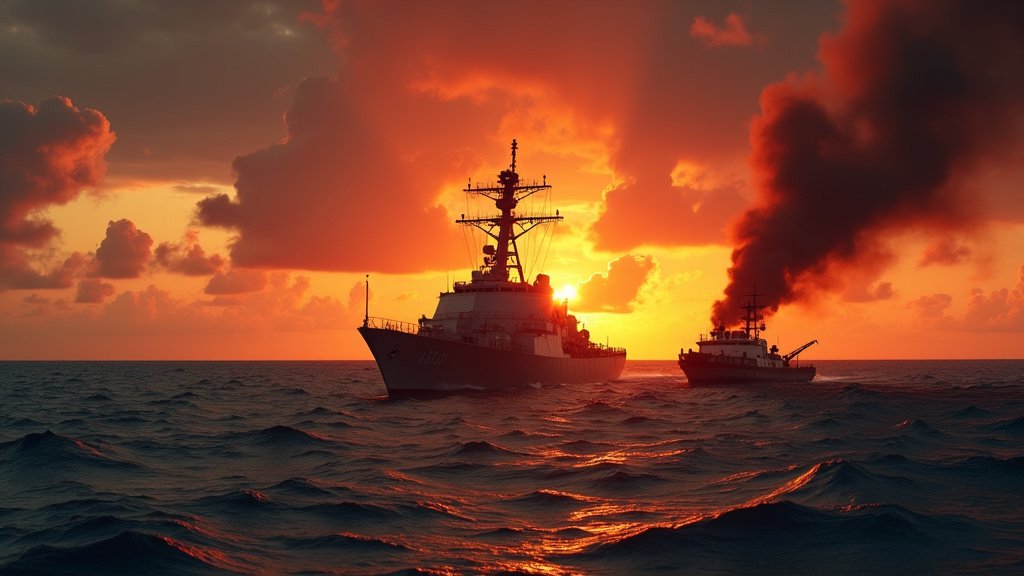
Since September 2025, the U.S. military has carried out a series of airstrikes on vessels, a campaign that has been framed by the Trump administration as a critical component of national security and a “war on drugs” and “narco-terrorism.” These strikes, initially concentrated in the Caribbean, expanded to include the Eastern Pacific Ocean by October. As of November 14, 2025, at least 80 individuals, described by officials as “narco-terrorists,” have been killed across 20 strikes targeting 21 vessels. Two individuals were wounded and later repatriated, and the Mexican Navy had suspended its search for a survivor of a late October strike after four days, a key part of the Operation Southern Spear efforts.
‘Operation Southern Spear’ and Unprecedented Military Presence in Anti-Narcotics Campaign
Defense Secretary Pete Hegseth officially unveiled “Operation Southern Spear” on Thursday, November 13, 2025. This operation, led by SOUTHCOM and a newly established joint task force, aims to disrupt maritime narcotics networks and dismantle transnational criminal organizations through enhanced maritime interdiction. The operation signifies a major escalation and an unprecedented U.S. military buildup in the region. The arrival of the USS Gerald R. Ford, the world’s largest and most advanced aircraft carrier, and its accompanying strike group in the U.S. Southern Command’s area of responsibility on November 11, 2025, marks the largest U.S. military presence in Latin America in decades, drawing comparisons to the 1989 invasion of Panama. The Ford strike group, along with other deployed naval assets, brings the total U.S. personnel in the region to an estimated 15,000, a stark contrast to the typical presence of one or two Navy vessels for routine interdiction missions. The operation also includes the deployment of a robotic fleet, integrating autonomous systems with traditional naval forces as part of Operation Southern Spear.
Justification and Allegations Amidst Lack of Evidence in Operation Southern Spear
The Trump administration has consistently justified these aggressive actions by asserting that the United States is engaged in “armed conflict” with drug cartels, which it designates as terrorist groups responsible for flooding American cities with drugs. U.S. officials claim the targeted vessels were operated by designated terrorist organizations, including the Venezuelan criminal group Tren de Aragua and the Colombian National Liberation Army (ELN). However, no public evidence has been presented to substantiate these claims regarding Operation Southern Spear, leading to significant scrutiny and criticism. Experts have noted that Venezuela is not the top supplier of illicit narcotics to the U.S..
International Scrutiny and Diplomatic Strain on Operation Southern Spear
The intensified military operations and associated fatalities have drawn sharp criticism internationally. Venezuela has vehemently denounced the strikes as violations of its sovereignty and accused the U.S. of fabricating a war against its government. Concerns about the legality of the strikes have also been voiced by international bodies, with the UN human rights chief urging an investigation into potential “extrajudicial killings”. Some lawmakers in the United States have questioned the legal justification and transparency of the operations, highlighting the lack of evidence provided for the killings and the potential overreach of executive power in Operation Southern Spear. The diplomatic fallout has been significant, with reports indicating that the United Kingdom and Colombia have ceased sharing drug intelligence with Washington due to concerns about violations of international law and human rights.
Broader Strategic Ambitions and Unanswered Questions for Operation Southern Spear
While the stated objective of Operation Southern Spear and the associated military buildup is to interdict drug trafficking and protect the American homeland, many observers and experts suggest that these actions may have broader strategic aims, including pressuring the government of Venezuelan President Nicolás Maduro, who faces U.S. charges of narcoterrorism. The scale of the deployment is far beyond what would typically be required for interdicting small drug boats, fueling speculation about regime change as a potential underlying goal. Furthermore, the effectiveness of such a militarized approach is being debated. Analysts point to the “balloon effect,” where enforcement pressure in one area merely shifts criminal activity elsewhere, and question whether these strikes are altering the fundamental economics of the drug trade or merely projecting resolve. The concentration of U.S. military power in the Caribbean, coupled with the ongoing strikes, has created a top security story with far-reaching implications for regional stability and international law, all under the umbrella of Operation Southern Spear.
Conclusion
The U.S. military’s 20th strike in the Caribbean underscores the aggressive posture of the Trump administration’s “war on drugs.” With the formal launch of Operation Southern Spear and the formidable presence of the USS Gerald R. Ford, the U.S. military buildup in the region is set to continue. However, significant questions remain regarding the legality, evidence base, and long-term effectiveness of these operations, as well as their impact on regional diplomacy and the broader fight against Caribbean drug trafficking.