Federal authorities, led by the U.S. Army and supported by the Environmental Protection Agency (EPA) and various federal emergency management teams, successfully executed a controlled detonation of nearly 10,000 pounds of crystallized lead azide at the Iowa Army Ammunition Plant (IAAAP). This operation, aimed at eliminating a severe public safety hazard, marks a significant milestone in ongoing remediation efforts at the sprawling, 19,000-acre facility located near Middletown, Iowa.
Key Highlights
- Mission Success: 10,000 pounds of crystallized lead azide, a highly sensitive primary explosive, were successfully neutralized through a controlled detonation process.
- Risk Mitigation: The operation was specifically designed to prevent accidental instability caused by the crystallization of the lead azide, which poses extreme sensitivity to friction and mechanical impact.
- Federal Oversight: The U.S. Army Joint Munitions Command spearheaded the effort, working in strict coordination with the EPA to ensure environmental and safety protocols were upheld.
- Strategic Remediation: This detonation represents a proactive approach to managing aging munitions and legacy hazards, ensuring the long-term safety of both the surrounding community and the workforce.
Operational Success: Mitigating the Lead Azide Threat
The operation at the Iowa Army Ammunition Plant was a calculated, high-stakes engineering endeavor necessitated by the chemical evolution of legacy munitions. Lead azide is a potent primary explosive used historically in detonators and primers. While it is stable under controlled conditions, it undergoes dangerous physical changes over extended storage periods. The crystallization process significantly increases the material’s sensitivity to physical stimuli—including friction, static electricity, and even minor vibrations.
Understanding the Chemical Risk
When lead azide crystallizes, it transforms from a manageable industrial component into a highly unpredictable material. In the context of the IAAAP, federal authorities identified that the stockpile in question had reached a critical threshold of instability. The decision to perform a controlled detonation was not merely a matter of disposal; it was an urgent necessity to mitigate the catastrophic risk of an accidental detonation. The specialized teams tasked with the operation treated the material with extreme caution, employing remote handling and stabilization techniques developed specifically for explosive ordnance disposal (EOD) at military installations.
The Logistical Scale of the Controlled Detonation

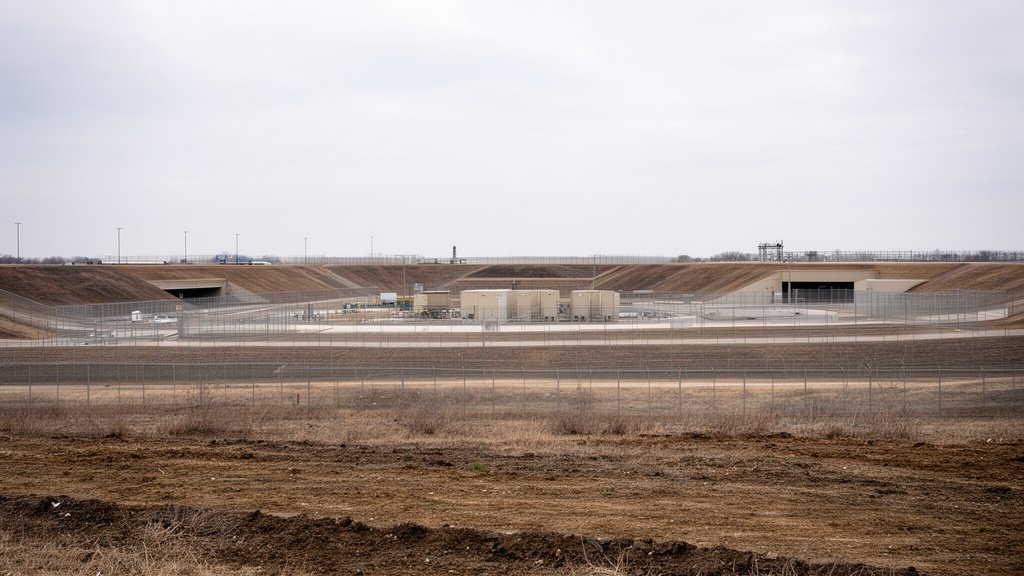


Neutralizing 10,000 pounds of explosives is a massive logistical undertaking. It requires the synchronization of specialized personnel, the establishment of exclusionary safety zones, and the real-time monitoring of atmospheric and physical conditions. The detonation was executed within a reinforced impact zone at the facility, designed specifically to contain the blast energy and prevent any collateral damage to the surrounding infrastructure or the environment. The precision required for such an operation underscores the advanced capabilities of the U.S. Army’s explosive safety programs. Following the detonation, site assessments were conducted to ensure that all chemical remnants were properly stabilized, reflecting a “safety-first” mandate that governed every stage of the planning process.
Federal Oversight and Environmental Safeguards
The involvement of the EPA in the operation highlights the complex intersection of military operations and environmental stewardship. Managing large quantities of explosive material requires rigorous adherence to federal environmental statutes, particularly concerning soil and groundwater protection. The detonation was planned with contingencies to prevent the dispersal of lead particulates into the surrounding Middletown ecosystem. Post-detonation, the EPA and Army environmental scientists conducted rigorous sampling to ensure that the site remained compliant with all environmental health standards. This transparency is a cornerstone of the modern remediation strategy at IAAAP, aiming to build and maintain trust with local stakeholders who live and work in the vicinity of the historic installation.
Modernizing Explosive Management Protocols
This operation serves as a blueprint for future munitions remediation. As the military transitions toward modernized inventory management, the ability to safely decommission aging explosives is paramount. The success at the Iowa facility demonstrates the efficacy of inter-agency partnerships where military readiness experts combine forces with environmental regulatory bodies. These protocols are being refined to ensure that future decommissioning activities can be executed with even greater speed and a reduced environmental footprint.
Historical Context and Future Security at IAAAP
The Iowa Army Ammunition Plant, established during World War II, has long been a critical node in the U.S. national defense infrastructure. For decades, it has produced, stored, and dismantled a vast array of munitions. However, the legacy of that history includes the responsibility for managing aging hazardous materials. The plant serves not just as an industrial facility, but as a site of continuous evolution, where modern technology is increasingly deployed to solve the challenges of 20th-century ordnance.
Maintaining Public Safety Protocols
For the residents near Middletown, the controlled detonation serves as a reassuring reminder of the federal government’s commitment to safety. By proactively eliminating the risk posed by unstable munitions rather than allowing them to sit in storage, the Army is effectively “buying down” the risk to the community. Future operations at the plant will continue to leverage these advanced safety protocols, prioritizing the elimination of volatile substances as part of the facility’s broader mission to balance national security requirements with local safety and environmental integrity.
FAQ: People Also Ask
1. Why is crystallized lead azide considered a severe safety hazard?
Lead azide is highly sensitive to friction, heat, and static. Over time, it can crystallize, which drastically lowers the energy required to trigger a detonation. A small amount of friction can cause a violent explosion, making storage and transport extremely dangerous.
2. How did authorities ensure the environment was protected during the detonation?
The U.S. Army worked in coordination with the EPA to establish rigorous containment zones. Specialized engineering controls were used to mitigate the release of lead particulates, and environmental testing was conducted immediately following the operation to verify that no contamination occurred.
3. Is the Iowa Army Ammunition Plant still operational?
Yes, the facility remains an active, critical part of the U.S. Army Joint Munitions Command. It continues to play a vital role in the storage, renovation, and demilitarization of munitions, maintaining high standards for both national defense and community safety.