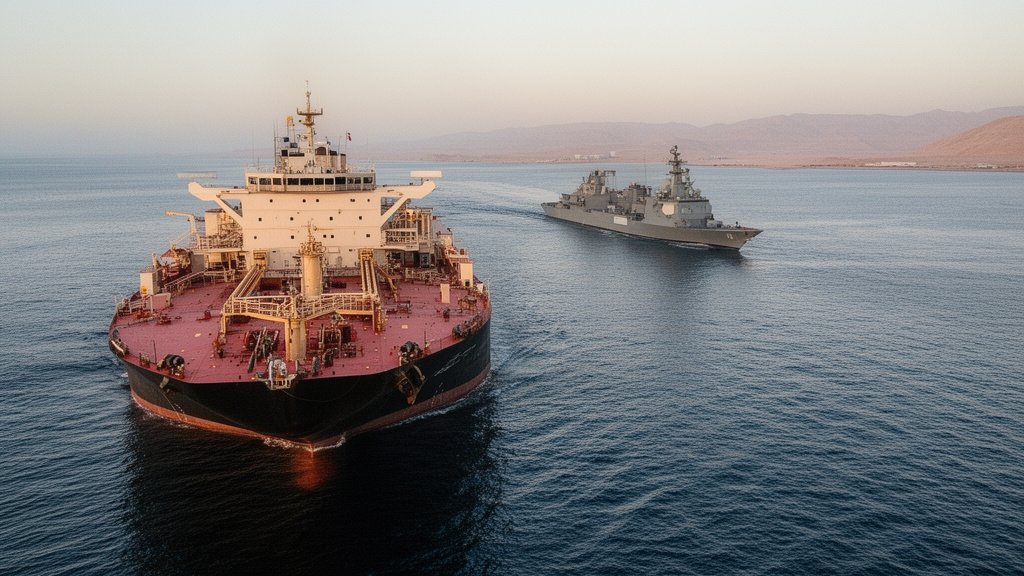
President Donald Trump has reignited tensions by reimposing a naval blockade on all Iranian ports and issuing stern warnings of strikes on critical energy infrastructure. This move comes after Tehran announced the closure of the Strait of Hormuz for a second time, following a resurgence of hostilities last week that have frayed a fragile ceasefire agreement. The U.S. Navy is actively enforcing the blockade around Iran’s maritime access, a measure taken in response to Iran’s alleged attacks on oil tankers within the strategic waterway. This dramatic escalation marks a significant departure from the interim deal reached in June, which had temporarily eased tensions and set a 60-day timeline for nuclear program negotiations.
Key Highlights
- Resumed Blockade: The U.S. has reimposed a naval blockade on all Iranian ports, impacting vessels transiting to and from the country.
- Threat of Energy Strikes: President Trump has threatened to target Iran’s power plants and bridges next week if negotiations do not resume, with energy targets being a final option.
- Strait of Hormuz Closure: Iran has announced the closure of the Strait of Hormuz for the second time, citing reignited hostilities.
- Fragile Ceasefire Undermined: The escalating conflict jeopardizes the interim ceasefire agreement signed in June, which aimed to end months of fighting.
- Naval Presence: Over 20 U.S. Navy warships and hundreds of military aircraft are currently operating across the Middle East to enforce the blockade and maintain regional security.
Escalation in the Strait of Hormuz: A Return to Hostilities
The Blockade and its Precedents
President Trump’s decision to reinstate the naval blockade of Iranian ports signifies a sharp increase in pressure on Tehran. The U.S. first imposed this blockade in mid-April 2026, only to lift it in mid-June following the signing of an interim deal. This deal, intended to lead to a permanent end to the ongoing conflict, also established a 60-day window for negotiations on Iran’s nuclear program. However, the truce has proven increasingly fragile, with intensified fighting in the Strait of Hormuz leading to Tehran’s proclamation of its closure last week. The U.S. Central Command (CENTCOM) confirmed that the blockade, which went into effect at 4 p.m. ET on Tuesday, July 15, 2026, targets vessels transiting to or from Iranian ports and coastal areas. Admiral Brad Cooper, head of CENTCOM, stated that “US forces are holding Iran accountable for unwarranted aggression that continues to endanger innocent lives,” citing Iran’s alleged intentional attacks on seven commercial ships over the past seven days, resulting in casualties and missing crew members.
Iran’s Retaliation and Strategic Maneuvers
In response to the escalating U.S. actions, Iran has announced the closure of the Strait of Hormuz, a critical chokepoint for global energy supplies. This move by Iran heightens concerns about disruptions to international shipping and potential impacts on global energy markets. The current flare-up has cast doubt on the longevity of a memorandum of understanding signed in June, which was meant to secure a permanent halt to the war that has already destabilized neighboring countries and affected global energy supplies. Iran’s army has also reported launching drone attacks against U.S. positions, including at Jordan’s Azraq base, and Iran’s Islamic Revolutionary Guard Corps (IRGC) claimed responsibility for targeting weapons and storage facilities in Bahrain and Kuwait. These actions underscore the volatile nature of the current situation and the potential for wider regional conflict.
The Threat of Wider Strikes and Diplomatic Stalemate



President Trump’s rhetoric has extended beyond the naval blockade, with explicit threats to target Iran’s infrastructure. He stated his intention to strike “power plants and bridges next week” unless Tehran agrees to resume negotiations, reserving “energy targets” for last but indicating they remain a possibility. This aggressive stance is coupled with an assertion that U.S. negotiators have been in touch with their Iranian counterparts, urging them to “make a deal.” However, the effectiveness of these diplomatic overtures is questioned by figures like House Speaker Mike Johnson, who has expressed that the nature of the negotiating parties makes achieving lasting peace difficult, deeming them “not good faith actors and cannot be trusted.” This highlights a potential diplomatic stalemate, where military pressure is being used in an attempt to force a negotiated settlement, even as international law concerns are raised regarding attacks on civilian essential sites.
Economic Ramifications and Geopolitical Context
The conflict’s impact on global energy supplies and prices has been a significant factor. The Strait of Hormuz is a crucial maritime route, with approximately 25% of the world’s seaborne oil trade and 20% of global liquefied natural gas (LNG) passing through it before the 2026 Iran War. Disruptions to this strait have historically led to substantial price increases and supply shortages, as seen in March 2026 when the largest-ever monthly increase in oil prices occurred. The current escalation risks a repeat of such economic instability. Furthermore, President Trump had previously considered, but later abandoned, a plan to charge commercial tolls for U.S. security in the Strait of Hormuz. This plan was reportedly replaced by offers from Gulf allies to compensate the U.S. through investments, suggesting a complex web of economic and security interests at play in the region. The historical context of tensions between Iran and the U.S. in the Strait of Hormuz, including incidents in 1988, 2011-2012, and 2019, underscores the strategic importance and persistent volatility of this waterway.
FAQ: People Also Ask
What is the Strait of Hormuz and why is it important?
The Strait of Hormuz is a strategically vital narrow waterway connecting the Persian Gulf to the Gulf of Oman and the open ocean. It is a critical chokepoint for global energy trade, with a significant portion of the world’s seaborne oil and LNG passing through it daily. Its closure or disruption can have severe global economic consequences.
Why has the U.S. reimposed a blockade on Iran?
The U.S. reimposed the blockade primarily in response to Iran’s alleged attacks on commercial shipping in the Strait of Hormuz. The U.S. claims these actions endanger innocent lives and commercial vessels, and the blockade aims to degrade Iran’s capabilities to threaten shipping and hold Tehran accountable for its aggression.
What are the potential consequences of strikes on Iranian energy targets?
Strikes on Iranian energy targets, such as power plants and oil facilities, could lead to widespread blackouts, disrupt global energy supplies, and potentially cause severe economic instability worldwide. International law, including the 1949 Geneva Conventions, prohibits attacks on sites essential for civilian populations, raising significant legal and humanitarian concerns.
How has the Iran-U.S. conflict evolved recently?
Recent escalations include the U.S. reimposing a naval blockade on Iranian ports and conducting fresh strikes, while Iran has announced the closure of the Strait of Hormuz and launched drone attacks. These actions have undermined a fragile ceasefire agreement signed in June 2026, leading to fears of a wider conflict.
What was the previous U.S. blockade of Iran and why was it lifted?
The U.S. first imposed a naval blockade on Iran in mid-April 2026, which was lifted in mid-June after the signing of an interim deal aimed at ending the conflict and facilitating nuclear negotiations. The lifting of the blockade was a key component of that fragile ceasefire agreement.