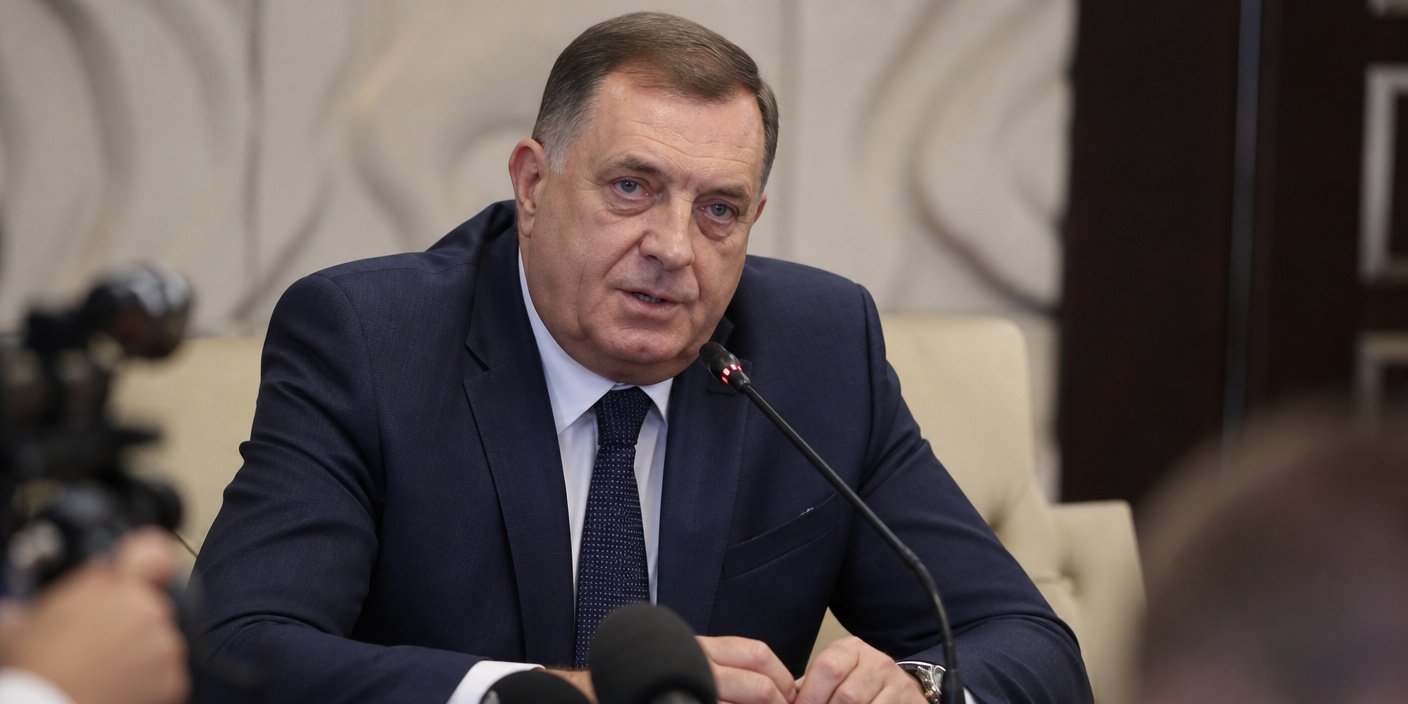
In a defining moment for Southeast Asian geopolitics, the Vietnamese National Assembly unanimously elected Communist Party General Secretary To Lam as the state president on Tuesday, April 7, 2026. The move officially consolidates the country’s top party and state roles under a single leader for the 2026–2031 term, marking a historic deviation from Vietnam’s long-standing tradition of shared, collective leadership. By assuming both the highest party position and the ceremonial head-of-state office, To Lam has signaled a definitive shift toward a more centralized governance model, drawing immediate parallels to the political structure in neighboring China.
Key Highlights
- Consolidated Leadership: To Lam becomes both General Secretary and President, moving Vietnam away from its traditional ‘Four Pillars’ power-sharing model.
- Strategic Shift: The move aims to streamline administrative reforms, reduce bureaucracy, and accelerate economic development goals for 2030 and 2045.
- China Comparison: Political analysts note that this structure closely mirrors the Xi Jinping model in China, prioritizing executive efficiency over traditional decentralized consensus.
- Economic Mandate: The leadership consolidation is framed as a necessary step to push through complex reforms and address economic headwinds, including the streamlining of provincial governments.
- Continuity and Stability: With his election, To Lam secures a stronger mandate to maintain stability, a key theme in his post-election address to the National Assembly.
The Era of Consolidation: Analyzing Vietnam’s New Leadership Structure
The election of To Lam as president is not merely a personnel change; it represents a structural transformation of the Vietnamese state. For decades, Vietnam has operated under a ‘Four Pillars’ leadership system—comprising the General Secretary, the President, the Prime Minister, and the National Assembly Chair—designed to prevent the concentration of power and ensure consensus. By unifying the two most prominent titles, Vietnam is recalibrating its political machinery to function with the speed and singular authority typically found in systems like China’s.
The Pivot from Tradition
For years, international observers have watched Vietnam’s internal politics for signs of this shift. While the merger of party and state roles has occurred during brief transitional periods—such as after the passing of former General Secretary Nguyen Phu Trong in 2024—the 2026–2031 election establishes this as a deliberate, five-year strategic design. Historically, the division of labor between the Party Chief (ideological and strategic) and the President (diplomatic and constitutional) served as a safeguard against individual dominance. The departure from this norm suggests that the Communist Party of Vietnam (CPV) has prioritized bureaucratic efficiency and decisive governance over traditional power-balancing mechanisms.
Mirroring the Dragon: China-Style Governance



The comparison to China is inevitable and, according to political scientists at the ISEAS–Yusof Ishak Institute, increasingly accurate. In Beijing, the consolidation of the General Secretary, State President, and Chairman of the Central Military Commission under Xi Jinping created a ‘command and control’ style of governance that allowed for rapid, top-down policy implementation. By aligning its structure more closely with this model, Hanoi is signaling a transition toward a system where the party’s strategic vision is less frequently debated by competing institutional stakeholders and more rapidly executed. This alignment is expected to simplify the hierarchy, ensuring that the party’s agenda—ranging from infrastructure development to foreign direct investment (FDI) policy—faces fewer internal bottlenecks.
Economic Mandate vs. Bureaucratic Reform
At the heart of this consolidation is an ambitious economic roadmap. To Lam’s administration has set clear targets: transitioning Vietnam into an upper-middle-income country with a modern industrial base by 2030, and a high-income developed economy by 2045. To reach these markers, the state has initiated a series of aggressive reforms, including the reduction of provincial jurisdictions and the streamlining of government ministries. Supporters argue that the consolidation of power provides the political leverage necessary to bypass the inertia that often plagues multi-stakeholder government structures. However, this high-speed approach carries inherent risks; the potential for ‘policy overheating’ or the exclusion of critical minority viewpoints within the party could lead to implementation errors if institutional safeguards are not carefully managed.
Geopolitical Balancing Act
Vietnam’s geopolitical strategy relies on a delicate balance, maintaining strong economic ties with the West—particularly the United States—while managing a complex, often fraught, relationship with China. The internal shift toward a China-like leadership structure will be closely scrutinized by foreign investors and diplomats alike. While a centralized leadership may make it easier for foreign partners to engage with a single, clear point of authority in Hanoi, it also invites questions about the long-term stability of the country’s consensus-driven foreign policy. Can a centralized leadership maintain the multi-directional, flexible diplomacy that has allowed Vietnam to prosper in the global supply chain, or will the new structure impose a rigid ideological framework that limits strategic autonomy?
The Road Ahead: 2026–2031
The next five years will serve as the stress test for this new model. To Lam has emerged from a background in public security, a trajectory that has informed his approach to anti-corruption and state discipline. His administration’s success will be measured by its ability to translate administrative centralization into tangible economic growth. As he assumes the dual role, the eyes of the international community will be fixed on Hanoi, watching to see how this ‘new Vietnam’ balances the efficiency of a centralized state with the complexities of a globalized, open-market economy. Whether this consolidation represents a permanent change or a temporary measure for a specific era of development remains the central question for the 2026-2031 term.
FAQ: People Also Ask
Q: Why is Vietnam’s power structure change significant?
A: Historically, Vietnam used a collective leadership model with four main pillars to prevent any single person from holding absolute power. Unifying the roles of General Secretary and President marks a major shift toward centralization, reducing internal check-and-balance mechanisms.
Q: Does this make Vietnam’s government exactly like China’s?
A: While it draws clear parallels to the Chinese model—where the party chief, state president, and military commander are the same person—Vietnam maintains its own unique, party-led political culture. It is an alignment of structural power rather than a total adoption of China’s specific governance methodology.
Q: How will this affect foreign investors in Vietnam?
A: Generally, investors appreciate predictability. A consolidated power structure may streamline decision-making and reduce bureaucratic red tape, potentially making it faster to approve infrastructure and industrial projects. However, it also changes the landscape of negotiation and risk assessment regarding political continuity.
Q: Was this change unexpected?
A: No. Analysts have been tracking the move toward consolidation since To Lam took over as party chief in 2024. The election was widely viewed as a formality following his party-level confirmation, signaling that the leadership transition had been carefully planned well in advance.