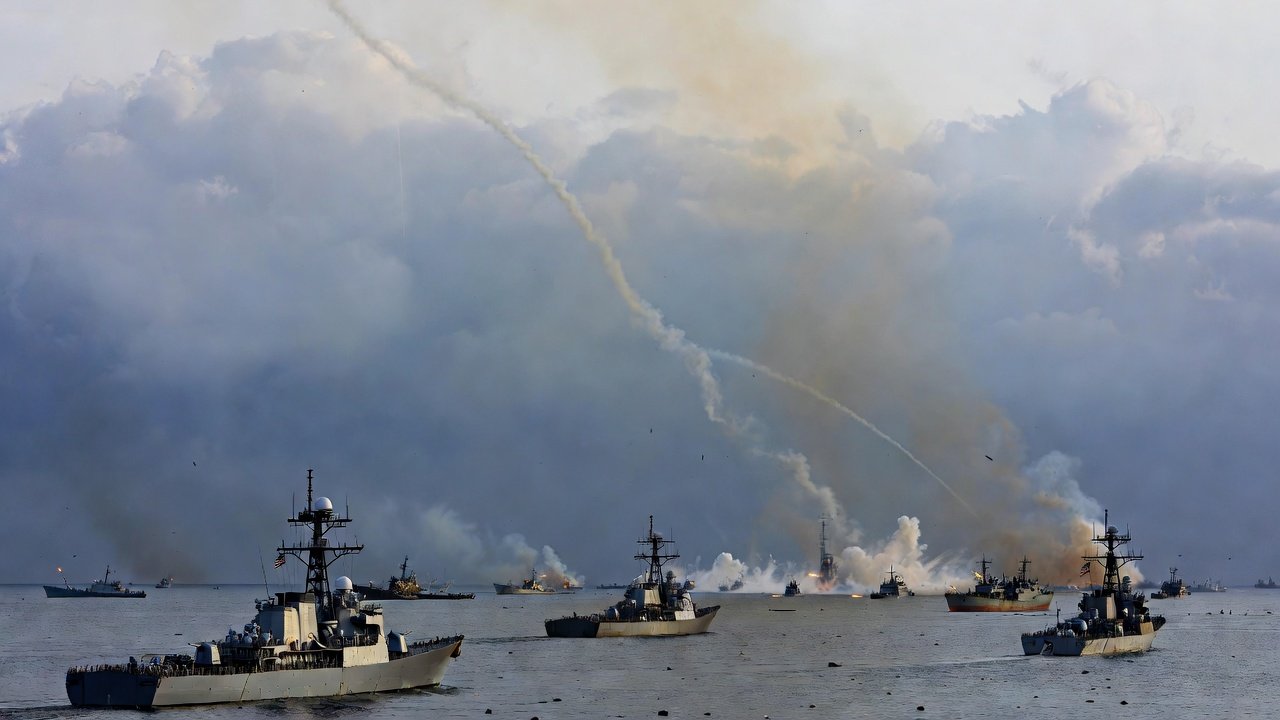
Washington, D.C. – A declaration of a “complete and total ceasefire” between Israel and Iran by US President Donald Trump on Monday, June 23, 2025, was swiftly challenged by reports of ongoing hostilities, including missile launches and an attack on a US military installation in the region. The situation, described by observers as a ceasefire declared “amidst waves of missiles,” appears significantly “tenuous, precarious” just hours after the anticipated truce was meant to take hold.
Presidential Announcement Amidst Rising Tensions
The announcement came directly from the White House on Monday, June 23, 2025, with President Trump stating that a comprehensive agreement had been reached to halt fighting between the long-standing adversaries, Israel and Iran. President Trump characterized the impending agreement as a “complete and total ceasefire,” signaling a potential de-escalation in a conflict that has seen frequent proxy clashes and direct, albeit limited, exchanges in recent years.
Initial reports, including those from Al Jazeera, suggested a positive reception to the proposal, indicating that Israel had agreed to the terms put forth by the US President. This agreement was seen by some as a breakthrough, raising hopes that diplomatic efforts could succeed in halting the dangerous cycle of violence.
Truce Challenged by Continued Fire




However, optimism quickly faded as subsequent updates from the region painted a starkly different picture. Despite the White House’s declaration and the reported agreement by Israel, hostilities did not immediately cease. Instead, reports began to surface indicating that the violence was persisting, directly contradicting the notion of a “complete and total ceasefire” having taken effect.
Authorities in Israel reported continued missile launches originating from Iran or forces aligned with Tehran. These reports were particularly alarming as they indicated that the attacks occurred after the deadline President Trump had announced for the ceasefire to come into force. The persistence of cross-border fire following the declared truce underscored the deep challenges in implementing any ceasefire agreement between the two nations, highlighting potential issues of control over various military factions or a lack of full commitment from one or both sides.
Regional Conflict Escalates
Further complicating the fragile situation was an attack targeting a US air base located in Qatar. This incident introduced another dangerous dimension to the crisis, directly involving American forces in the escalating regional tensions. While details regarding the perpetrator and specific damage were not immediately available, the attack on a US installation in a neighboring country underscored the widespread nature of the conflict and the risks it poses to regional stability and American interests.
The attack in Qatar demonstrated that the conflict is not confined solely to the immediate border areas between Israel and Iran but has wider implications across the Middle East, potentially drawing in other actors and increasing the risk of a broader conflagration.
A “Tenuous, Precarious” Situation
Given the conflicting reports – a declared ceasefire juxtaposed with verifiable ongoing attacks – the situation on Monday, June 23, 2025, was widely described as a ceasefire agreed “amidst waves of missiles.” This paradoxical description reflects the reality where diplomatic announcements failed to immediately translate into a cessation of violence on the ground.
Hours after President Trump’s announcement, the truce appeared profoundly “tenuous, precarious.” The continued missile launches from Iran reported by Israel, coupled with the attack on the US base in Qatar, demonstrated that the underlying tensions and the capacity for violence remained high. The inability of the declared ceasefire to immediately halt military actions raised serious questions about its effectiveness and durability.
The events of the day highlight the immense difficulties in mediating a lasting peace or even a temporary halt to hostilities between Israel and Iran, whose rivalry has long fueled instability in the Middle East. The disconnect between the diplomatic declaration and the reality on the ground left the region in a state of heightened uncertainty as the initial hopes for a de-escalation were quickly overshadowed by the continuation of military action. The coming hours and days are expected to be critical in determining whether the declared ceasefire can eventually take hold or if the cycle of violence will persist.