Public opinion regarding the death penalty remains one of the most contentious topics in American social policy, with a recent Pew Research Center analysis highlighting that a distinct majority of Americans continue to support capital punishment for those convicted of murder. While the debate has spanned decades, current data underscores a significant ideological chasm that defines the national conversation, revealing that while the practice remains legal in many jurisdictions, the consensus on its application is far from unified.
The Partisan Chasm: Analyzing the Data
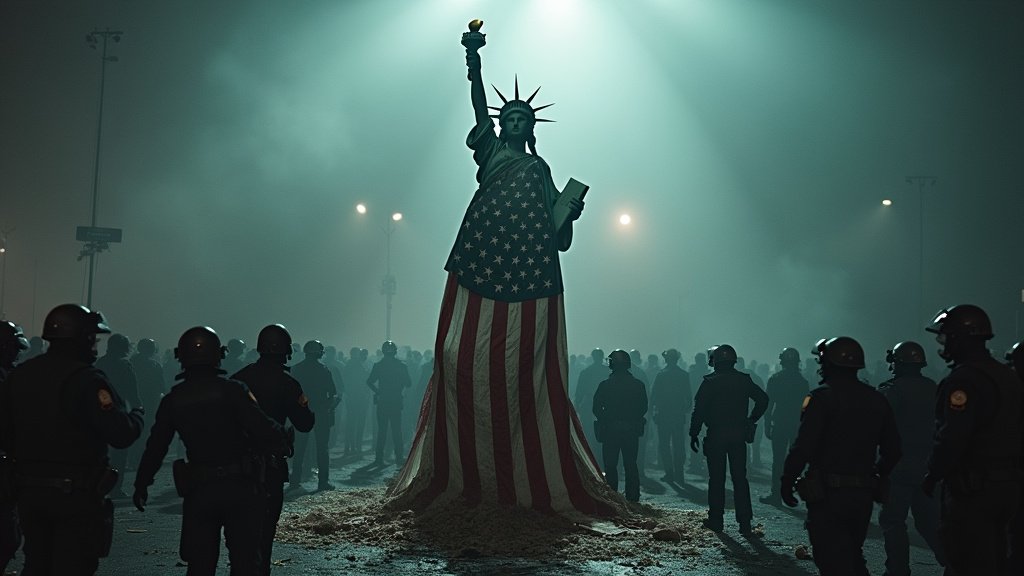


The most striking finding in the recent reporting is the divergence between the two major political parties. Data indicates that a staggering 84% of Republicans favor the death penalty for those convicted of murder. This high level of support underscores a firm belief in retributive justice within the conservative base, often framed as a necessary tool for law and order. In stark contrast, the Democratic perspective is characterized by a deep, internal split. Among Democrats, support is significantly lower, with many holding nuanced or outright oppositional views based on concerns regarding human rights, the risk of wrongful execution, and the efficacy of the penalty as a deterrent. This divide within the left reflects broader shifts in progressive legal theory and evolving standards of decency in American criminal justice.
The Historical Evolution of Public Sentiment
To understand the current climate, one must look at the historical trajectory of public support for capital punishment. In the late 20th century, specifically the 1990s, support for the death penalty in the United States reached historic highs, with large majorities across almost all demographic groups favoring its use. However, the last two decades have seen a slow but steady transformation. While the majority still favors the penalty for murder, the intensity of that support has been tempered by a series of factors, including the advent of DNA evidence. The emergence of the Innocence Project and the subsequent exonerations of death row inmates have fundamentally changed the discourse. This has forced the public to weigh the desire for ultimate justice against the fallibility of the legal system.
The Legal and Constitutional Framework
At the center of this debate is the interpretation of the Eighth Amendment, which prohibits cruel and unusual punishment. The Supreme Court of the United States has historically walked a fine line, refusing to declare the death penalty unconstitutional in its entirety while implementing strict guidelines to prevent arbitrary application. Despite these legal guardrails, the divide remains palpable in the courtroom. Federal versus state jurisdictions create a patchwork system where the probability of facing a death sentence often depends more on geography than the severity of the crime committed. This jurisdictional lottery is a secondary angle that often fuels legal challenges and complicates the administration of justice across state lines.
The Economic Argument: A Cost-Benefit Analysis
Beyond moral and ethical considerations, an increasingly relevant aspect of the death penalty discourse is the economic impact. Studies, including those conducted by various state legislatures, have consistently shown that capital cases are significantly more expensive than cases involving life imprisonment without the possibility of parole. These costs are driven by the extensive legal defense, prolonged appeals processes, and specialized incarceration requirements. As budget constraints tighten, taxpayers and policymakers are increasingly questioning the fiscal sustainability of maintaining a system that, while supported by a majority, is financially burdensome and infrequently utilized compared to the total number of homicide cases.
Emerging Trends and Future Predictions
The future of the death penalty in America appears to be in a state of suspended animation. While public opinion polls, such as those from Pew, show sustained support for the practice, the actual usage of the death penalty is trending downward. Executions are becoming rarer, and several states have implemented moratoriums, citing concerns over the sourcing of lethal injection drugs and broader civil rights issues. As we look toward the future, the primary tension will likely remain between a public that continues to express a preference for capital punishment in cases of murder and a criminal justice system that is finding it increasingly difficult, expensive, and ethically complex to carry out those sentences. The divide is no longer just about the philosophy of punishment; it is about the practical viability of the death penalty in a modern, evidence-based society.