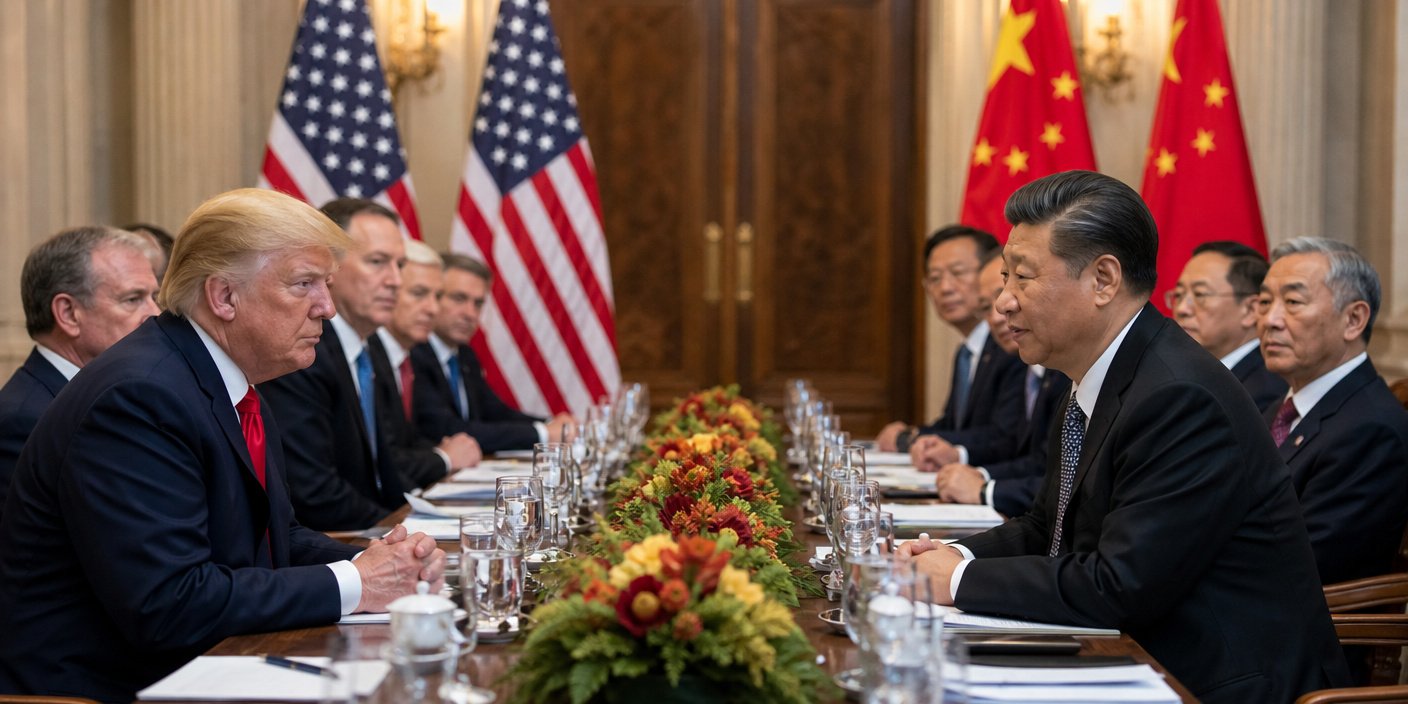
In a day marked by significant diplomatic and trade developments, U.S. President Donald Trump announced the abrupt termination of all trade negotiations with Canada, citing a “fraudulent” advertisement featuring the late President Ronald Reagan. This decision to halt Trump trade talks has sent ripples through international commerce. Separately, U.S. Vice President JD Vance forcefully ruled out any possibility of Israel annexing the West Bank, calling a preliminary parliamentary vote on the matter a “stupid political stunt.”
Trump Trade Talks Erupt Over Reagan Advertisement

President Trump declared an immediate end to trade talks with Canada late on October 24, 2025, via a post on his Truth Social platform. The catalyst for this drastic measure was an advertisement campaign launched by the Ontario government, which reportedly used edited audio and video clips of Ronald Reagan speaking negatively about tariffs. The Ronald Reagan Presidential Foundation and Institute confirmed that the Ontario government had used excerpts from Reagan’s 1987 “Radio Address to the Nation on Free and Fair Trade” without authorization, stating the ad “misrepresents” the former president’s message and that they were exploring legal options. The abrupt end to Trump trade talks highlights the President’s volatile approach to international negotiations.
Trump characterized Canada’s use of the advertisement as “egregious behavior” and alleged it was intended to interfere with decisions by U.S. courts, including the Supreme Court. He reiterated the importance of tariffs for American national security and the economy. The advertisement, part of a broader campaign by the Ontario government against U.S. tariffs on Canadian goods, reportedly cost $75 million and had been airing on major U.S. television networks. This sudden halt to negotiations escalates existing trade tensions between the two neighboring nations, impacting crucial US-Canada relations.
Vance Delivers Firm Stance on West Bank Annexation
During his visit to Israel, Vice President JD Vance explicitly rejected any Israeli annexation of the West Bank, delivering a sharp rebuke to lawmakers who had advanced a bill on the issue. Speaking at Ben Gurion Airport before his departure, Vance called the preliminary Knesset vote a “very stupid political stunt” and stated, “I personally take some insult to it”. He reaffirmed the consistent policy of the Trump administration: “The West Bank is not going to be annexed by Israel. The policy of the Trump administration is that the West Bank will not be annexed by Israel. That will continue to be our policy” regarding Middle East policy.
The vote, which narrowly passed 25-24, occurred during Vance’s visit and was criticized by Prime Minister Benjamin Netanyahu’s office as a “deliberate political provocation by the opposition to sow discord”. Officials noted that without the Prime Minister’s party’s support, the bills were unlikely to advance further. Vance’s firm stance aligns with President Trump’s previous declarations opposing annexation, which he believes could jeopardize regional normalization efforts and support from Arab nations. The U.S. views such unilateral actions as potentially destabilizing to the fragile ceasefire in Gaza and the broader peace process, a key aspect of the ongoing Canada trade dispute and broader Trump foreign policy.
Broader Implications for American Politics and Diplomacy
These two significant events highlight the assertive nature of the Trump administration’s foreign policy and trade strategy. The termination of Trump trade talks with Canada, stemming from a dispute over an advertisement, underscores the President’s strong stance on trade protectionism and his sensitivity to perceived slights. This move could have tangible repercussions for Canadian businesses and the broader North American economic landscape, marking a significant development in Trump trade talks.
Simultaneously, Vice President Vance’s clear opposition to West Bank annexation reinforces the administration’s diplomatic priorities in the Middle East. By condemning the Israeli parliamentary vote, the U.S. signaled its commitment to maintaining regional stability and preserving diplomatic channels, particularly in the context of efforts to secure a lasting ceasefire in Gaza and foster normalization among Arab states. These actions reflect a complex American foreign policy balancing national economic interests with intricate geopolitical considerations in a critical region. This latest news underscores the dynamic nature of international relations and American politics, as seen in the implications of Trump trade talks.