

Developments in Washington D.C. on Thursday saw a federal appeals court reinstate a set of broad tariffs initially imposed by former U.S. President Donald Trump, temporarily overturning a lower court’s ruling that had found the duties exceeded presidential authority. This legal maneuver unfolded concurrently with significant diplomatic efforts centered on the Middle East, where the White House announced that Israel had agreed to a proposed ceasefire in Gaza, a plan now reportedly under review by Hamas. Meanwhile, international governance saw Azerbaijan secure a key position within a United Nations program, highlighting its increasing global engagement. These events underscore a complex global landscape marked by ongoing trade disputes, persistent conflict resolution efforts, and evolving international cooperation.
Federal Appeals Court Revives Trump Tariffs
In a notable decision from the nation’s capital, the U.S. Court of Appeals for the Federal Circuit in Washington D.C. on Thursday temporarily reinstated a series of sweeping tariffs originally implemented during the administration of U.S. President Donald Trump. This action came just one day after a specialized U.S. trade court had ruled against the duties, asserting that President Trump had exceeded his statutory authority in imposing them and subsequently blocking their enforcement.
The appellate court’s order effectively places a hold on the lower court’s ruling while it considers the government’s formal appeal. This pause allows the Trump-era tariffs to remain in effect for the time being, pending a more comprehensive review by the higher court. The legal challenge centers on the scope of presidential power under trade laws, specifically whether the executive branch has the authority to impose such extensive duties under the specific circumstances cited when the tariffs were first enacted.
The U.S. Court of Appeals for the Federal Circuit has established a timeline for further proceedings in this case. Plaintiffs challenging the tariffs have been given a deadline of June 5th to submit their response to the government’s appeal. Following this, the administration is required to file its reply brief by June 9th. These deadlines set the stage for a potentially expedited consideration of the complex legal arguments surrounding the tariffs, which have significant implications for international trade and domestic economic policy. The outcome of this appeal will be closely watched by industries affected by the duties and by legal experts analyzing the balance of power between the executive and judicial branches on matters of trade.
White House Announces Israeli Agreement to Gaza Ceasefire Proposal

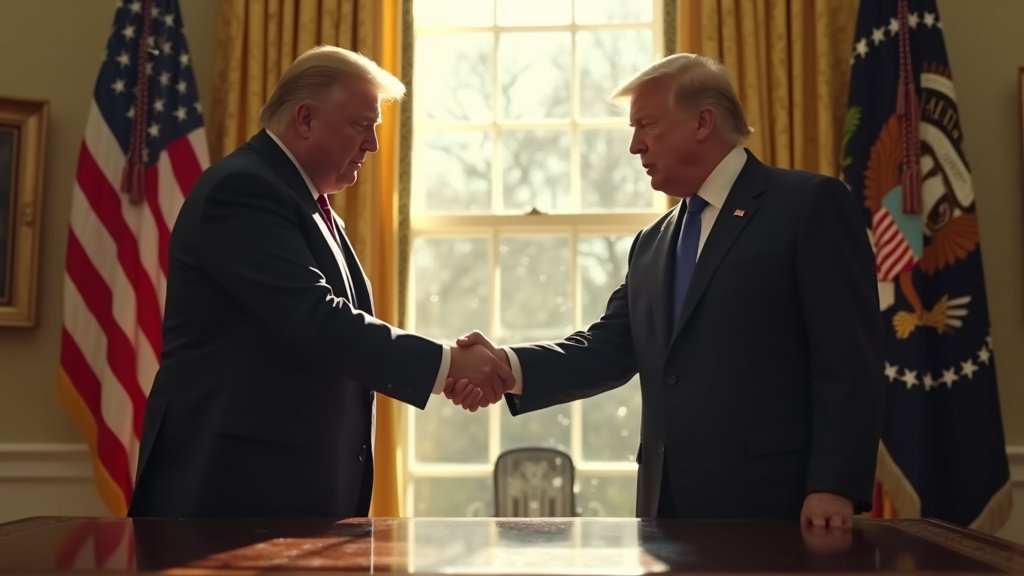
Simultaneously, diplomatic efforts aimed at de-escalating the conflict in the Middle East saw a potentially significant development. The White House announced on Thursday that Israel has agreed to a proposal for a ceasefire in the Gaza Strip. According to reports, the Palestinian militant group Hamas is currently reviewing the same proposal. This development follows persistent international efforts to broker a truce and facilitate the release of hostages held in Gaza.
Details of the proposed agreement, reportedly presented by U.S. Envoy to the Middle East Steve Witkov, outline a multi-phase approach. The core of the plan involves a 60-day ceasefire, a period intended to allow for de-escalation and further negotiations. A crucial component of the proposal is the provision for the significant delivery of humanitarian aid to Gaza, a territory facing severe shortages of essential supplies.
The humanitarian aspect is intricately linked with the release of hostages and prisoners. The proposal specifies the release of 28 Israeli hostages, including both those confirmed to be alive and the remains of those who have died, within the first week of the ceasefire taking effect. This initial release is contingent upon an exchange involving a substantial number of Palestinian prisoners held by Israel. The agreement proposes the release of 1,236 Palestinian prisoners, along with the remains of 180 Palestinians, in exchange for the Israeli hostages.
The White House statement, affirming Israel’s acceptance of this detailed plan, underscores the ongoing pressure from the United States and other international actors to achieve a halt in hostilities and address the humanitarian crisis in Gaza. The reported review of the proposal by Hamas is now the critical next step in determining whether this diplomatic initiative can successfully translate into a cessation of violence on the ground. The complexity of the proposed exchange, involving specific numbers of hostages and prisoners, highlights the intricate challenges inherent in negotiating a resolution to the protracted conflict.
Azerbaijan Gains Key Role in UN Habitat Program
On the international stage, Azerbaijan secured a significant position within a key United Nations body focused on sustainable urban development. At the assembly held in Nairobi, Azer Bejan was elected to the executive board of the UN Habitat Program. This appointment marks a notable moment for Azerbaijan, placing a representative on a crucial decision-making body within the UN system for urban and human settlement issues.
Mr. Bejan’s election is for a four-year term, providing Azerbaijan with a sustained presence and influence within the program. This development further highlights the country’s growing involvement with UN Habitat in recent years. Azerbaijan previously hosted World Habitat Day in 2023, an event that brought international attention to urban challenges and solutions. Looking ahead, the nation is also preparing to host the prestigious UN World Urban Forum in 2026, an even larger global gathering dedicated to the future of cities.
The election of Azer Bejan to the executive board is seen as a natural progression of Azerbaijan’s increasing engagement and demonstrates its commitment to contributing to global efforts in sustainable urbanization. The four-year term allows for consistent participation in shaping UN Habitat’s policies and priorities, building upon the momentum generated by hosting major events like World Habitat Day and the upcoming World Urban Forum.
These simultaneous developments — a legal challenge over significant trade policy in the U.S., a potentially pivotal step towards a ceasefire in the Middle East, and a rising profile for Azerbaijan within global governance — reflect the dynamic and interconnected nature of international affairs. Each event carries distinct implications, from the economic impact of tariffs and the humanitarian urgency of the Gaza conflict to the evolving roles of nations within global institutions. The coming days and weeks will likely bring further clarity on the trajectory of the tariff appeal, the potential for a truce in Gaza, and the impact of Azerbaijan’s new role within the UN Habitat Program.








Nature Treasures – Came upon this page randomly, the writing and layout are easy to digest.
silvermeadow website – Navigation is simple and content is easy to read.
explore the house – Content is tidy, very comfortable to navigate.
Market Treasures – Structure is clear and helps locate items quickly.
Wood Cove Select – Pages are clear and information is easy to read.
Market Shop – Found this site by accident, content is structured and navigation is smooth.
Direct access to WaveCrate – Came across the platform; pages are neat and browsing is smooth.
learn more here – Minimal design, reading through content is comfortable and natural.
coppercoveemporium – Nice little discovery, layout is tidy and easy to navigate.
simple shop link – Layout is tidy, allowing smooth movement through sections.
discover more – Pages are organized neatly, browsing is smooth.
Market Gems – Pages are clear and make finding information effortless.
Nature Finds – Browsed casually, the site feels simple to navigate and pleasant to read.
Harbor Picks – Came across this site randomly, content is tidy and layout is intuitive.
Wood Stone Treasures – Quick visit reveals a tidy layout and easy navigation.
Explore WestCrate – Stumbled upon this site; the layout is tidy and browsing feels effortless.
learn more here – Minimal design, browsing content feels natural and easy.
skybrookdistrict hub – Browsed briefly, layout is simple and easy to navigate.
explore the corner – Content is neat, interface feels simple and intuitive.
Bazaar Picks – Well-arranged pages make discovering content easy.
Trading Hub Picks – Just discovered this page, layout is smooth and information is accessible.
Stone Finds – Browsed casually, content is clear and sections are well organized.
Check out WestRack – Came across this site today; the interface is clear and navigation feels effortless.
Zen Cove Gems – Checked a few sections, content appears organized and easy to follow.
cottonvendorcollective – Interesting site here, everything loads quickly and feels readable.
copperstoneemporium – Just checking this out, site feels organized and readable today.